
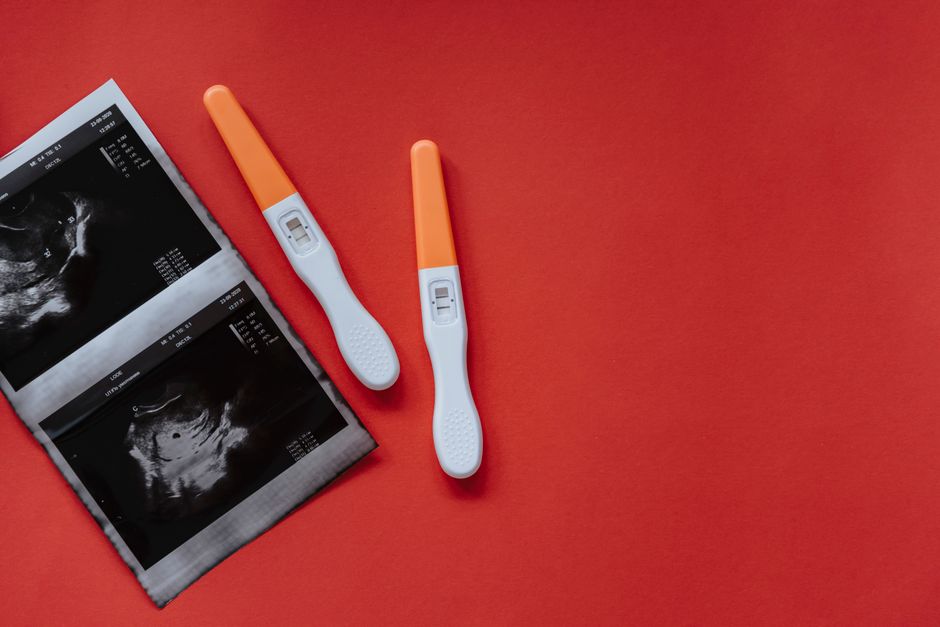
Knowing when you conceived is not as simple as counting back from your due date. Many women want to pinpoint the exact day they got pregnant, but biology does not work that cleanly. The two main tools doctors use are your last menstrual period (LMP) and early ultrasound measurements. Neither gives you a precise conception date, but together they provide your best estimate. Here is what the evidence actually says about how to know when you conceived using LMP and ultrasound.
How Does Last Menstrual Period (LMP) Estimate Conception Date?
Your LMP is the first day of your last period. Doctors use this date to calculate a 40-week pregnancy timeline. They assume ovulation happened around day 14 of your cycle, which would put conception roughly two weeks after your LMP started. This works well for women with regular 28-day cycles who ovulate on schedule.
But here is where it gets messy. The American College of Obstetricians and Gynecologists (ACOG) states that only about 30% of women have cycles exactly 28 days long. If your cycle is 35 days, you ovulate closer to day 21, not day 14. That shifts your conception date by a full week. LMP also assumes you ovulated exactly two weeks after your period started, which many women do not.
LMP is a starting point, not a fact. It gives you a window of several days when conception likely occurred, not a specific date. For women with irregular cycles, LMP can be off by two weeks or more. This is why ultrasound dating exists.
How Does Early Ultrasound Refine the Conception Window?
First-trimester ultrasound is the most accurate way to date a pregnancy. Research published in the New England Journal of Medicine found that ultrasound between 8 and 13 weeks estimates gestational age within 5 to 7 days. The ultrasound technician measures the crown-rump length of the embryo, which correlates closely with gestational age in early pregnancy.
The key word is early. Ultrasounds done after 20 weeks are far less accurate for dating because fetal growth varies more in the second and third trimesters. ACOG recommends using the earliest available ultrasound to establish your due date, preferably before 14 weeks. If you had an ultrasound at 8 weeks, that measurement is your best tool for estimating when you conceived.
Ultrasound does not tell you the exact day of conception either. It estimates gestational age, which is counted from the first day of your last period, not from conception. To get a conception window, you subtract about two weeks from the gestational age. For example, if your ultrasound says you are 10 weeks pregnant, conception likely happened around 8 weeks ago.
What Is the Difference Between Gestational Age and Fertilization Age?
This distinction confuses many people. Gestational age is the standard medical way to measure pregnancy. It starts from the first day of your LMP, which is about two weeks before you actually ovulated and conceived. So when your doctor says you are 8 weeks pregnant, the embryo is really only about 6 weeks old.
Fertilization age (also called conceptional age) counts from the actual moment of conception. This is what most women want to know. But doctors rarely use this number because it is harder to determine. Fertilization age is always about two weeks less than gestational age.
Here is a quick comparison:
| Measurement | Starts From | What It Tells You |
|---|---|---|
| Gestational age | First day of LMP | Standard pregnancy dating (40 weeks total) |
| Fertilization age | Actual conception | True age of the embryo (38 weeks total) |
When you see online calculators or apps asking for your LMP date, they are using gestational age. If you want to estimate conception, you need to work backward from the gestational age by about two weeks. But remember, this assumes a perfect 28-day cycle with ovulation on day 14.




How To Know When You Conceived Lmp And Ultrasound When Cycles Are Irregular?
Irregular cycles make LMP unreliable. If your cycles range from 30 to 45 days, you cannot assume ovulation happened on day 14. In this case, early ultrasound is your only reliable tool for dating. The ultrasound measurement overrides your LMP date when there is a discrepancy of more than 5 to 7 days.
ACOG guidelines say that if your first-trimester ultrasound due date differs from your LMP date by more than a week, doctors should use the ultrasound date. This is standard practice. For women with irregular cycles, the ultrasound date is almost always used because LMP is known to be inaccurate.
Some women track ovulation with ovulation predictor kits or basal body temperature charts. If you know your ovulation date, you can estimate conception within a 24-hour window because the egg is only viable for about 12 to 24 hours after release. Sperm can survive up to five days in the reproductive tract, so intercourse in the five days before ovulation can lead to conception. Even with perfect tracking, you are looking at a window, not a single day.
What Does Research Say About Accuracy of LMP Versus Ultrasound?
A large study published in JAMA looked at over 40,000 pregnancies. It found that using LMP alone misclassified the due date in about 25% of cases. Ultrasound corrected those dates and reduced the number of post-term pregnancies. The study concluded that first-trimester ultrasound is the gold standard for pregnancy dating.
Another study in the journal Ultrasound in Obstetrics and Gynecology compared LMP and ultrasound dating in women with known ovulation dates from fertility treatments. These women knew exactly when they conceived. The study found that ultrasound dating was within 5 days of the true conception date in 95% of cases. LMP was only within 5 days in about 70% of cases.
This does not mean ultrasound is perfect. Fetal growth in the first trimester is remarkably consistent, but there is still natural variation. Some embryos grow faster or slower than average. The margin of error is about 5 to 7 days in early pregnancy. After 14 weeks, the margin grows to 1 to 2 weeks.
For women who had fertility treatments like IUI or IVF, the conception date is known exactly. Doctors use the date of insemination or embryo transfer to date the pregnancy. In these cases, LMP and ultrasound are less relevant because the true conception date is documented.
Common Misconceptions About Conception Dating
Many women believe they conceived on the exact day they had sex. This is a common misconception. Sperm can live in the female reproductive tract for up to five days. You could have sex on Monday, ovulate on Thursday, and conceive on Thursday. The sex that led to pregnancy may have happened days before ovulation.
Another misconception is that due dates are exact. Only about 4% of babies are born on their exact due date. The due date is a 40-week estimate, not a promise. Using LMP and ultrasound together gives you a conception window, not a specific date. Most women conceive within a 5-day window ending on the day of ovulation.
Some people think ultrasound can tell you the exact moment of conception. It cannot. Ultrasound measures the size of the embryo, which correlates with gestational age. It does not detect the moment sperm met egg. The best ultrasound can do is give you a range of possible conception dates.
One more myth: that LMP is always wrong if you have irregular cycles. LMP can still be useful if you have a positive pregnancy test and an early ultrasound. The combination of LMP and ultrasound gives more information than either one alone. Even with irregular cycles, LMP provides a starting point that ultrasound can refine.
What To Avoid When Trying To Determine Conception Date
Avoid using home pregnancy test dates to estimate conception. Pregnancy tests detect hCG, which rises after implantation, not after conception. Implantation happens 6 to 12 days after ovulation. A positive test tells you that implantation has occurred, but it does not tell you when you conceived.
Avoid relying on online calculators that only ask for your LMP. These calculators assume a 28-day cycle with ovulation on day 14. If your cycle is different, the calculator will be wrong. Use an app or calculator that lets you input your cycle length and ovulation date if you track it.
Do not assume that a later ultrasound at 20 weeks will give you a more accurate date. Second-trimester ultrasound is less accurate for dating than first-trimester ultrasound. Fetal growth varies more after the first trimester due to genetics, nutrition, and other factors. If you had an early ultrasound, that date is more reliable than a later one.
Avoid stress over not knowing the exact day. Most women never know their exact conception date, and that is normal. The medical system uses gestational age from LMP or ultrasound, which is consistent and evidence-based. Knowing the exact day of conception does not change your prenatal care or your baby’s health.
Frequently Asked Questions
How accurate is LMP for determining conception date?
LMP is accurate within about 7 days for women with regular 28-day cycles. For women with irregular cycles, LMP can be off by two weeks or more.
Can ultrasound tell me the exact day I conceived?
No, ultrasound estimates gestational age within 5 to 7 days in the first trimester. It gives you a window of possible conception dates, not a specific day.
Should I use LMP or ultrasound for my due date?
Use the earliest ultrasound if there is a discrepancy of more than 5 to 7 days. ACOG recommends first-trimester ultrasound as the most accurate method for dating.
How do I calculate conception date from ultrasound?
Subtract about two weeks from the gestational age given by the ultrasound. This gives you an approximate conception window, not an exact date.
