
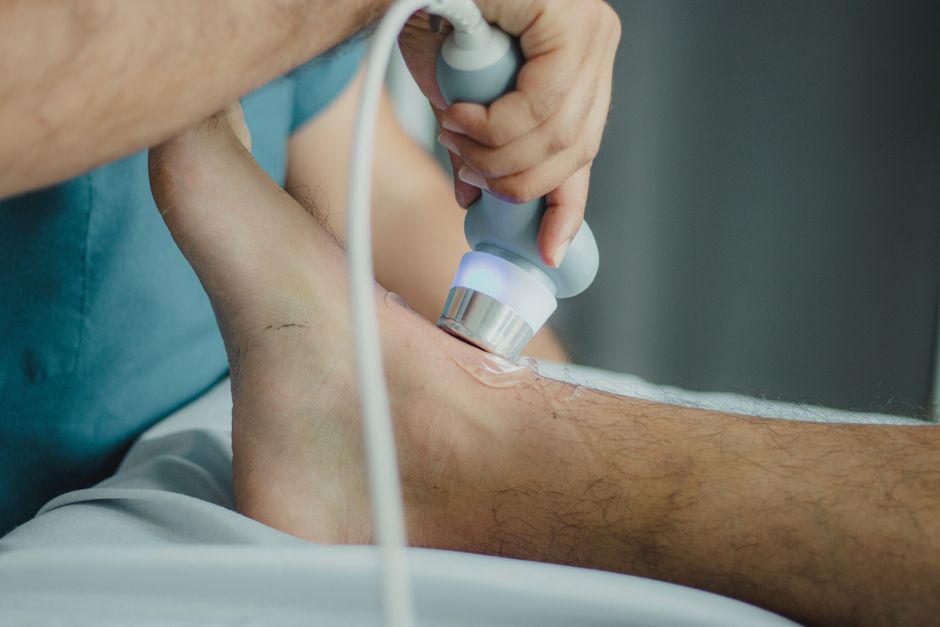
A 3D ultrasound uses sound waves to build a three-dimensional image of structures inside the body. It is most often used in pregnancy to show a baby’s face, hands, and body shape in still pictures rather than the flat slices of a standard 2D scan. No radiation is involved, and the American College of Obstetricians and Gynecologists has stated that diagnostic ultrasound is not associated with confirmed harm when used appropriately by trained professionals. Cost in the United States commonly runs from about $100 to $300 for an elective “keepsake” session, while a medically ordered 3D scan is usually billed through insurance as part of a diagnostic exam.
What Is A 3D Ultrasound and How Does It Work?
A 3D ultrasound is a medical imaging method that sends high-frequency sound waves into the body and measures the echoes that bounce back. The machine calculates how long each echo takes to return and converts that data into an image.
The difference from a standard scan is how the data gets arranged. A conventional 2D ultrasound shows one thin cross-section at a time, like a slice through a loaf of bread. A 3D machine takes many slices and stacks them into a single volume, which can then be viewed from different angles. A 4D ultrasound is the same 3D volume captured continuously, so it plays as moving video.
The physics have not changed. The same transducer, the same sound waves, and the same general safety profile apply across 2D, 3D, and 4D. What changes is the software that assembles the image.
One detail that surprises many people: a 3D image is not automatically more diagnostic than a 2D image. For most routine checks, 2D remains the standard. The 3D view adds information in specific situations where seeing depth and surface shape actually helps.
What Is a 3D Ultrasound Used For?
The most common use is in pregnancy, but the technology is not limited to obstetrics.
Pregnancy
In obstetrics, a 3D scan can help a clinician look at facial features, the spine, the limbs, and the surface of the placenta. It can be useful when a standard scan raises a question about a possible structural difference, such as a cleft lip or a problem with the baby’s spine. Seeing a structure in three dimensions can sometimes clarify what a flat image cannot.
It is also used to guide certain procedures, such as sampling the placenta or assessing blood flow, because the depth view helps the clinician place a needle accurately.
Other Medical Uses
Outside pregnancy, 3D ultrasound is used in several specialties:
- Cardiology, to build a full picture of heart valves and chambers
- Urology and gynecology, to examine the uterus, ovaries, and prostate
- Breast imaging, as a supplement to mammography in some cases
- Vascular and abdominal imaging, to view blood vessels and organs in depth
In these settings the goal is diagnostic, not decorative. The clinician is looking for information that changes a decision.
Is a 3D Ultrasound Safe?
Diagnostic ultrasound has been used in medicine for decades, and the evidence base for its safety when used appropriately is strong. Unlike X-rays and CT scans, ultrasound uses sound waves rather than ionizing radiation, so it does not carry the radiation risk those methods do.
The main theoretical concern is heating. Sound waves deposit a small amount of energy in tissue, and at high enough intensity this can raise temperature slightly. Ultrasound machines display a thermal index and a mechanical index so the operator can keep energy output within safe limits. In trained hands, output stays within established thresholds.
The American Institute of Ultrasound in Medicine and other professional bodies have long held that there is no confirmed link between diagnostic ultrasound and harm to a fetus. That is a statement about diagnostic use, not about every possible use.
The area where caution is more warranted is prolonged, non-medical scanning. Keepsake sessions that run for long periods, or that are performed by untrained operators, may expose the fetus to more energy than a standard diagnostic exam. Professional organizations have advised against non-medical scanning for entertainment, particularly when it is done without a medical reason or by someone without proper training.
There is no evidence that a single standard diagnostic 3D scan causes harm. There is also no strong evidence that repeated, lengthy, non-medical sessions are safe, because those have not been well studied. The honest position is that the risk from appropriate diagnostic use is considered low, and the risk from casual overuse is not well defined.





How Much Does a 3D Ultrasound Cost?
Cost depends heavily on whether the scan is medically ordered or elective.
| Type of Scan | Typical Cost (US) | Insurance |
|---|---|---|
| Medically ordered 3D ultrasound | Billed as part of a diagnostic exam; varies widely | Often covered if medically necessary |
| Elective keepsake 3D/4D session | About $100 to $300 | Usually not covered |
| Add-on 3D images during a covered scan | May add a facility fee | Sometimes covered |
When a doctor orders a 3D scan for a medical reason, it is generally treated like any other diagnostic imaging. What you pay depends on your insurance plan, your deductible, and whether the facility is in network. The exact figure is hard to generalize because billing codes and facility fees differ by region and provider.
Elective sessions are a different market. These are usually cash-pay, run by standalone businesses, and priced as a flat package. Prices around $100 to $300 are common, with higher prices for longer sessions or video recordings. Insurance almost never covers these because there is no medical need.
One practical point: an elective session is not a substitute for a diagnostic scan ordered by your clinician. If a keepsake operator notices something unusual, they cannot diagnose it, and you would still need to see a medical provider.
3D vs 2D vs 4D Ultrasound: What Is the Difference?
All three use the same sound waves. The difference is how the image is built and displayed.
- 2D shows a single flat cross-section. It is the standard tool for measuring the fetus, checking growth, and screening for most issues.
- 3D stacks many cross-sections into a volume, giving a still image with depth. It is useful for viewing surface features and certain structures.
- 4D is a 3D volume captured over time, so it shows movement as video.
For most clinical decisions, 2D remains the workhorse. A 3D or 4D view is added when the extra depth helps answer a specific question. It is not that one is better overall; they answer different questions.
A common misconception is that a 3D scan is a more advanced “upgrade” that replaces 2D. In practice, they are used together. The clinician usually starts with 2D and switches to 3D when it adds value.
When Should You Be Cautious About a 3D Ultrasound?
Be cautious when the scan has no medical purpose and is done for entertainment alone. Professional guidance has generally advised against non-medical scanning, especially prolonged sessions.
Be cautious when the operator is not a trained sonographer or supervised by a physician. Proper training matters for both image quality and for keeping energy output within safe limits.
Be cautious about any business that promises to detect or rule out medical conditions. Only a qualified medical provider can diagnose. A keepsake session is not a screening exam, and it should never replace one.
If you are pregnant and considering an elective 3D session, it is reasonable to talk with your obstetric provider first. They can tell you whether there is any reason to avoid it in your specific situation, and they can confirm that your routine diagnostic scans are already covering what matters.
Frequently Asked Questions
Is a 3D ultrasound safe during pregnancy?
Diagnostic ultrasound, including 3D, has not been linked to confirmed harm when used appropriately by trained professionals. Prolonged non-medical sessions have not been well studied, so caution is reasonable there.
How much does a 3D ultrasound cost without insurance?
Elective keepsake sessions typically cost about $100 to $300 as a flat cash price. Medically ordered scans are billed differently and depend on your plan and provider.
Does insurance cover a 3D ultrasound?
Insurance often covers a 3D scan when a doctor orders it for a medical reason. Elective sessions done for entertainment are usually not covered.
What is the difference between 3D and 4D ultrasound?
A 3D ultrasound produces a still image with depth, while a 4D ultrasound captures the same 3D volume over time as moving video. Both use the same sound waves as a standard 2D scan.
