
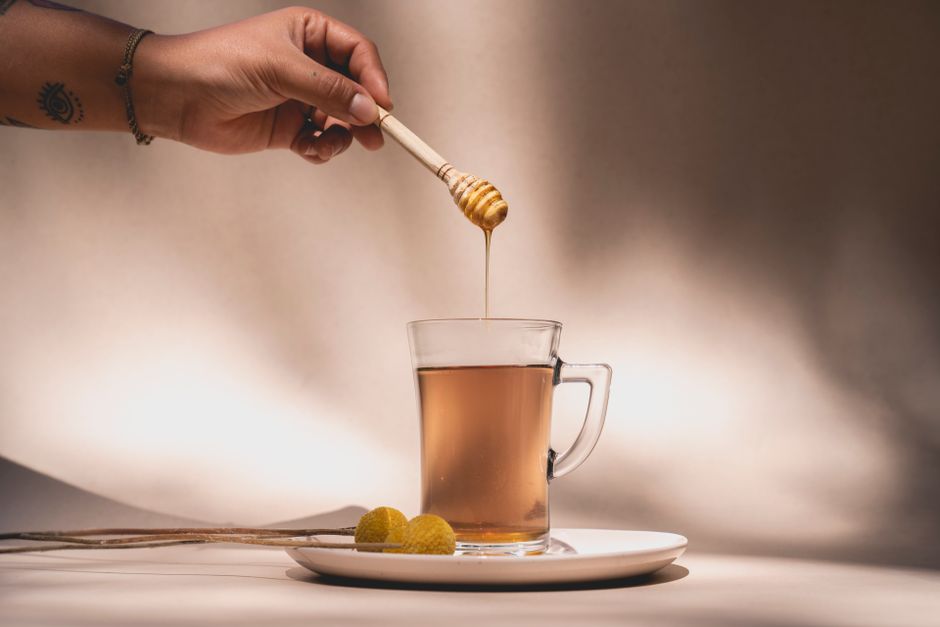
Honey is more than a sweetener. It has been used as food and medicine for thousands of years. The “best” honey depends on what you want it to do. For everyday eating, raw honey is a good choice. For soothing a sore throat, darker honeys like buckwheat have more antioxidants. For wound care, medical-grade Manuka honey is the only type with strong clinical evidence. No single honey is best for everything. The right choice depends on your goal.
What Makes Honey Different From Sugar?
Honey is mostly sugar, but it is not the same as table sugar. Honey contains about 80% sugar and 20% water. The sugars are mainly fructose and glucose, but they exist in a different balance than refined sugar.
Honey also contains small amounts of enzymes, amino acids, vitamins, and minerals. These are present in tiny quantities. You should not eat honey expecting to meet your nutritional needs. The real value is in the plant compounds called polyphenols. These act as antioxidants in the body.
Because honey is sweeter than sugar, you can use less of it. That can mean fewer calories overall. But honey still raises blood sugar. People with diabetes need to count it like any other sweetener.
What Honey Is Good for Everyday Use?
For daily eating and cooking, raw honey is the most practical choice. Raw honey is honey that has not been heated above the temperature found in a hive. It has not been fine-filtered. This preserves the natural enzymes and pollen that commercial processing removes.
Most supermarket honey is pasteurized. Pasteurization kills yeast cells and prevents fermentation. It also makes honey smoother and easier to pour. The trade-off is that heating destroys some of the beneficial compounds.
Look for honey labeled “raw” on the jar. Check the ingredient list. It should say honey and nothing else. Some products labeled “honey” are actually honey blended with corn syrup or other sweeteners. Read labels carefully.
Local honey is another good option. It comes from flowers in your area. Some people believe local honey helps with seasonal allergies. The evidence for this is weak. The pollen that causes most allergy symptoms comes from wind-pollinated plants, not the bee-pollinated flowers that end up in honey. Local honey may still taste great and support local beekeepers.
What Honey Is Good for a Sore Throat?
Dark honey is the best choice for a sore throat. Buckwheat honey is one of the darkest varieties. Research published in the Archives of Pediatrics and Adolescent Medicine found that buckwheat honey relieved nighttime cough better than a common over-the-counter cough suppressant in children.
Dark honeys have more antioxidants than light honeys. The darker color comes from higher levels of phenolic compounds. These compounds have anti-inflammatory properties that may help soothe irritated throat tissues.
For a sore throat, take a spoonful of honey directly. Let it coat the throat before swallowing. You can also stir it into warm tea or warm water with lemon. Do not add honey to boiling water. High heat destroys the beneficial enzymes.
Honey for cough and sore throat is supported by clinical evidence. The World Health Organization lists honey as a demulcent, meaning it coats and soothes mucous membranes. It is a reasonable first-line treatment for adults and children over one year old.




What Honey Is Good for Wound Care?
Medical-grade Manuka honey is the only honey with strong evidence for wound care. Manuka honey comes from the manuka tree in New Zealand and Australia. It contains a compound called methylglyoxal that gives it unique antibacterial properties.
This is not the honey you eat. Medical-grade Manuka honey is sterilized by gamma radiation. It is sold in specialized wound-care products, not in jars. These products are regulated as medical devices in many countries.
Clinical studies have shown that medical-grade honey can help heal burns and infected wounds. It works by drawing fluid away from the wound, creating an environment bacteria cannot survive in. It also reduces odor and keeps the wound moist.
Do not use regular honey on wounds. Food-grade honey can contain spores that cause infection, especially in open wounds. If you have a wound that needs treatment, see a healthcare provider. Do not treat it with honey from your kitchen.
What Is Manuka Honey and Is It Worth the Price?
Manuka honey has become famous. It is also expensive. A small jar can cost several times more than regular honey. The question is whether the extra cost is justified.
Manuka honey does have unique antibacterial activity. This comes from methylglyoxal, a compound not found in significant amounts in other honeys. The antibacterial strength is measured by a rating system called UMF or MGO. Higher ratings mean stronger antibacterial activity.
For eating, the evidence that Manuka is better than other honey is limited. All honey has some antibacterial properties. The hydrogen peroxide produced by enzymes in honey is responsible for most of this activity. Manuka’s methylglyoxal activity is different, but that does not mean it is better for internal use.
For wound care, Manuka is the best-studied honey. But you need the medical-grade version, not the food version. If you are using Manuka honey for general health purposes, the evidence is not strong enough to justify the high price.
What Honey Is Good for Allergies?
No honey has been proven to treat allergies. This is a popular claim, especially for local honey. The theory sounds logical. Eating local honey exposes you to local pollen, which builds immunity. The problem is that the pollen in honey is not the pollen that causes allergies.
Most seasonal allergies come from wind-pollinated plants like ragweed, grasses, and trees. Bees visit flowers, not ragweed. Flower pollen is heavier and stickier. It does not float in the air the way allergy-causing pollen does. The pollen in honey is mostly from flowers that do not trigger allergy symptoms.
Some small studies have looked at honey for allergic rhinitis. Results have been mixed. Some showed mild benefit, others showed no difference from placebo. No large, well-designed trial has confirmed that honey helps allergies.
If you enjoy honey, eat it. But do not expect it to replace your allergy medication. If you are considering honey for allergy symptoms, talk to your doctor first.
Which Honey Is Highest in Antioxidants?
Dark honey has more antioxidants than light honey. This is consistent across studies. Buckwheat honey, manuka honey, and honey from dark flowers like chestnut and heather rank high in antioxidant content.
Antioxidants neutralize free radicals in the body. Free radicals are unstable molecules that can damage cells. Over time, this damage contributes to aging and chronic disease. Eating foods rich in antioxidants is associated with lower risk of some diseases.
The antioxidant content of honey varies widely. It depends on the flowers the bees visited, the soil, the weather, and how the honey was processed. Raw honey retains more antioxidants than heated honey.
For maximum antioxidants, choose raw dark honey. Buckwheat honey is a good option. It has a strong, molasses-like flavor that some people love and others find too intense. Start with a small jar to see if you like it.
How Should You Choose and Store Honey?
Choose honey based on your purpose. For daily use, raw honey from any source is fine. For sore throats, dark honey like buckwheat. For wounds, medical-grade Manuka products only. For antioxidants, raw dark honey.
Check the label. The ingredient list should have one item: honey. Avoid products with added sugar or corn syrup. Look for the word “raw” if you want unprocessed honey.
Honey does not spoil. It can last indefinitely when stored properly. Keep it in a sealed container at room temperature. Do not refrigerate honey. Cold temperatures cause it to crystallize faster.
If your honey crystallizes, it is not spoiled. Place the jar in warm water and stir. Do not microwave honey. This can create hot spots that destroy beneficial compounds and cause the honey to boil over.
Never give honey to a child under one year old. Honey can contain spores of Clostridium botulinum. An infant’s digestive system is not developed enough to handle these spores. This can cause infant botulism, a serious illness. This risk does not apply to older children or adults.
What Honey Is Good for Blood Sugar?
No honey is good for blood sugar. Honey raises blood sugar, just like any other sweetener. It has a glycemic index that varies from about 45 to 64, depending on the variety. Table sugar has a glycemic index of about 65. The difference is small.
Some people believe honey is safe for diabetes because it is “natural.” This is not accurate. Honey is still sugar. Your body processes it similarly. For people with diabetes, honey should be counted as a carbohydrate and used in moderation.
Honey does have a slightly lower glycemic index than table sugar. This means it may cause a slightly slower rise in blood sugar. But the overall effect is similar. Replacing sugar with honey will not meaningfully improve blood sugar control.
If you have diabetes, treat honey like any other sweetener. Test your blood sugar after eating it to see how your body responds. Everyone responds differently.
Frequently Asked Questions
Is raw honey better than regular honey?
Raw honey retains more enzymes and antioxidants because it is not heated or fine-filtered. Regular honey has been pasteurized, which destroys some beneficial compounds.
Can honey help with a cough?
Yes, honey is a proven remedy for cough and sore throat in adults and children over one year old. Dark honey like buckwheat has the strongest evidence.
Is Manuka honey worth the high price?
Medical-grade Manuka honey is worth it for wound care, where it has strong clinical evidence. For eating, the extra cost is not justified by current evidence.
Can I give honey to my baby?
No. Never give honey to a child under one year old because it can cause infant botulism, a serious illness.
