
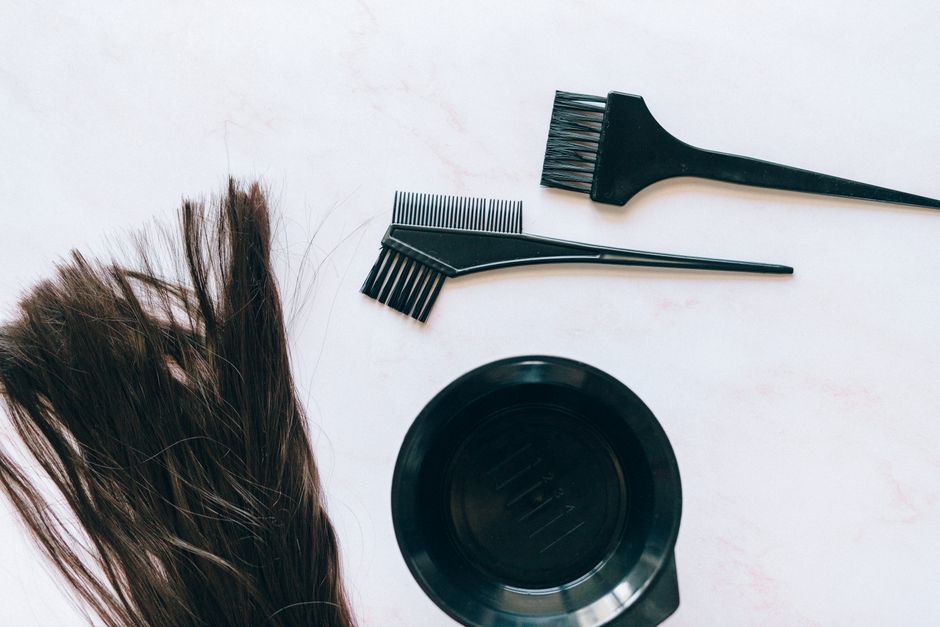
Bleaching your hair is a controlled chemical process that strips natural color from the hair shaft. The active ingredient, usually hydrogen peroxide, breaks down the melanin molecules that give hair its pigment. Once those molecules are altered, the hair can no longer reflect its original color, leaving it lighter — and permanently changed at a structural level.
What Happens When You Bleach Your Hair The Science?
Hair color comes from melanin, the same pigment that colors skin and eyes. There are two main types: eumelanin (brown to black) and pheomelanin (red to yellow). Bleach does not paint over this pigment. It chemically destroys it.
Hydrogen peroxide in bleach penetrates the outer layer of the hair, called the cuticle, and reaches the cortex where melanin lives. The peroxide releases oxygen that oxidizes the melanin molecules. Oxidized melanin becomes colorless. The result is lighter hair — but the process is not gentle.
The bleach also attacks the structural proteins of the hair, particularly keratin. Keratin gives hair its strength and elasticity. When bleach breaks disulfide bonds within keratin, the hair becomes weaker, more porous, and less elastic. This is why bleached hair often feels dry, looks dull, and breaks more easily. The color change is permanent because the melanin is destroyed, not removed. Regrowth at the root will show your natural color because new hair produces new melanin.
Why Does Bleach Burn or Sting the Scalp?
Bleach is alkaline. The high pH lifts the cuticle scales so the bleach can penetrate deeper into the hair shaft. Your scalp, however, is living skin. The same alkaline chemistry that opens the cuticle also irritates skin cells.
A mild stinging or warming sensation is common and often considered normal during a bleach session. A sharp burning pain is not. That indicates the bleach has damaged the skin barrier and may be causing a chemical burn. The scalp can also develop contact dermatitis — an allergic reaction to one of the ingredients, most commonly the dye molecules or persulfate salts used to boost the bleach’s strength.
Symptoms of a reaction include redness, swelling, itching, blistering, or oozing. If any of these occur, the bleach should be rinsed off immediately. Severe reactions require medical attention. It is not safe to assume a strong burn is just part of the process.
What Determines How Much Damage Bleach Causes?
Several factors decide how much damage your hair will sustain. The starting color matters. Darker hair contains more melanin, which means more oxidation is needed to lighten it. That longer processing time equals more structural damage. Lighter hair, especially fine or previously treated hair, reaches the lightening endpoint faster but has less structural reserve to begin with.
The condition of your hair before bleaching is equally important. Hair that is already dry, brittle, or damaged from heat styling or previous chemical treatments has a weaker cuticle. Bleach will penetrate it faster and cause more harm. Healthy hair with an intact cuticle is more resilient.
The concentration of the bleach matters too. Higher-volume developers — the creams that activate the hydrogen peroxide — lift color faster but cause more damage. A 10-volume developer lifts slightly. A 40-volume developer lifts several levels but is far more aggressive. Professionals choose the lowest volume that achieves the desired result for a reason.





Can Bleach Damage Be Reversed?
No. Once keratin proteins are broken and disulfide bonds are severed, the hair cannot rebuild itself. Hair is dead tissue. It has no repair mechanism. Products labeled as “hair repair” or “bond builders” do not actually rebuild the hair. They temporarily coat the shaft, smooth the cuticle, or deposit conditioning agents that make the hair feel better.
Some bond-building products do form new chemical links between broken protein chains. Research suggests these products can improve the mechanical strength of damaged hair. But the effect is temporary. The new bonds are weaker than the original ones, and they wash out or degrade over time. The hair remains more fragile than it was before bleaching.
The only true fix for severely damaged bleached hair is to cut it off and let new hair grow in. This is why stylists often recommend trimming split ends regularly and spacing out bleach sessions. The damage accumulates with each treatment.
How to Minimize Damage If You Bleach
The most important step is to start with healthy hair. If your hair is already damaged, bleach will make it worse. Wait until it is in good condition. Deep conditioning treatments in the weeks before can help, but they cannot fully protect hair that is already compromised.
Choose a professional for the first session or for any dramatic color change. Professionals can assess your hair’s condition, select the appropriate developer strength, and monitor the processing time closely. Home bleach kits are convenient, but the margin for error is larger. Over-processing is the most common mistake.
After bleaching, switch to a gentle, sulfate-free shampoo. Sulfates strip oils and can worsen dryness. Use a deep conditioner weekly. Avoid heat styling tools — flat irons and curling irons put additional stress on weakened hair. If you must use heat, use the lowest effective setting and a heat protectant spray.
Space out your bleach sessions. Hair needs time to recover between chemical treatments. Many stylists recommend waiting at least six to eight weeks between sessions. This is not a strict rule — it depends on your hair’s condition — but rushing the process increases the risk of breakage.
Bleach and Hair Loss: What’s the Real Risk?
Bleach does not typically cause hair loss from the root. The hair follicle is deep in the scalp, and bleach acts on the hair shaft above the surface. However, bleach can cause hair to break off at the scalp or along the shaft. This looks like hair loss, but the follicle is usually intact and will produce new hair.
Severe over-processing can cause the hair to become so fragile that it snaps off when brushed or styled. In extreme cases, large chunks of hair can break off, leaving uneven lengths or visible thinning. This is distressing, but it is breakage, not permanent baldness.
There is a separate concern: chemical burns on the scalp can damage the follicles themselves. If the burn is severe enough to scar the scalp, hair may not regrow in that area. This is rare but possible. It is one more reason why a burning sensation should never be ignored.
Is There a Safe Way to Lighten Hair Without Bleach?
Bleach is the only reliable way to lighten hair by multiple shades in one session. No over-the-counter product can do what bleach does. Some alternatives exist, but they have limits.
High-lift hair color uses ammonia and a stronger developer to lighten hair slightly while depositing color. It is less damaging than bleach because it does not fully destroy melanin, but it also cannot achieve the same level of lightness. It typically lifts only one to three shades, and it works best on hair that is already light.
Sun exposure and lemon juice can lighten hair gradually, but the effect is unpredictable and often uneven. These methods also damage the hair through UV radiation and drying. They are not a safe alternative to bleach — they are just slower and less controllable.
For those who want a lighter look without chemical damage, the honest answer is to consider a different color approach. Highlights, lowlights, or a semi-permanent color that works with your natural shade can change your look without the structural toll of full bleaching.
Frequently Asked Questions
Does bleach permanently change your hair?
Yes. Bleach destroys the melanin in the hair shaft, and that color cannot return. The structural damage to the hair is also permanent, though the hair may feel better with conditioning products.
How long should you wait between bleach sessions?
Most stylists recommend waiting at least six to eight weeks between full bleach sessions. This allows the hair to recover and reduces the risk of severe breakage.
Can bleached hair go back to its natural color?
New hair growing from the root will be your natural color, but the bleached length will not revert. You would need to dye it back to a shade close to your natural color, and that dye will fade over time.
Is it safe to bleach hair at home?
Home bleaching is possible but riskier than professional treatment. The main dangers are over-processing, uneven results, and scalp burns, which are more likely without professional experience.
