
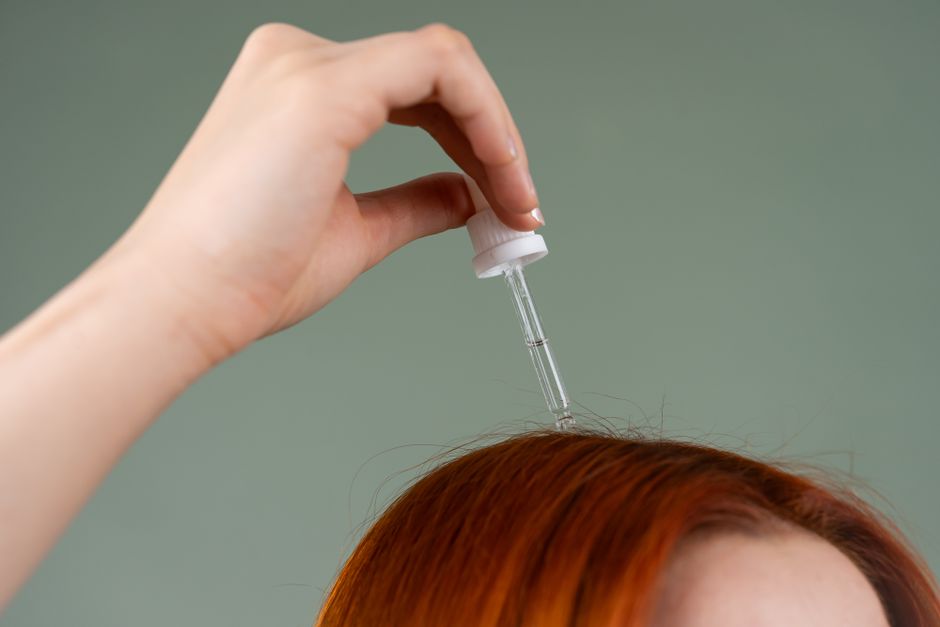
Estrogen does not reliably regrow hair on its own, but it plays a major role in keeping the hair you have. The science shows that estrogen prolongs the growth phase of the hair cycle, which can reduce shedding and improve thickness. However, it is not a proven treatment for regrowing hair that has already been lost, and its effects depend heavily on hormone levels, genetics, and the underlying cause of the hair loss.
What Does Estrogen Actually Do to Hair Follicles?
Hair grows in cycles. Each follicle moves through a growth phase, a resting phase, and a shedding phase. Estrogen influences this cycle in a specific way: it extends the growth phase.
When estrogen levels are healthy and balanced, hair follicles spend more time actively growing. This means less hair falls out at any given time. It also explains why many women notice thicker, fuller hair during pregnancy, when estrogen levels are naturally high.
The effect is real and measurable. Research consistently shows that estrogen binds to receptors on hair follicle cells and directly influences their activity. This is not a marketing claim. It is established physiology.
But extending the growth phase is not the same as creating new hair follicles or reviving follicles that have permanently stopped producing hair.
Does Estrogen Regrow Hair The Science Explained
The short answer is no, not in the way most people hope. Estrogen can make existing hair grow longer and shed less. It does not typically regrow hair on bald or thinning areas where follicles have already miniaturized or shut down.
Consider what happens after pregnancy. Many women experience dramatic postpartum shedding. This occurs because estrogen levels drop sharply after delivery. The hair follicles that were held in the growth phase suddenly shift into the shedding phase all at once. The hair does not regrow immediately. It takes months for the cycle to normalize.
This pattern tells us something important. Estrogen maintains hair. It does not rebuild it. When estrogen is present, hair stays in its growth phase longer. When estrogen drops, the shedding catches up.
For someone with female pattern hair loss, estrogen alone is rarely the answer. This condition involves genetics and androgen sensitivity. Estrogen can help balance the effects of androgens, but it does not reverse the underlying genetic programming that causes follicles to shrink over time.
What Happens When Estrogen Levels Drop
Menopause is the clearest example of estrogen withdrawal. As estrogen declines, many women notice their hair becomes thinner, drier, and sheds more.
The mechanism is straightforward. Lower estrogen means shorter growth phases. Follicles cycle faster. More hairs enter the shedding phase at once. The overall density decreases even if the number of follicles has not changed.
This type of hair loss is often diffuse. It affects the whole scalp rather than one specific area. It is different from male pattern baldness, which typically starts at the temples or crown.
Hormone replacement therapy can sometimes improve menopausal hair thinning. Some women on HRT report thicker hair. But the evidence is not strong enough to recommend HRT as a hair loss treatment. It is prescribed for menopausal symptoms like hot flashes and sleep disruption. Hair changes may be a secondary benefit for some women, but results vary widely.
Why Estrogen Alone Is Not a Hair Regrowth Treatment
Hair loss has many causes. Estrogen deficiency is only one of them. Thyroid disorders, iron deficiency, stress, nutritional gaps, and autoimmune conditions can all cause shedding.
If estrogen is not the root cause, adding more estrogen will not help. In fact, it could cause harm. Excess estrogen can lead to blood clots, gallbladder issues, and other serious side effects. No clinician should prescribe estrogen for hair loss without a clear medical reason.
There is also a common misconception that estrogen can counteract all forms of androgen-related hair loss. This is not accurate. Androgens like testosterone and dihydrotestosterone bind to follicles and cause miniaturization. Estrogen does not directly block this process. Some medications like spironolactone reduce androgen effects, but they work through a different mechanism than estrogen.
Clinical trials have not shown that estrogen supplements regrow hair in people with pattern baldness. The evidence for estrogen as a hair regrowth agent is limited to its role in maintaining the growth phase of existing hair. That is a meaningful effect. It is just not the same as regrowth.
What Actually Regrows Hair Based on Evidence
If you are looking for proven hair regrowth options, the evidence points in specific directions.
Minoxidil is the most widely studied topical treatment. It is FDA-approved for hair regrowth and works for both men and women. The exact mechanism is not fully understood, but it extends the growth phase and enlarges miniaturized follicles.
Finasteride is an oral medication that blocks the conversion of testosterone to dihydrotestosterone. It is FDA-approved for men with pattern hair loss. It is not approved for women who may become pregnant because of serious birth defect risks.
Low-level laser therapy has some supporting evidence. It is thought to stimulate blood flow and cellular activity in follicles. Results are modest but documented in several studies.
Platelet-rich plasma injections are used in clinical practice. Some studies show benefit, but protocols vary and results are inconsistent. The evidence is promising but not definitive.
None of these treatments work for everyone. Hair regrowth is slow. Visible results typically take three to six months of consistent use. And no treatment regrows all lost hair.
When to See a Doctor About Hair Loss
Sudden or rapid hair loss warrants a medical evaluation. This is especially true if you notice patchy bald spots, scalp redness, or pain.
A doctor can run blood tests to check thyroid function, iron levels, vitamin D, and hormone panels. These tests identify treatable causes. Without them, you are guessing.
If you are experiencing hair loss after starting a new medication, do not stop the medication on your own. Contact your prescribing doctor. Some medications cause temporary shedding that resolves on its own.
If you are considering any hormonal treatment, including estrogen therapy or birth control pills, discuss it with a clinician. Hormones affect the entire body. They should not be used casually for cosmetic purposes.
What the Research Does and Does Not Support
Some research suggests that estrogen therapy can improve hair density in postmenopausal women. These studies are generally small and observational. They do not prove causation.
Other studies have examined estrogen receptors in hair follicles. They confirm that follicles respond to estrogen. But identifying a receptor is not the same as proving a treatment effect.
The honest summary is this: estrogen supports hair health and may reduce shedding when levels are adequate. It does not regrow hair that has already been lost due to genetics or permanent follicle damage.
Marketing claims that estrogen creams, supplements, or serums can regrow hair are not supported by clinical evidence. No large human trials have confirmed that topical estrogen regrows hair. Avoid products that promise dramatic regrowth based on hormone claims.
Practical Steps That Support Hair Health
Focus on what you can control. A balanced diet with adequate protein, iron, and vitamin D supports hair structure. Severe deficiencies can cause shedding, and correcting them can help.
Manage stress where possible. High stress triggers telogen effluvium, a condition where large numbers of follicles enter the shedding phase. This is usually temporary and resolves within months.
Be gentle with your hair. Tight hairstyles, heat styling, and chemical treatments can cause breakage that mimics hair loss. This is not the same as follicle loss, and it is reversible.
If you are postmenopausal and considering HRT for other reasons, discuss hair changes with your doctor. Some women notice improvement. Others do not. There is no reliable way to predict your individual response.
Frequently Asked Questions
Can estrogen supplements regrow hair?
No clinical evidence confirms that estrogen supplements regrow hair. Estrogen may extend the growth phase of existing hair, but it does not revive follicles that have already miniaturized.
Does low estrogen cause hair loss?
Yes, low estrogen can increase hair shedding because follicles spend less time in the growth phase. This is common after childbirth and during menopause.
Is estrogen therapy effective for female pattern hair loss?
Evidence is limited and results vary. Estrogen therapy is not a standard treatment for female pattern hair loss, which is primarily genetic and androgen-related.
How long does it take for hair to regrow after estrogen levels normalize?
Hair cycles are slow. It typically takes three to six months to see noticeable improvement after hormone levels stabilize. Full recovery can take up to a year.
