
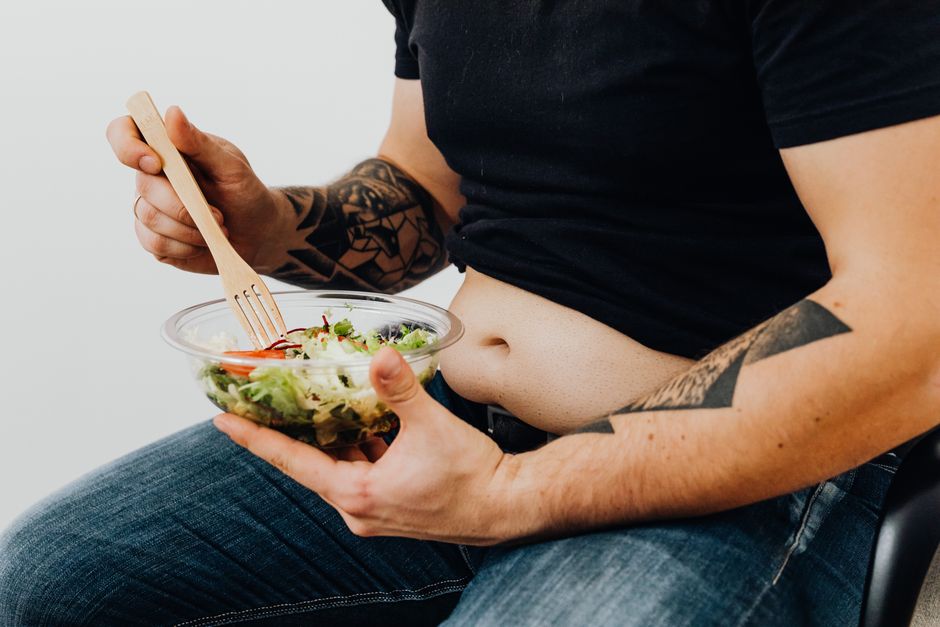
No food burns belly fat directly. That idea sells books, but it is not how human metabolism works. What certain foods can do is help you eat fewer calories without feeling hungry, steady your blood sugar, and support the hormone and metabolic conditions that decide where your body stores fat. The foods that “work” are the ones that make a calorie deficit easier to hold. The ones that “don’t” are the ones people believe are helping when they are actually working against them.
What Foods Actually Help Reduce Belly Fat?
Belly fat, especially the deep visceral fat packed around your organs, responds to the same thing all fat responds to: a sustained calorie deficit. There is no food that melts it. But some foods make that deficit far easier to reach and maintain, and a few have effects on appetite and blood sugar that matter more than their calorie count alone.
Protein-rich foods top the list. Protein takes more energy to digest than fat or carbs, and it is the most filling macronutrient. Eggs, fish, poultry, Greek yogurt, cottage cheese, beans, and tofu all help you stay full on fewer calories. This is one of the better-supported findings in nutrition research.
Fiber-rich foods come next. Vegetables, whole fruits, legumes, oats, and whole grains slow digestion and blunt blood sugar spikes. Soluble fiber in particular forms a gel in the gut that slows emptying, which extends fullness. Legumes are unusually useful here because they deliver both protein and fiber in the same bite.
Foods high in water and volume — soups, leafy greens, cucumbers, tomatoes, melons — let you eat a large physical amount of food for very few calories. Studies on satiety consistently find that people eat a fairly consistent weight of food per day. If that weight is mostly water-rich vegetables, total calories drop without conscious restriction.
None of this is exotic. The pattern that shows up again and again in the research is a diet built on vegetables, fruit, legumes, whole grains, lean protein, and healthy fats, with minimal added sugar and refined starch. That pattern is associated with less visceral fat over time. The individual “superfoods” matter far less than the overall pattern.
Does Sugar and Refined Carbs Cause Belly Fat?
Sugar and refined carbohydrates do not cause belly fat on their own. Excess calories cause fat gain, and where that fat lands depends on genetics, hormones, sex, and age. But refined carbs and added sugars make overeating much easier, and that is where the real problem sits.
Liquid sugar is the clearest case. Sugary drinks deliver a large number of calories with almost no satiety signal. You can drink 300 calories of soda and still be hungry an hour later. Solid food of the same calorie count would have blunted your appetite. This is why sugar-sweetened beverages are among the most consistently linked items to weight gain and visceral fat in observational research.
Refined starches — white bread, white rice, most crackers and snack foods — behave similarly. They digest quickly, spike blood sugar, and tend to come packaged with fat and salt that make them hard to stop eating. They are not uniquely fattening compared to other calories, but they are easy to overconsume.
One clarification worth making: fruit is not the enemy here. Whole fruit contains fiber and water that slow sugar absorption, and the evidence does not support blaming fruit for belly fat. The problem is added sugar and refined starch, not the sugar naturally present in an apple.
What Foods People Think Kill Belly Fat But Don’t
This is where most of the disappointment lives. A long list of foods and drinks get marketed as fat-burning when the evidence is thin, absent, or actively contradicts the claim.
- Detox teas and “flat tummy” teas. Most contain laxatives or diuretics. They cause temporary water loss, not fat loss. No study has confirmed they reduce fat. Some have caused serious bowel problems with regular use.
- Apple cider vinegar. Some small studies suggest minor effects on appetite or blood sugar. The evidence is weak and inconsistent, and no large trial has shown it reduces belly fat. It is also hard on tooth enamel and the esophagus.
- Cayenne, green tea extract, and “metabolism boosters.” Green tea and caffeine can nudge energy expenditure slightly. The effect is small and does not translate into meaningful fat loss on its own. Capsaicin may mildly increase calorie burn in some studies, but the amounts needed are often uncomfortable.
- Celery, grapefruit, and “negative calorie” foods. The idea that some foods burn more calories to digest than they contain is false. No food works this way in any meaningful sense.
- Diet sodas and “zero calorie” sweet treats. These do not add calories, but they do not reduce belly fat either. Some research suggests they may keep sweet cravings alive, though the findings are mixed. They are not a fat-loss tool.
- Collagen powders and “belly fat” supplements. No clinical evidence currently confirms these reduce visceral fat. The supplement industry is largely unregulated, and most products have not been tested in human trials.
The common thread is that these products promise a shortcut around the one thing that actually works: eating fewer calories than you burn, sustained over time. Anything marketed as a shortcut around that is almost always selling hope, not results.





Why Visceral Fat Is Different From Other Fat
Visceral fat is the fat stored deep inside the abdomen, wrapped around the liver, pancreas, and intestines. It is not the same as the pinchable fat just under the skin, called subcutaneous fat. Visceral fat is metabolically active in ways that matter for health.
It releases inflammatory signals and free fatty acids directly into the liver through the portal vein. This is one reason visceral fat is more strongly linked to insulin resistance, type 2 diabetes, and heart disease than subcutaneous fat. It is also why doctors care more about waist circumference than about weight alone.
The good news is that visceral fat tends to respond relatively quickly to calorie restriction and exercise. When people lose weight, visceral fat often comes off earlier and faster than the fat you can see and pinch. This is one reason waist measurements can improve before the mirror shows much change.
This also explains why the type of food matters less than the total calorie balance and the overall dietary pattern. You cannot target visceral fat with a specific food. You reduce it by reducing overall fat stores, and the foods that help you do that are the ones already described: protein, fiber, vegetables, and whole foods that keep you full.
Do You Need to Avoid Certain Foods Entirely?
No single food needs to be banned for belly fat to come down. That framing sets people up for failure, because restriction tends to backfire. What matters is the pattern and the proportion.
That said, a few categories are worth limiting because they make overeating easy and add calories without nutrition:
- Sugar-sweetened beverages — soda, sweet tea, most fruit juice, energy drinks
- Refined grain snacks — chips, crackers, most packaged baked goods
- Fried foods and foods high in added fat and refined starch together
- Alcohol — it adds calories and tends to increase appetite and disrupt sleep
Alcohol deserves a specific mention. Heavy drinking is associated with increased belly fat in both men and women, and the pattern of central weight gain in heavy drinkers is well documented. Moderate drinking is a grayer area. The evidence does not support alcohol as a fat-loss aid, and it does not support heavy drinking as harmless.
The practical approach is not elimination but substitution. Swap soda for water or unsweetened drinks. Swap white bread for whole grain. Swap chips for nuts or fruit. These swaps reduce calories and improve the nutritional quality of what you eat, and they are easier to sustain than cutting entire food groups.
What Else Matters Besides Food?
Food is the biggest lever, but it is not the only one. Sleep, stress, and activity all affect where and how your body stores fat.
Short sleep is consistently linked to higher levels of the hunger hormone ghrelin and lower levels of the fullness hormone leptin. People who sleep poorly tend to eat more, and the extra calories often come from refined carbs and sugar. Chronic stress raises cortisol, which is associated with increased appetite and, over time, more abdominal fat storage. These are not excuses — they are real physiological inputs.
Physical activity matters too, but not in the way most people assume. You cannot out-exercise a bad diet, and spot reduction — doing crunches to lose belly fat — does not work. What exercise does is help preserve muscle during weight loss, improve insulin sensitivity, and support the calorie deficit. Both aerobic activity and resistance training have evidence behind them. Resistance training in particular helps maintain lean mass, which keeps resting metabolism from dropping as much during weight loss.
The bottom line is unglamorous. There is no food that kills belly fat. There are foods that help you eat less without suffering, and there are foods and drinks that quietly add calories and work against you. The first group is worth building your diet around. The second is worth noticing. Everything else is marketing.
Frequently Asked Questions
What foods kill belly fat the fastest?
No food kills belly fat quickly, because fat loss depends on a sustained calorie deficit rather than any single food. Protein, fiber, vegetables, and legumes help the most because they keep you full on fewer calories.
Does apple cider vinegar reduce belly fat?
Some small studies suggest minor effects on appetite or blood sugar, but no large trial has shown it reduces belly fat. The evidence is weak and inconsistent.
Can certain foods target belly fat specifically?
No. You cannot spot-reduce fat with food or exercise. Visceral fat does tend to come off relatively early during weight loss, but that happens because overall fat stores are dropping, not because of any specific food.
Is fruit bad for belly fat?
No. Whole fruit contains fiber and water that slow sugar absorption, and the evidence does not support blaming fruit for belly fat. Added sugar and refined starch are the real issue.
