
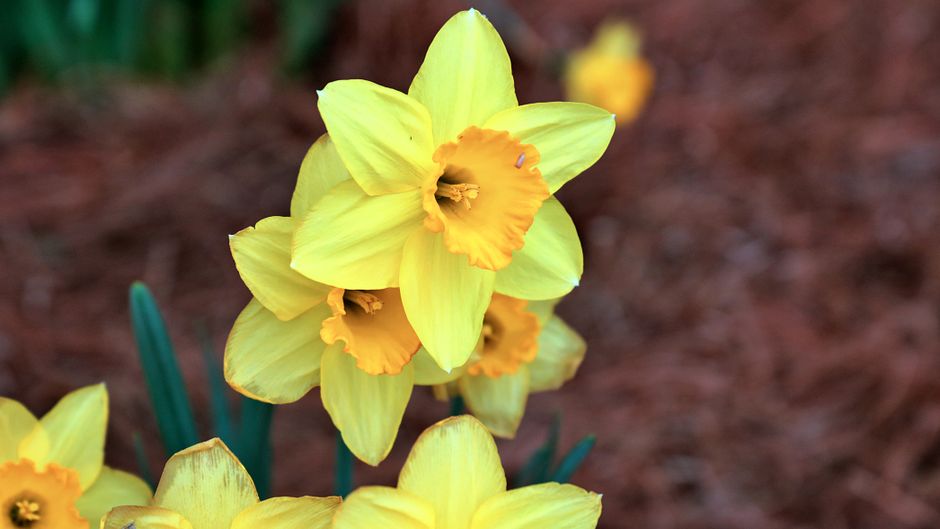
Daffodils are among the most reliable spring flowers, but their buds and leaves often disappear before they ever bloom. The culprits are usually deer, rabbits, squirrels, or slugs, depending on where you live. The most effective way to stop them is to identify the animal by the damage pattern, then apply a targeted barrier or repellent before the next feeding event.
Which Animals Eat Daffodils?
Daffodils contain a toxic alkaloid called lycorine. This makes them bitter and unpalatable to most mammals. Deer and rabbits typically avoid the bulbs and leaves entirely when other food is available.
However, hungry animals will eat almost anything. In late winter and early spring, when natural forage is scarce, deer and rabbits will browse on daffodil foliage and flower buds despite the taste. Squirrels dig up bulbs, usually in autumn when they are storing food for winter. Voles and mice eat bulbs from below ground, and slugs chew holes in leaves and flowers during damp weather.
Birds rarely cause significant damage. Some species, like crows, may pull up young shoots while searching for insects, but this is incidental rather than deliberate feeding.
Signs of Damage by Animal Type
Look closely at the damage before choosing a control method. Each animal leaves a distinct pattern.
Deer tear foliage, leaving ragged edges. They graze from the top down, so the tallest shoots disappear first. Deer do not dig, so bulb damage rules them out.
Rabbits leave clean, sharp cuts at a 45-degree angle, as if the stems were snipped with scissors. They feed low to the ground and rarely reach higher than about 18 inches.
Squirrels dig shallow holes around the planting area. They usually take bulbs shortly after planting in autumn. If you see scattered soil and missing bulbs, squirrels are the likely cause.
Voles and mice tunnel underground. The plant may fail to emerge in spring, and when you dig down, the bulb has hollowed-out sections or is missing entirely.
Slugs and snails leave irregular holes in leaves and flowers, often with a silvery slime trail on nearby soil or foliage. Damage appears overnight, especially after rain.
Do Deer Actually Eat Daffodils?
Deer generally avoid daffodils, which is why gardeners plant them as a natural deer deterrent. The bulbs and leaves contain sharp crystals called raphides, along with lycorine, which cause burning and irritation in the mouth.
But this protection is not absolute. During harsh winters or early spring droughts, deer browse on plants they normally avoid. Young deer that have not yet learned to avoid bitter plants may also sample daffodils. If deer pressure is extreme, they will strip the foliage completely.
Research consistently shows that daffodils rank low on deer preference lists. In most suburban areas, deer will eat tulips and hostas long before touching daffodils. If deer are eating your daffodils, food is likely very scarce, or the deer population in your area is unusually high.




What Eats Daffodil Bulbs Underground?
Underground damage is almost always caused by rodents. Voles are the most common bulb predators in North America. These small, mouse-like creatures tunnel through soil and feed on bulbs throughout winter.
Mice also eat bulbs, particularly in areas with heavy ground cover or tall grass that provides shelter. Squirrels dig up bulbs in autumn, but they usually eat them immediately rather than storing them.
Bulb damage from rodents is often discovered only in spring when the plant fails to emerge. By then the damage is done, and the bulb is usually beyond saving. Prevention must happen at planting time.
Wire mesh baskets are the most reliable defense. Plant bulbs inside a hardware cloth cage buried in the soil. The mesh should be fine enough to exclude voles but large enough to allow shoot growth. Galvanized hardware cloth with 1/4-inch openings works well for most situations.
How To Stop Animals From Eating Daffodils
The most effective strategy combines multiple approaches. No single method works in every situation, and animals adapt quickly to repellents.
Physical barriers are the most reliable option. Fencing is the only method that consistently excludes deer. A fence must be at least 8 feet tall to stop deer from jumping over, though some gardeners succeed with 6-foot fences in areas of low deer pressure. For rabbits, a 2-foot-tall chicken wire fence, buried 6 inches deep, is usually sufficient.
Repellents work by taste or smell. Predator urine, putrescent egg solids, and garlic-based sprays are common commercial options. These require reapplication after rain and as new growth emerges. Rotate between two different repellents every few weeks, because animals habituate to a single scent.
Planting strategies reduce vulnerability. Interplant daffodils with other spring bulbs that animals prefer, such as tulips, which may distract pests. Plant daffodils in clusters rather than single rows, making them harder for animals to harvest efficiently.
Timing matters for bulb-eating rodents. If squirrels dig up newly planted bulbs in autumn, delay planting until late fall when squirrels have finished their food-caching season. In colder regions, this means planting after the first hard frost.
Natural Daffodil Pest Control Methods
Some gardeners avoid chemical repellents and prefer natural methods. Evidence for many home remedies is limited, but a few approaches have practical merit.
Blood meal is a common organic repellent. Its strong odor deters deer and rabbits, and it adds nitrogen to the soil. However, it must be reapplied after rain, and it can attract dogs and rodents.
Human hair, soap bars, and reflective objects are frequently recommended but have no reliable evidence of effectiveness. Some gardeners report success; others see no change. These methods are inexpensive and harmless, so they may be worth trying, but do not rely on them as your primary defense.
Companion planting with strongly scented plants, such as alliums or marigolds, may help mask the scent of daffodils. The evidence here is largely anecdotal. Some research suggests that interplanting can reduce deer damage, but results vary widely by region and deer population density.
When To Apply Daffodil Pest Control
Timing is often more important than the specific control method. Apply repellents before damage begins, not after.
For autumn-planted bulbs, protect the soil surface immediately after planting. This is when squirrels and voles are most active. For spring growth, apply repellents when shoots first emerge from the soil, typically 2 to 4 weeks before flowering.
Reapply repellents on a schedule, not just after rain. Most commercial repellents last 2 to 4 weeks under dry conditions. In wet spring weather, reapply every 7 to 10 days.
Remove potential shelter for rodents. Clear tall grass, brush piles, and dense ground cover near your daffodil beds. Voles and mice prefer areas where they can move without being seen by predators.
Are Daffodils Toxic To Animals That Eat Them?
Daffodils are toxic to most animals. The entire plant contains lycorine, but the bulb has the highest concentration. Ingestion can cause vomiting, drooling, diarrhea, and abdominal pain in dogs and cats.
In severe cases, larger quantities of bulbs can cause cardiac arrhythmias or respiratory depression. The ASPCA Animal Poison Control Center lists daffodils as toxic to dogs, cats, and horses.
Most wild animals that sample daffodils eat only small amounts before the bitter taste stops them. This is why daffodil damage from deer and rabbits is often limited to a few nibbled leaves rather than complete destruction. If an animal consumes a large quantity, it will likely become ill, which reinforces the avoidance behavior.
If you suspect your pet has eaten daffodil bulbs or foliage, contact your veterinarian or a pet poison control hotline immediately. Do not wait for symptoms to develop.
Frequently Asked Questions
What animal is eating my daffodil bulbs?
Voles and mice are the most common bulb-eaters, tunneling underground to reach them. Squirrels dig up bulbs in autumn, usually shortly after planting.
Will daffodils grow back after deer eat them?
Deer damage to foliage in early spring usually does not kill the plant, but the bulb may not flower the following year. The leaves are needed to photosynthesize and store energy for the next season.
Do coffee grounds keep animals away from daffodils?
No reliable evidence supports coffee grounds as an effective animal deterrent. Some gardeners report success, but most research shows animals quickly habituate to the scent.
What is the best repellent for daffodils?
Putrescent egg solids are among the most effective commercial repellents for deer and rabbits. Physical barriers like fencing remain the only consistently reliable method.
