
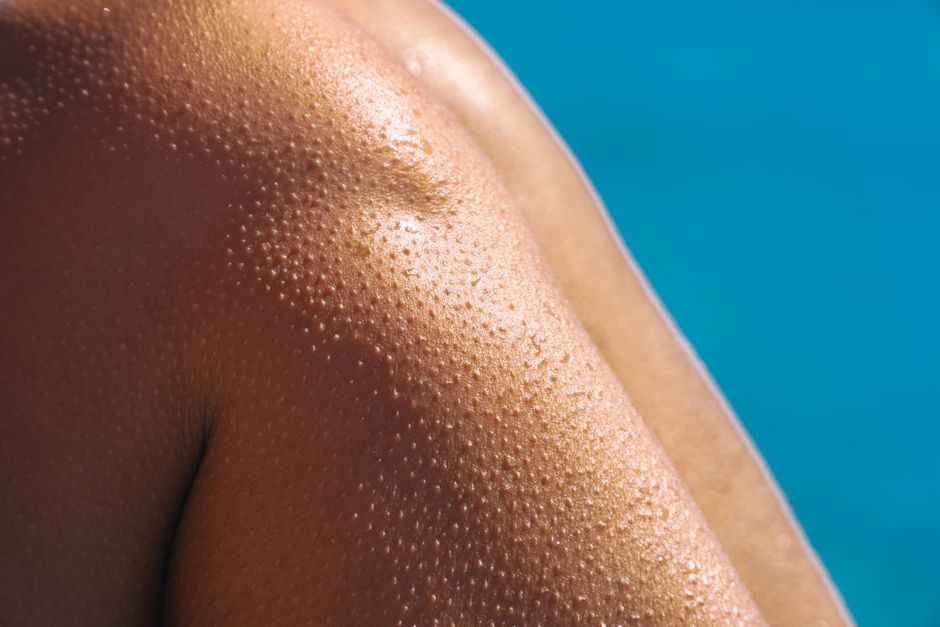
Uneven skin texture shows up as a visible change in how light reflects off your face. You might see small bumps, shallow pits, rough patches, or enlarged pores that make your skin look dull and feel coarse. These changes are not the same as wrinkles or sagging, though they often appear alongside them. Texture issues are about the surface of the skin, not its firmness.
What Does Uneven Skin Texture Look Like Bumps Pits More
Uneven skin texture has several distinct appearances. The most common are bumps, pits, and rough patches, but each has a different cause and looks different under light.
Bumps are raised areas on the skin. They can be tiny and flesh-colored, like closed comedones, or red and inflamed, like papules. Some bumps are actually blocked hair follicles that never come to a head. Others are small cysts that sit deeper in the skin. When you run your finger over them, they feel like grains of sand or small peas under the surface.
Pits are the opposite. These are depressed areas that look like small dents or craters. They are most often the result of past acne that damaged the collagen in the skin. When the skin healed, it formed scar tissue that pulls downward, leaving a shadowed hollow. Pits are easiest to see in side lighting because the shadow makes them more obvious.
Rough patches feel like sandpaper. They look dry and flaky, and they often have a slightly different color than the surrounding skin. These patches can be caused by sun damage, dehydration, or a buildup of dead skin cells that the skin has not shed normally.
Enlarged pores are another form of texture. They look like small dots, often on the nose, cheeks, and forehead. Pores are not muscles, so they do not open and close. When they look large, it is usually because they are stretched by oil, dead skin, or age-related loss of collagen around the opening.
What Causes the Skin Surface to Become Uneven
The skin has three layers, and texture problems can start in any of them. The outermost layer, called the stratum corneum, is made of dead skin cells held together by a lipid barrier. When this layer sheds unevenly, the surface feels rough. This is common with dry skin or after sun exposure.
The middle layer, the dermis, contains collagen and elastin. These proteins give skin its structure. When collagen breaks down faster than it is replaced, the skin loses support. This can make pores look larger and allow pits to form where scar tissue pulls the surface down. Sun exposure is the main cause of collagen breakdown over time.
Oil production also plays a role. The sebaceous glands produce oil that travels up the hair follicle to the skin surface. When oil mixes with dead skin cells and becomes trapped, it forms a plug. That plug is a comedo, the technical name for a clogged pore. If the plug stays closed, it looks like a small white bump. If it opens and oxidizes, it looks like a blackhead.
Genetics influence all of these processes. Some people naturally produce more oil, have larger pores, or heal acne with more scarring. You cannot change your genetics, but you can manage the factors that make texture worse.
How Acne Scars Create Pits and Depressions
Acne scars form when inflammation damages the skin deeply enough to destroy collagen. The body responds by laying down new collagen, but the repair is not always smooth. The result is a depression in the skin surface.
There are three main types of depressed acne scars. Ice pick scars are narrow and deep, like a puncture wound. They look like the skin was pierced with a sharp instrument. Boxcar scars are wider with sharp, defined edges. They look like small craters. Rolling scars have sloping edges and make the skin look wavy or undulating.
Not every pit is a true scar. Some depressed areas are caused by loss of fat under the skin, which happens with age. Others are the result of repeated picking or squeezing of pimples, which damages tissue that would otherwise heal flat.
Treatment for pits depends on the type and depth. No single treatment works for all scars. Dermatologists may recommend laser resurfacing, microneedling, chemical peels, or filler injections. The evidence for these treatments varies, and results depend heavily on the skill of the clinician and the characteristics of the scar.





Why Skin Texture Worsens With Age
Age changes the skin at every level. Cell turnover slows down. In your twenties, skin cells turn over roughly every 28 days. By your fifties, that cycle can take 40 to 60 days. Slower turnover means dead cells accumulate on the surface, making it look dull and feel rough.
Collagen production also declines with age. The body makes less collagen each year, and the collagen it does make becomes less organized. This reduces the structural support under the skin. Pores appear larger because the tissue around them is weaker. Fine lines become more visible because the skin has less bounce.
Sun damage accelerates all of these changes. Ultraviolet radiation breaks down collagen and elastin fibers. It also damages the DNA in skin cells, which can lead to precancerous growths that feel rough or scaly. The cumulative effect of sun exposure over decades is the single most preventable cause of uneven texture.
Hormones also matter. Estrogen supports collagen production and skin thickness. After menopause, estrogen levels drop, and skin becomes thinner and drier. This makes texture irregularities more noticeable because there is less healthy tissue to mask them.
How to Tell Texture Issues From Other Skin Problems
Texture changes are sometimes confused with other conditions. Keratosis pilaris causes small, rough bumps, usually on the upper arms and thighs. It is harmless and caused by a buildup of keratin blocking hair follicles. It rarely appears on the face.
Milia are tiny white cysts that look like small pearls under the skin. They are common on the face, especially around the eyes. Milia are not acne and do not respond to acne treatments. They often resolve on their own but can be removed by a dermatologist.
Seborrheic keratoses are brown, waxy growths that look like they are stuck onto the skin. They are common after age 40 and are benign. They feel rough or scaly and can be mistaken for texture problems, but they are actual growths, not surface irregularities.
If a rough patch is new, growing, bleeding, or changing color, see a dermatologist. Skin cancer can sometimes look like a rough or scaly area. A biopsy is the only way to know for certain.
What Actually Improves Skin Texture
The evidence for texture treatments varies. Some approaches are well supported. Others are mostly marketing.
Sun protection is the most proven step. Daily sunscreen use prevents further collagen breakdown and allows the skin to repair itself. No treatment works if sun damage continues.
Retinoids are the most studied topical treatment for texture. They increase cell turnover and stimulate collagen production. Prescription tretinoin has the strongest evidence. Over-the-counter retinol is weaker but still effective for mild texture issues. Both can cause irritation, redness, and peeling in the first weeks of use.
Chemical exfoliants like alpha-hydroxy acids and beta-hydroxy acids remove dead skin cells from the surface. Glycolic acid and lactic acid are common AHAs. Salicylic acid is a BHA that works inside the pore. These improve roughness and dullness, but they do not change scar depth or pore size permanently.
Microneedling creates tiny wounds in the skin to stimulate collagen. Some studies show improvement in acne scars and overall texture. Results take multiple sessions and are gradual. The procedure carries a risk of infection and hyperpigmentation, especially in darker skin tones.
Laser treatments can resurface the skin and tighten collagen. Fractional lasers are commonly used for scars and texture. These treatments are effective but expensive, require downtime, and carry risks including burns and pigment changes.
Moisturizers help rough texture caused by dryness. They do not change the structure of the skin. A moisturizer with ceramides or hyaluronic acid can make the surface feel smoother temporarily, but the effect stops when you stop using it.
What Does Not Work Despite What Marketing Says
Many products claim to fix skin texture with no evidence behind them. Pore vacuums, pore strips, and scrubbing brushes remove surface debris but do not change pore size or scar depth. The effect is temporary and can irritate the skin if used aggressively.
Jade rollers and gua sha tools feel nice and reduce temporary puffiness, but no clinical evidence shows they change skin texture. They do not stimulate collagen or alter the skin surface.
Collagen creams and serums cannot deliver collagen into the skin. The collagen molecule is too large to penetrate the stratum corneum. These products may moisturize, but they do not rebuild skin structure.
Facial oils can smooth the surface by filling in tiny gaps between skin cells. This is a cosmetic effect only. Oils do not treat the underlying cause of uneven texture.
Frequently Asked Questions
Can uneven skin texture be fixed permanently?
Some causes can be treated effectively, but no treatment stops the aging process. Acne scars can be improved significantly with procedures like laser resurfacing or microneedling, but the result depends on the scar type and your skin’s healing response.
Is uneven skin texture the same as wrinkles?
No. Wrinkles are lines and folds caused by collagen loss and repeated muscle movement. Texture refers to the surface quality of the skin, including bumps, pits, roughness, and pore size. They often occur together but are separate issues.
How long does it take to see results from retinol?
Most people see smoother texture after 8 to 12 weeks of consistent use. The skin needs time to adjust, and irritation in the first few weeks is common. Results continue to improve with longer use.
Does drinking water improve skin texture?
Severe dehydration makes skin look dull and rough, but normal water intake does not measurably change skin texture. The skin’s appearance depends more on sun protection, collagen health, and cell turnover than on how much water you drink.
