
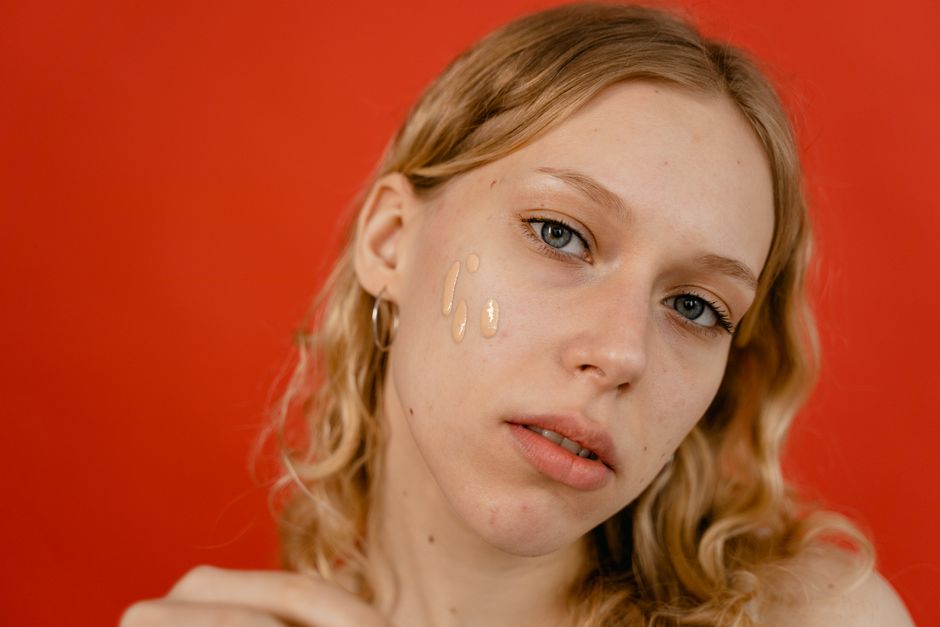
You have probably heard the claim that pale skin makes you look heavier, or that a tan has a slimming effect. It is a common piece of beauty advice, repeated in magazines and on social media. But is there any truth to it? The short answer is yes, but not because of the color itself. The effect comes from how light and shadow interact with the shape of your face and body. Pale skin does not add fat, but it can change how your contours are perceived, which can create an optical illusion of a fuller appearance.
Why Does Pale Skin Create a Fuller Appearance?
The effect is about contrast, not color. When your skin is very light, it reflects more light evenly. This reduces the natural shadows that define your bone structure. Those shadows, like the hollows of your cheeks or the line of your jaw, are what create a sculpted look.
When you have a tan, the skin absorbs more light. This increases the contrast between the high points of your face, like your cheekbones and nose, and the lower points, like your temples and under your chin. That contrast is what makes features look more defined and, by comparison, leaner.
This is a well-established principle in art and photography. Artists use shading to create the illusion of depth and volume. A flat, evenly lit surface looks wider than the same surface with strong shadows. Your skin tone works the same way. Pale skin acts like a flat, bright surface, while tanned skin adds depth.
Is It the Skin Tone or the Lighting?
Lighting plays a massive role in this effect. In dim or diffuse lighting, everyone looks flatter and less defined. In bright, direct light, shadows are sharper and features look more chiseled. This is why photographers and makeup artists obsess over lighting angles.
If you are in a room with soft, overhead lighting, your skin tone matters less. The lack of directional light means there are few shadows to begin with. In this case, pale skin and tanned skin will look similar in terms of facial definition.
However, in natural sunlight or strong directional light, the difference becomes clear. A tanned complexion will create more visible contouring. A pale complexion will reflect more light, washing out those shadows. So the “pale makes you look fat” effect is strongest in bright, direct light.
What Role Does Makeup Play in This?
Makeup is the most direct way to test this theory. Contouring is based entirely on the principle of light and shadow. You apply a darker product to areas you want to recede, like the sides of your nose or under your cheekbones. You apply a lighter product to areas you want to bring forward, like the center of your forehead or the tops of your cheeks.
This works on any skin tone. The technique is about creating contrast, not about adding color. A person with pale skin can achieve the same sculpted look as a person with a tan by using makeup to add shadows. This confirms that the slimming effect is not about the pigment itself, but about the perception of depth.
It is also worth noting that a self-tanner can have a similar effect. It darkens the skin, which naturally increases the contrast between facial features. This is why people often feel they look leaner after a spray tan. The tan is not changing their body shape; it is changing how the light hits their skin.




Does This Apply to the Whole Body?
The same principle applies to your body, but the effect is less dramatic. On your torso or limbs, there is less complex bone structure to define. The main effect comes from the overall silhouette. A tan can create a subtle shadow along the sides of your body, which can make the edges appear slightly more recessed.
However, this is a minor optical effect. It does not change your actual body shape or size. Clothing, posture, and muscle tone have a far greater impact on how your body looks than your skin color. A tan might make you feel more confident, which can improve your posture, but the color itself is not changing your measurements.
Some research suggests that people associate tanned skin with health and vitality. This perception can influence how others view your overall appearance. But this is a psychological and cultural association, not a physical one. It does not change the actual shape of your body.
Is There Any Real Science Behind This?
There is no major scientific study that directly measures whether pale skin makes you look fatter. This is a question of visual perception, not a medical condition. The science that applies here is the study of how the human brain interprets light, shadow, and contrast to understand three-dimensional shapes.
This field, called visual perception, has shown that the brain relies heavily on shading cues to determine the shape of objects. When you remove shading, objects appear flatter and less defined. When you increase shading, objects appear more three-dimensional and sculpted. Your skin tone is one factor that controls how much shading is visible.
So while no one has conducted a clinical trial on “pale skin and body weight perception,” the underlying physics and biology are well understood. The effect is real, but it is an optical illusion. It is not a reflection of your actual body composition.
Does Pale Skin Actually Make You Look Fatter?
Yes, it can, but only in a specific way. Pale skin reduces the natural shadows on your face and body. This reduction in contrast makes your features look less defined. The result is that you may appear softer or fuller than you would with a tanned complexion.
This is not the same as looking fat. It is about looking less sculpted. The difference is subtle, and it is heavily influenced by lighting and the angle of the viewer. It is also a temporary perception. Your actual body fat percentage, muscle mass, and bone structure are unchanged.
If you are concerned about this effect, you have options. You can use makeup to create contrast. You can use a self-tanner to darken your skin temporarily. Or you can simply ignore it. The effect is minor for most people, and it does not change your health or your actual appearance.
Healthy Skin Matters More Than Skin Color
It is important to separate this optical effect from actual skin health. A pale complexion can be perfectly healthy. Many people have naturally light skin that is well cared for and radiant. The issue is not the color itself, but the lack of contrast.
Focusing on skin health is more productive than focusing on skin color. Well-hydrated, smooth skin reflects light more evenly, which can actually minimize the appearance of texture and fine lines. This can be a positive thing, even if it reduces the sculpted look.
Sun exposure is a serious risk factor for skin cancer. Chasing a tan for aesthetic reasons can be dangerous. If you want the slimming effect of a tan, a self-tanner is a safer choice than sunbathing or using a tanning bed. The risk of skin damage is not worth a temporary change in how your face looks in a mirror.
Frequently Asked Questions
Does pale skin really make you look heavier?
Yes, it can create an optical illusion of a fuller appearance by reducing the shadows that define your bone structure. It does not change your actual body shape or weight.
Will a tan make me look thinner?
A tan can make you look more sculpted because it increases contrast and shadows on your skin. This is a visual effect, not a change in your actual body size.
Is it safe to tan to look slimmer?
Sun exposure and tanning beds increase your risk of skin cancer, so they are not a safe way to change your appearance. Self-tanners are a safer option if you want the look of a tan.
Can makeup make pale skin look more defined?
Yes, contouring with makeup creates the shadows that pale skin naturally lacks. This can give the same sculpted effect as a tan without any sun exposure.
