
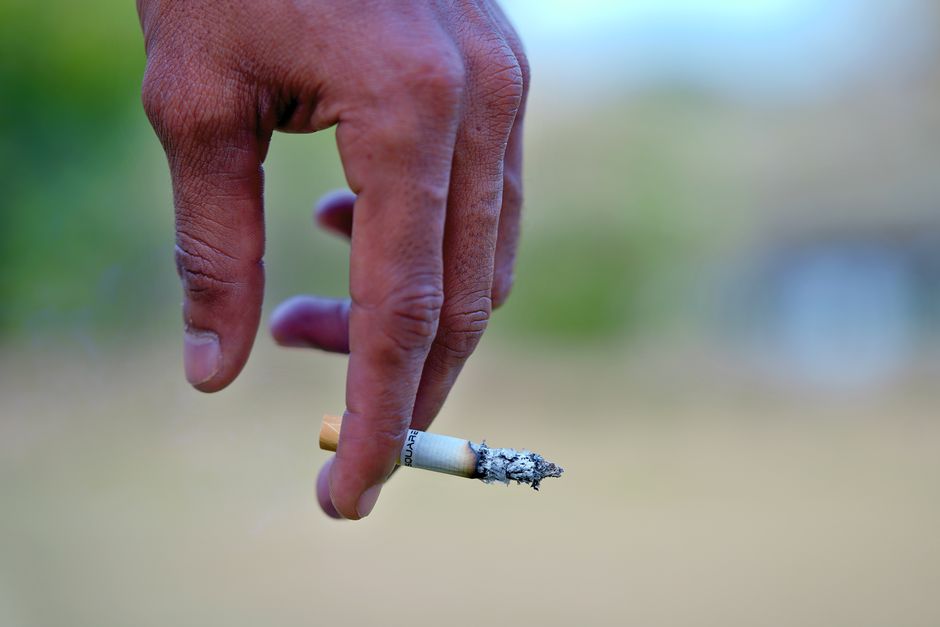
Smoking damages your lungs in ways that begin with the very first cigarette and continue for as long as you smoke. It destroys the tiny air sacs where oxygen enters your blood, paralyzes the cilia that sweep out debris, and triggers chronic inflammation that narrows your airways. Over time, this damage leads to conditions including chronic obstructive pulmonary disease (COPD), emphysema, chronic bronchitis, and lung cancer.
What Happens to Your Lungs When You Smoke?
Your lungs are built for gas exchange. Air travels down the trachea, through branching airways called bronchi and bronchioles, and finally reaches clusters of tiny sacs called alveoli. There are roughly 480 million alveoli in healthy adult lungs. Their walls are incredibly thin — about one cell thick — so oxygen can pass into your bloodstream and carbon dioxide can pass out.
Cigarette smoke contains thousands of chemical compounds. At least 70 of them are known carcinogens, according to the U.S. Centers for Disease Control and Prevention. When you inhale, these chemicals travel the full length of your respiratory tract.
Three things happen almost immediately:
- Cilia stop working. These tiny hair-like structures line your airways and sweep mucus, dust, and bacteria upward to be coughed out. Smoke paralyzes them. Without working cilia, debris accumulates.
- Mucus production increases. Your airways respond to irritation by producing more mucus. Combined with paralyzed cilia, this creates the smoker’s cough — the body’s attempt to clear what cilia can no longer move.
- Airways become inflamed. The immune system floods the area with inflammatory cells. This is meant to repair damage, but with repeated exposure, the inflammation itself becomes destructive.
These changes happen in every smoker. The severity and speed of progression vary from person to person, but the underlying process is the same.
How Does Smoking Cause Emphysema?
Emphysema is the permanent destruction of alveolar walls. Once alveoli are destroyed, they do not grow back.
The mechanism involves two parallel processes. First, the chemicals in smoke directly damage the cells lining the alveoli. Second, smoke triggers an inflammatory response that releases enzymes — particularly elastase — that break down elastin, the protein that gives alveolar walls their elasticity. Normally, a protective protein called alpha-1 antitrypsin keeps elastase in check. Smoking disrupts this balance.
As alveolar walls break down, individual sacs merge into larger, floppier spaces. This sounds like more room for air, but it is the opposite. These larger spaces have less surface area for gas exchange. They also lose the elastic recoil that helps push air out when you exhale.
The result: air gets trapped in the lungs. Breathing out becomes difficult. People with emphysema often describe feeling like they cannot get enough air, even though their lungs are technically full.
This damage is irreversible. That is a critical point. Unlike some smoking-related changes, emphysema does not reverse after quitting. Stopping smoking halts further destruction, but existing damage remains.
What Is Chronic Bronchitis and How Does Smoking Cause It?
Chronic bronchitis is defined clinically as a productive cough lasting at least three months per year for two consecutive years, with no other explanation. It is one of the two main conditions under the COPD umbrella (the other being emphysema).
Smoking causes chronic bronchitis through persistent irritation of the bronchial lining. The airways respond by:
- Enlarging mucus-producing glands in the airway walls
- Increasing the number of mucus-secreting cells
- Thickening the airway walls through chronic inflammation
More mucus plus narrowed airways equals obstruction. Air has a harder time moving through. The cough becomes chronic because the body is constantly trying to clear excess mucus it cannot move on its own.
Many people with chronic bronchitis also have emphysema. The two conditions frequently overlap, and most people with COPD have features of both. This is why doctors now describe COPD as a spectrum rather than two separate diseases.





Does Smoking Cause Lung Cancer?
Yes. Cigarette smoking is the leading cause of lung cancer, responsible for the majority of cases. The U.S. Surgeon General has concluded that smoking causes lung cancer in both men and women.
The mechanism is direct DNA damage. Carcinogens in tobacco smoke — including polycyclic aromatic hydrocarbons and nitrosamines — bind to DNA in lung cells and cause mutations. Some of these mutations affect genes that control cell growth, such as TP53 and KRAS. When those genes are damaged, cells can begin dividing uncontrollably.
Not every smoker develops lung cancer. Genetics, duration of smoking, number of cigarettes per day, and environmental exposures all influence individual risk. But the relationship between smoking and lung cancer is one of the most well-established cause-and-effect relationships in medicine.
Lung cancer risk does decrease after quitting. The decline begins within a few years and continues over time. However, former smokers retain some elevated risk compared to people who never smoked.
What Does Secondhand Smoke Do to Lungs?
Secondhand smoke is not a milder version of firsthand smoke. It contains the same toxic chemicals, and in some cases higher concentrations of certain compounds because it burns at lower temperatures.
Nonsmokers exposed to secondhand smoke absorb nicotine and other chemicals. Research consistently shows that secondhand smoke exposure increases the risk of lung cancer in nonsmokers. It also worsens asthma, increases respiratory infections, and can cause coughing and reduced lung function.
Children are especially vulnerable. Their lungs are still developing, and they breathe faster than adults. Secondhand smoke exposure in childhood is linked to more frequent respiratory infections, slower lung growth, and increased risk of asthma.
There is no established safe level of secondhand smoke exposure. Even brief exposure can trigger immediate effects, such as platelet activation and reduced coronary flow reserve. The evidence supports eliminating exposure entirely, not reducing it.
Can Your Lungs Recover After Quitting Smoking?
Some recovery happens. Some does not.
Within days to weeks of quitting, cilia begin to regain function. Mucus clearance improves. Coughing may temporarily increase as the lungs clear accumulated debris — this is a sign of recovery, not worsening.
Within months, airway inflammation decreases. Lung function decline slows to a rate closer to normal aging. For people without established COPD, this means their lungs age more like a nonsmoker’s from that point forward.
What does not recover: destroyed alveoli. Emphysema is permanent. Scar tissue in the airways does not disappear. If someone has already developed COPD, quitting stops or slows progression but does not reverse existing structural damage.
The earlier you quit, the more lung function you preserve. But quitting at any age improves outcomes compared to continuing to smoke. This is one of the few areas in medicine where the evidence is genuinely unambiguous.
Is Smoking the Only Cause of Lung Damage?
No. Other inhaled irritants can produce similar damage:
- Vaping. The long-term lung effects of e-cigarettes are not yet well established because these products have not been in widespread use long enough for large longitudinal studies. Some short-term studies show airway irritation and inflammation. The evidence does not support the claim that vaping is harmless, nor does it yet support precise long-term risk estimates.
- Air pollution. Fine particulate matter (PM2.5) is linked to reduced lung function and increased respiratory disease. The World Health Organization identifies air pollution as a major risk factor for chronic respiratory diseases.
- Occupational exposures. Asbestos, silica, coal dust, and other workplace irritants can cause lung damage and increase cancer risk, especially in combination with smoking.
- Genetic conditions. Alpha-1 antitrypsin deficiency is a genetic disorder that causes emphysema even in nonsmokers. Smoking accelerates it dramatically.
The lungs have limited ways to respond to injury. Whether the insult is smoke, pollution, or occupational dust, the downstream damage — inflammation, airway remodeling, alveolar destruction — follows similar pathways.
How Is Smoking-Related Lung Damage Diagnosed?
Doctors use several tools to assess lung damage from smoking:
- Spirometry. This is the primary test for COPD. You breathe into a device that measures how much air you can exhale and how quickly. A ratio of forced expiratory volume in one second (FEV1) to forced vital capacity (FVC) below 0.70 after bronchodilator use supports a COPD diagnosis.
- Chest imaging. X-rays and CT scans can show emphysema, air trapping, and masses. Low-dose CT screening is recommended for certain high-risk adults — generally those aged 50 to 80 with a significant smoking history. Specific eligibility criteria vary, so discuss screening with your doctor.
- Pulse oximetry and arterial blood gases. These measure how well your lungs are transferring oxygen into your blood.
- Symptom assessment. Chronic cough, sputum production, shortness of breath, and wheezing are all relevant. Doctors also ask about frequency of respiratory infections.
Many people with early smoking-related lung damage have no symptoms. Spirometry can detect obstruction before symptoms appear. This is one reason screening matters for people with a smoking history.
Frequently Asked Questions
How quickly does smoking damage your lungs?
Damage begins with the first cigarette — cilia paralysis and airway inflammation start immediately. Clinically detectable COPD typically develops after years of smoking, but the biological process starts right away.
Can lungs heal after 20 years of smoking?
Partially. Cilia recover, inflammation decreases, and lung function decline slows after quitting. Emphysema and airway scarring do not reverse, but quitting at any point preserves remaining lung function.
Does smoking cause lung cancer in every smoker?
No. Not every smoker develops lung cancer, but smoking is the leading cause and significantly increases risk. The risk depends on how long and how much someone smoked, along with genetic and environmental factors.
Is emphysema reversible?
No. Emphysema destroys alveolar walls permanently, and they do not regenerate. Treatment focuses on slowing progression, managing symptoms, and improving quality of life.
