
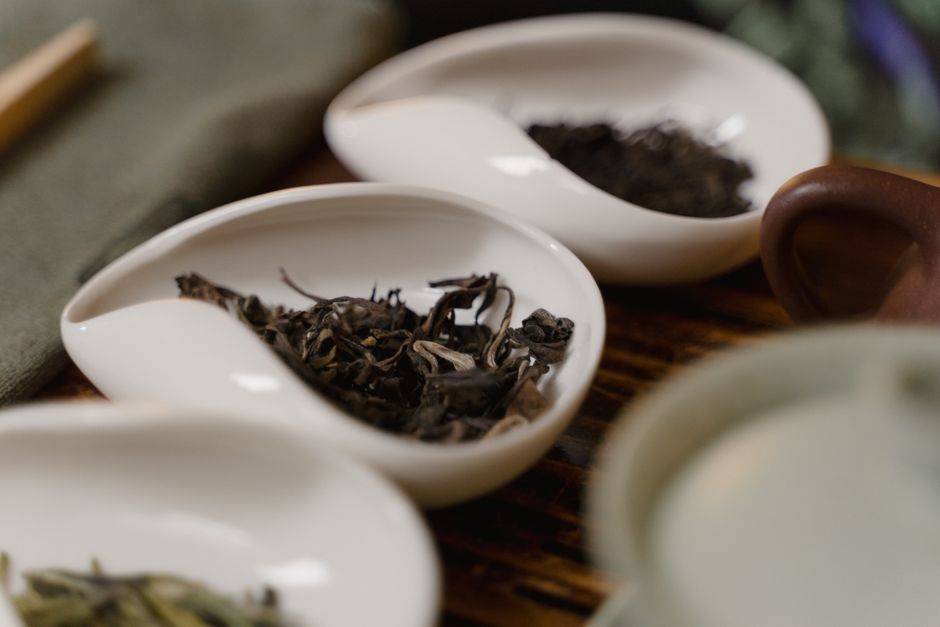
Oolong tea sits between green and black tea, and its taste reflects that middle ground. It is not grassy like green tea or bold like black tea. Instead, oolong offers a range from light and floral to dark and toasty, often with a creamy or buttery feel in your mouth. The flavor depends heavily on how long the tea leaves were oxidized, which is the key process that sets oolong apart from other teas.
What Does Oolong Tea Taste Like Compared to Green and Black Tea?
Think of green tea as lightly steamed vegetables or fresh grass. Black tea is more like dark chocolate or dried fruit. Oolong tea lives in between these two points. The oxidation level of the leaves determines exactly where it falls.
Low-oxidation oolongs, around 10 to 20 percent, taste closer to green tea. They have floral notes like orchid or jasmine. The flavor is light, clean, and slightly sweet. High-oxidation oolongs, around 60 to 80 percent, taste closer to black tea. They bring roasted nuts, caramel, or even dark stone fruit flavors. The color of the brewed tea also shifts from pale yellow-green to deep amber as oxidation increases.
One key difference is the mouthfeel. Oolong tea has a thicker, creamier texture than most green or black teas. This comes from the unique processing that bruises the leaf edges and allows partial oxidation. The result is a smooth, almost buttery sensation that many drinkers describe as luxurious.
Does the Roast Level Change the Taste of Oolong Tea?
Yes, roasting is a major factor in oolong flavor. After oxidation, some oolongs are roasted over charcoal or in a drum. Light roasting keeps floral and fruity notes. Heavy roasting transforms the flavor into something deeper and more complex.
A lightly roasted oolong like Tie Guan Yin (Iron Goddess of Mercy) tastes of orchids and cream. It is delicate and refreshing. A heavily roasted oolong like Da Hong Pao (Big Red Robe) tastes of dark chocolate, roasted barley, and dried dates. The roast adds a warmth that lingers in the throat.
Some people report that heavily roasted oolongs have a mineral or rocky taste. This is often called “yan yun” or rock rhyme in Chinese tea culture. It is a subtle flavor that comes from the soil where the tea plants grow, not from the roast itself. Research published in the Journal of Agricultural and Food Chemistry has identified specific volatile compounds created during roasting, such as pyrazines and furans, that contribute to these toasty, nutty notes.
What Are the Different Types of Oolong Tea and Their Flavors?
Oolong tea is not one flavor. It is a family of flavors. The main categories include Chinese oolongs, Taiwanese oolongs, and darker oolongs like Wuyi rock teas.
| Type | Oxidation Level | Flavor Profile | Mouthfeel |
|---|---|---|---|
| Tie Guan Yin (Chinese) | Low (10-20%) | Orchid, floral, light sweetness | Creamy, smooth |
| Dan Cong (Chinese) | Medium (30-50%) | Honey, stone fruit, orchid | Thick, lingering finish |
| Wuyi Rock Teas (Chinese) | High (50-70%) | Roasted nuts, dark chocolate, mineral | Full, warming |
| Taiwanese High Mountain | Low to Medium (15-30%) | Milk, cream, tropical fruit | Buttery, velvety |
| Oriental Beauty (Taiwanese) | High (60-80%) | Honey, dried fruit, spice | Rich, syrupy |
Taiwanese high mountain oolongs are famous for a creamy, milky flavor that some people describe as buttered toast. This is not from added milk. It comes from specific tea plant cultivars and processing methods. Oriental Beauty, also called Bai Hao Oolong, is unique because it is grown with leafhoppers that bite the leaves, triggering a chemical response that produces honey-like flavors.



Why Does Oolong Tea Taste Creamy or Buttery?
The creamy texture of many oolongs is not in your head. It comes from natural compounds in the tea leaves. One key compound is L-theanine, an amino acid that creates a smooth, umami sensation. L-theanine also promotes relaxation without drowsiness.
Another factor is the processing itself. Oolong leaves are withered in the sun, then shaken or tossed in baskets to bruise the edges. This bruising starts oxidation only at the leaf margins, leaving the centers green. The partial oxidation creates a balance of flavors and thickens the liquor. Some studies suggest that the rolling and shaping of oolong leaves releases oils and polysaccharides that make the tea feel creamier in the mouth.
Some people report that certain oolongs taste like milk or butter. This is especially true for Jin Xuan (Milk Oolong) from Taiwan. The milky flavor is natural, not added. However, some lower-quality Milk Oolongs on the market are artificially flavored with milk or butter essence. Real Jin Xuan has a subtle, clean creaminess, not a strong dairy taste.
Can the Taste of Oolong Tea Vary Between Brews?
Yes, oolong tea is known for changing flavor across multiple infusions. High-quality oolongs can be steeped five to ten times. The first steep is often light and floral. The second or third steep is more developed and rich. Later steeps become more subtle but still flavorful.
This happens because oolong leaves are rolled tightly. They unfurl slowly as water penetrates. Each infusion extracts different compounds at different rates. The first steep pulls out lighter floral and fruity compounds. Later steeps release deeper roasted notes and tannins. Some tea drinkers consider the third or fourth steep the best because the leaves have fully opened and the flavor is most balanced.
This is a genuine difference from green or black tea, which typically peaks in the first one or two steeps. If you drink oolong, it is worth steeping the leaves multiple times to experience the full range. Discarding the leaves after one steep means missing most of the flavor.
What Should You Avoid When Trying Oolong Tea for the First Time?
Do not judge oolong by the first sip of a poorly brewed cup. Water temperature matters. Oolong is best brewed with water around 195°F to 205°F, not boiling. Boiling water can scorch delicate leaves and make the tea bitter. Use about one teaspoon of leaves per eight-ounce cup.
Do not steep for too long. Two to three minutes is usually enough for the first infusion. Oversteeping releases too much tannin, which makes the tea astringent and drying in the mouth. If you prefer stronger flavor, use more leaves instead of steeping longer.
Do not buy pre-bagged oolong tea if you want the real experience. Most bagged oolongs are low-quality fannings or dust. They lack the complexity and multiple-infusion potential of whole-leaf oolong. Loose-leaf oolong from a reputable seller is the only way to taste what this tea actually offers.
Common misconception: oolong tea is not naturally sweet in the way that fruit juice is sweet. The sweetness in oolong is subtle and floral, more like honeydew or sugarcane than table sugar. If you expect a sugary taste, you will be disappointed. The sweetness is a background note that complements the floral or roasted flavors.
Frequently Asked Questions
Does oolong tea taste like green tea?
Low-oxidation oolongs can taste similar to green tea with floral notes, but they are creamier and less grassy. High-oxidation oolongs taste nothing like green tea.
Is oolong tea bitter?
Oolong tea can be bitter if oversteeped or brewed with boiling water. Properly brewed oolong is smooth, with mild astringency but not harsh bitterness.
Can I add milk and sugar to oolong tea?
You can, but it masks the natural flavor. Most oolong drinkers prefer it plain to taste the floral, creamy, or roasted notes. Milk is rarely added to oolong.
How many times can I steep oolong tea leaves?
High-quality oolong leaves can be steeped five to ten times. Each infusion reveals a slightly different flavor as the leaves unfurl.
