
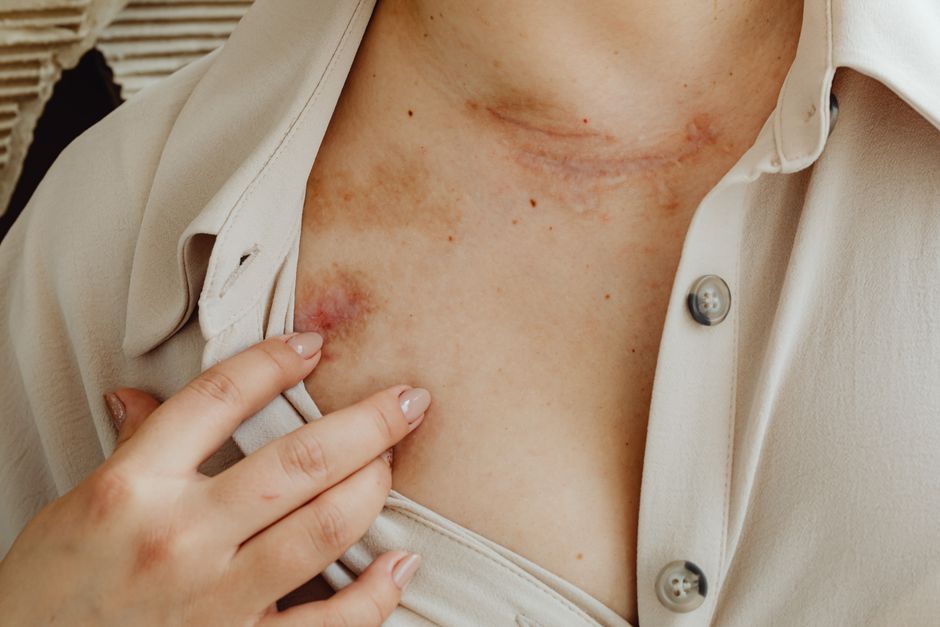
An ointment is a semi-solid preparation you spread on skin. It sits on the surface and forms a barrier that slows water loss, keeps the wound bed moist, and gives medication or protective ingredients time to work. That moisture matters: a wound that stays slightly damp heals faster than one left to dry out and scab.
But “ointment” is a broad word. It covers everything from plain petroleum jelly to antibiotic creams to steroid preparations. What each one does to your skin depends entirely on what is in it. The base does one job. The active ingredient does another. Understanding both is the difference between using the right product and guessing.
What Does Ointment Do To Your Skin And Wounds?
An ointment does two things at once. It protects the surface, and it changes the environment underneath.
The base — usually petrolatum, lanolin, or a similar fatty substance — is the protective part. It is thick, occlusive, and largely water-repellent. When you spread it over intact skin, it reduces how much water evaporates from the surface. When you spread it over a wound, it does the same thing while also keeping outside contaminants and friction away from the injured tissue.
That moisture change is not cosmetic. Skin cells that rebuild a wound — keratinocytes and fibroblasts — migrate better across a moist surface than a dry one. A dry wound forms a hard scab, and that scab becomes a barrier the new cells have to work around. A moist wound lets them move across more directly. This is why moist wound healing became a standard principle in wound care, and why occlusive dressings and ointments are used together so often.
The active ingredient is the second job, and it varies. Some ointments carry antibiotics. Some carry steroids to calm inflammation. Some carry antifungals, anesthetics, or keratolytics that soften thick skin. The base gets the ingredient to the surface and holds it there. What happens next depends on the drug.
How Is Ointment Different From Cream and Lotion?
The difference is mostly about oil and water.
Ointments are almost all oil or fat, with little to no water. Creams are a mix of oil and water — roughly half and half. Lotions are mostly water with a little oil. That single difference changes how each one behaves on skin.
- Ointment: thickest, most occlusive, longest-lasting. Best for dry, cracked, or damaged skin and for wound beds.
- Cream: lighter, spreads easily, absorbs faster. Good for larger areas of skin where an ointment would feel greasy.
- Lotion: thinnest, mostly water, evaporates quickly. Useful for hairy areas and for mild dryness.
The trade-off is simple. The more occlusive the product, the more it traps moisture — and the more it can feel heavy, shiny, or warm. Ointments are the most effective at holding water in. They are also the least pleasant to wear over large areas.
One practical point people miss: an ointment does not “absorb into” skin the way a lotion does. Much of it stays on the surface as a film. That film is the point. It is doing its job by sitting there.
How Does Ointment Help a Wound Heal?
A wound goes through overlapping phases: bleeding and clotting, inflammation, new tissue formation, and remodeling. Ointment does not change the biology of those phases directly. What it does is remove obstacles.
Three obstacles matter most.
The first is dryness. As covered above, a dry wound surface slows the migration of new cells. Keeping it moist helps.
The second is contamination. An occlusive layer reduces the chance that dirt, bacteria, and irritants reach the wound. It is not sterile and not a substitute for cleaning, but it is a physical barrier.
The third is friction and re-injury. A wound that sticks to a bandage gets torn open every time the dressing is changed. An ointment layer keeps the dressing from adhering to the wound bed, which means less disruption each time you change it.
What ointment does not do is speed up healing beyond what a clean, moist, protected environment already allows. Plain petroleum jelly and a medicated antibiotic ointment will both keep a minor wound moist. The antibiotic adds a drug — and that drug has its own trade-offs, covered below.

Do Antibiotic Ointments Work Better Than Plain Ones?
For most minor cuts and scrapes in healthy people, the evidence does not show a meaningful healing advantage from antibiotic ointment over plain petroleum jelly.
Both keep the wound moist. Both protect it. The antibiotic adds a small reduction in surface bacteria, but for a clean minor wound in someone with a normal immune system, that reduction usually does not change the outcome. This is a point where common practice and the evidence do not fully line up — antibiotic ointment is widely used, but its advantage over a plain occlusive is limited for routine minor wounds.
There are real downsides to routine antibiotic ointment use. One is allergic contact dermatitis, which is more common with certain antibiotic ingredients than many people realize. Another is that repeated use of topical antibiotics can contribute to bacterial resistance. Neither is a reason to avoid them when they are genuinely needed, but both are reasons not to reach for them by default.
Antibiotic ointment makes more sense when a wound is more likely to get infected, or when a clinician has recommended it. For a small kitchen cut that you have cleaned, plain petroleum jelly and a bandage do the same protective job.
When Should You Not Use Ointment on a Wound?
Ointment is not right for every wound. Some situations call for a clinician rather than a tube from the medicine cabinet.
- Deep, gaping, or puncture wounds. These may need cleaning, closure, or a tetanus check. Ointment on the surface does not address what is underneath.
- Wounds with signs of infection. Spreading redness, warmth, swelling, pus, or fever suggest an infection that a topical product will not treat.
- Burns beyond a small superficial one. Burn care follows its own rules, and the wrong product can trap heat or delay proper treatment.
- Animal or human bites. These carry a higher infection risk and often need medical evaluation.
- Wounds in people with diabetes, poor circulation, or weakened immunity. Healing and infection risk are different in these groups, and a minor-looking wound can become serious.
There is also a category of skin problem that ointment can make worse. Weeping, oozing, or already-macerated skin — skin that is overly soft and broken down from too much moisture — does not benefit from an occlusive layer. Adding ointment traps more moisture where there is already too much.
What Ointment Does to Skin That Is Not Wounded
Ointment is not only for cuts. It is one of the most effective tools for dry, cracked, or irritated skin.
When skin loses water faster than it can hold it, it becomes rough, tight, and prone to cracking. An occlusive ointment slows that water loss directly. This is why plain petroleum jelly is a standard recommendation for dry skin and for protecting skin that is repeatedly exposed to water, cold, or irritants.
For conditions like eczema, ointments are often favored over creams because they are less likely to sting broken skin and because they hold moisture longer. Some ointments also contain active drugs — hydrocortisone for inflammation, for example — and those are used under a clinician’s guidance, not as general moisturizers.
One caution applies broadly. Ointments are occlusive, which means they can also trap whatever is already on the skin. On clean, intact skin that is fine. On skin that has not been cleaned, or over a rash that is oozing or infected, sealing the surface can work against you.
How Should You Apply Ointment?
For a minor wound, the general approach is straightforward.
Clean the wound first with mild soap and water, and remove any dirt or debris. Pat the surrounding skin dry. Apply a thin layer of ointment — enough to cover the surface with a light film, not a thick glob. Cover with a bandage or dressing if the wound is in a spot that will rub against clothing or get dirty. Change the dressing and reapply as needed, and wash your hands before and after.
A thin layer is genuinely enough. More ointment does not mean more effect. It mostly means more mess and, on some skin, more chance of clogged pores or irritation.
If a wound is not improving, is getting more painful, or is showing any sign of infection, stop self-treating and get it looked at. Ointment is a support, not a treatment for a wound that is going the wrong way.
Frequently Asked Questions
Does ointment actually help a wound heal faster?
It helps by keeping the wound moist and protected, which supports the natural healing process better than leaving it dry. It does not speed healing beyond what a clean, moist, covered wound already achieves.
Is plain petroleum jelly as good as antibiotic ointment for a small cut?
For most minor, clean wounds in healthy people, the evidence does not show a clear healing advantage from antibiotic ointment over plain petroleum jelly. Both keep the wound moist and protected.
Can you put too much ointment on a wound?
Yes. A thin film is enough, and a thick layer does not improve results. Excess ointment can clog pores, irritate skin, and make dressings messy without adding benefit.
Should you use ointment on a wound that is already infected?
No. Signs like spreading redness, warmth, swelling, pus, or fever need medical evaluation, and a topical ointment will not treat an infection like that.
