
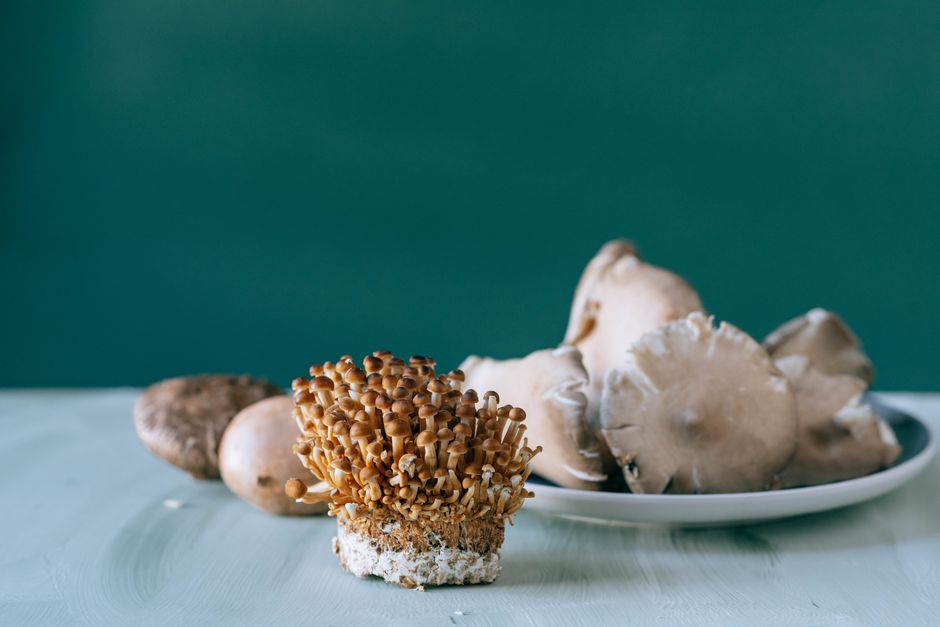
Mushroom coffee is regular coffee blended with dried, powdered mushrooms. The mushrooms used are not the ones you slice into a pan. They are varieties like lion’s mane, chaga, reishi, and cordyceps, chosen for compounds studied in lab and animal research. The drink tastes mostly like coffee, with an earthy note. What it does for you is simpler than the marketing suggests: it delivers caffeine and the same coffee compounds as regular coffee, plus a small amount of mushroom material whose effects in humans are not well established.
What Is Mushroom Coffee, Exactly?
Mushroom coffee is ground coffee mixed with powdered mushroom extract. That is the whole product. The mushroom portion is usually 10 to 40 percent of the blend, though the exact amount varies by brand and is often not clearly stated on the label.
The mushrooms are typically processed into a powder using hot water extraction or drying and grinding. The goal is to concentrate certain compounds, mainly beta-glucans and other polysaccharides. Some products also contain triterpenes, which are compounds found in reishi and related mushrooms.
This matters because the form of the mushroom affects what you actually get. A whole dried mushroom ground into powder contains fiber and other material. An extracted powder contains a concentrated fraction of specific compounds. Labels rarely make this distinction clear, and independent testing has found that some mushroom coffee products contain little to no detectable mushroom material at all.
The caffeine content is another variable. Most mushroom coffee blends contain less caffeine than a standard cup of coffee because the coffee portion is diluted with mushroom powder. Some brands mix coffee with mushroom extract at a ratio that keeps caffeine close to normal. Others cut it substantially. If you are drinking mushroom coffee to reduce caffeine, check the label. If you are drinking it for the mushrooms, the evidence is much thinner than the packaging implies.
What Does Mushroom Coffee Do For You?
Mushroom coffee gives you caffeine, which reliably improves alertness and concentration in the short term. That effect comes from the coffee, not the mushrooms. The mushroom portion adds compounds that have shown immune and cognitive activity in laboratory and animal studies, but human trials are limited and results are mixed.
Here is what the research actually supports:
- Caffeine effects: Well established. Caffeine blocks adenosine, a molecule that builds up in your brain and makes you feel sleepy. Blocking it keeps you alert. This is true of mushroom coffee and regular coffee alike.
- Cognitive effects from lion’s mane: Early-stage. Some small human studies suggest lion’s mane may support certain aspects of cognition, but the trials are small, short, and not consistent. Larger studies are needed before any conclusion can be drawn.
- Immune effects from beta-glucans: Mixed. Beta-glucans from certain mushrooms have been studied for immune modulation, but findings vary by mushroom type, preparation method, and dose. No clinical guidelines recommend mushroom coffee for immune support.
- Stress and relaxation from reishi: Weak evidence. Reishi has a long history in traditional medicine and some small studies suggest calming effects, but the evidence is not strong enough to call it established.
No large, well-controlled human trial has confirmed that drinking mushroom coffee produces meaningful health benefits beyond what the coffee alone provides. That does not mean the mushrooms do nothing. It means the evidence is not there yet.
Does Mushroom Coffee Have Less Caffeine Than Regular Coffee?
Usually yes, but not always. A standard 8-ounce cup of brewed coffee contains roughly 95 milligrams of caffeine. Mushroom coffee blends vary widely. Some contain about half that amount. Others are close to regular coffee because the manufacturer uses a small proportion of mushroom powder.
If caffeine reduction is your goal, mushroom coffee can help, but you need to read the label. Caffeine content is not always listed. When it is, compare it to the 95 milligram reference for regular coffee.
If you are sensitive to caffeine, mushroom coffee is not automatically a safe choice. It still contains caffeine unless it is explicitly labeled decaf. The mushroom powder does not cancel out caffeine’s effects.





Are the Health Claims About Mushroom Coffee Supported?
Most health claims about mushroom coffee are not supported by strong human evidence. The marketing often borrows from laboratory research and presents it as if it applies directly to drinking a cup of coffee. It does not work that way.
Lab studies use concentrated extracts on cells or in animals. The doses are often much higher than what you get from a cup of mushroom coffee. The route of exposure is different. The species is different. A finding in a petri dish or a mouse does not automatically translate to a person drinking a beverage.
This is not a reason to dismiss all mushroom research. It is a reason to be skeptical when a product claims to boost immunity, sharpen focus, or reduce stress based on studies that were never designed to test those outcomes in humans drinking that product.
Some clinicians recommend mushroom coffee as a gentler coffee alternative for people who want less caffeine. That is a practical suggestion, not an evidence-based recommendation. The distinction matters.
What Are the Risks and Side Effects?
For most healthy adults, mushroom coffee is unlikely to cause serious harm. But there are real considerations.
- Allergic reactions: If you are allergic to mushrooms, avoid mushroom coffee. Reactions can range from mild to severe.
- Digestive upset: Some people experience bloating, gas, or stomach discomfort from the mushroom powder or from the coffee itself.
- Medication interactions: Reishi and other mushrooms may interact with blood thinners, immunosuppressants, and certain diabetes medications. If you take any prescription medication, talk to your doctor before adding mushroom coffee to your routine.
- Pregnancy and breastfeeding: No clinical guidelines exist for mushroom coffee use during pregnancy or breastfeeding. The safest approach is to avoid it unless your doctor says otherwise.
- Product quality: Independent testing has found that some mushroom coffee products contain little to no actual mushroom material. Others may contain fillers or contaminants. There is no standardized regulation for these products in the US.
The lack of regulation is a genuine issue. Supplements and mushroom coffee blends are not held to the same standards as medications. What is on the label may not match what is in the bag.
How Does Mushroom Coffee Compare to Regular Coffee?
Regular coffee has a large body of research behind it. Drinking coffee is associated with a lower risk of several conditions, including type 2 diabetes and certain liver diseases. These findings come from large observational studies, which cannot prove cause and effect, but the pattern is consistent across many populations.
Mushroom coffee has no comparable body of evidence. It contains coffee, so it likely shares some of coffee’s benefits in proportion to how much coffee it contains. The mushroom portion adds compounds whose effects in humans are not well established.
If you enjoy mushroom coffee, there is no strong reason to stop. If you are drinking it specifically for health benefits beyond what coffee provides, the evidence does not support that expectation. You may be paying more for a product that does less than regular coffee in terms of proven effects.
A practical middle ground: drink regular coffee if you want coffee’s established benefits. Drink mushroom coffee if you like the taste or want less caffeine. Do not expect the mushrooms to do heavy lifting that the research does not support.
Should You Try Mushroom Coffee?
Whether to try mushroom coffee is a personal choice. It is not a medical treatment. It is a beverage.
If you are curious, there is little harm in trying it, provided you do not have a mushroom allergy and are not taking medications that interact with reishi or other mushrooms. Start with a small amount and see how you feel.
If you are looking for a specific health outcome, be clear about what the evidence shows. For alertness, the caffeine will work. For immune support, cognitive enhancement, or stress reduction, the evidence is not there. No study has confirmed those benefits from drinking mushroom coffee.
Talk to your doctor if you have any health conditions or take prescription medications. This is especially important if you are pregnant, breastfeeding, or managing a chronic illness. The honest position is that mushroom coffee is a low-risk beverage for most people, but it is not a proven health intervention.
Frequently Asked Questions
Does mushroom coffee actually contain mushrooms?
It should, but independent testing has found that some products contain little to no detectable mushroom material. Check for third-party testing or a clear label listing the mushroom species and amount.
Will mushroom coffee make me feel more focused?
Any focus boost likely comes from the caffeine, not the mushrooms. Lion’s mane has shown some cognitive effects in small studies, but the evidence is not strong enough to confirm it works in a cup of coffee.
Can I drink mushroom coffee while pregnant?
No clinical guidelines exist for mushroom coffee during pregnancy or breastfeeding. The safest approach is to avoid it unless your doctor says otherwise.
Is mushroom coffee safer than regular coffee?
It is not necessarily safer. It still contains caffeine unless labeled decaf, and the mushroom portion may interact with certain medications. Regular coffee has a much larger body of research behind it.
