
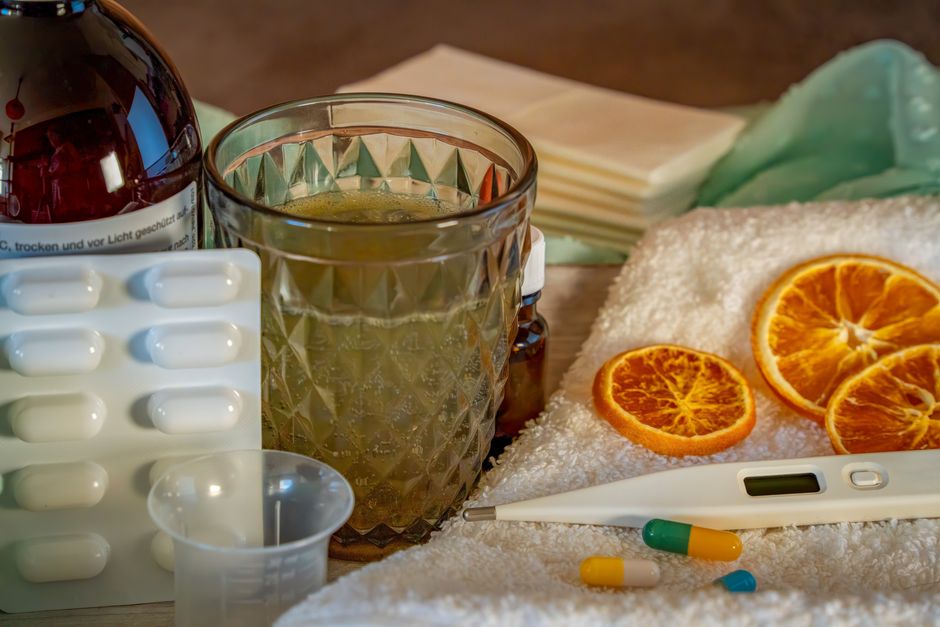
A fever is your body raising its internal temperature to fight off an infection. Chills are the body’s way of generating heat to reach that new, higher set point. The fastest way to get rid of fever and chills at home is to treat the fever with an over-the-counter medication like acetaminophen or ibuprofen, drink plenty of fluids, and dress in light layers that you can remove once the chills stop. Do not bundle up in heavy blankets, as this can trap heat and make the fever worse.
Why Do You Get Chills With A Fever?
Chills are a direct result of your brain’s thermostat being reset. When your immune system detects a virus or bacteria, it releases chemicals called pyrogens. These chemicals travel to the hypothalamus, the part of the brain that controls body temperature, and tell it to raise the temperature to make the environment less hospitable for the infection.
Once the hypothalamus sets a higher target, your body feels “cold” compared to that new target. To close the gap, your muscles contract and relax rapidly to generate heat. That is the shivering you feel. It is a physiological response, not a sign that you are actually cold. Understanding this helps explain why heavy blankets are counterproductive—they prevent the body from shedding excess heat once the fever peaks.
What Works Fastest To Break A Fever?
Over-the-counter fever reducers are the most reliable fast option. Acetaminophen (Tylenol) and ibuprofen (Advil, Motrin) are the two main choices. They work by blocking the production of prostaglandins, the chemicals that tell the brain to raise the temperature. Taking the correct dose usually starts lowering the fever within 30 to 60 minutes.
Do not give aspirin to children or teenagers recovering from a viral illness due to the risk of Reye’s syndrome, a rare but serious condition that causes swelling in the liver and brain. For adults, aspirin is an option, but acetaminophen and ibuprofen are generally preferred because they have fewer side effects on the stomach.
You should not alternate these medications unless a doctor or pharmacist tells you to. Alternating can lead to dosing errors, especially in children. Pick one medication and stick to it.
How To Take Fever Medication Safely
Always read the label for the correct dose based on age and weight. For children, weight is the most accurate measure. Do not guess. If you are unsure, call your pharmacist or pediatrician.
Never take more than the maximum daily dose. Acetaminophen is processed by the liver, and taking too much can cause liver damage. Ibuprofen can irritate the stomach lining and kidneys, so it should be taken with food. If you have liver disease, kidney disease, or a history of stomach ulcers, talk to a doctor before taking these medications.
How To Get Rid Of Fever And Chills Fast At Home
Start with medication, then focus on comfort and hydration. A lukewarm bath can help bring a fever down, but only if it is truly lukewarm, not cold. Cold water causes shivering, which generates more heat and raises your core temperature. The goal is to help the body lose heat, not shock it.
Wear one light layer of clothing. When the chills stop and you start feeling hot, remove that layer. This allows sweat to evaporate, which cools the skin. Keep the room at a comfortable temperature, around 68–72°F, and use a light sheet instead of a heavy comforter.
Hydration is critical. A fever increases fluid loss through sweating and faster breathing. Drink water, clear broth, or an electrolyte solution. Avoid alcohol and caffeinated drinks, as they can dehydrate you further. For children, oral rehydration solutions like Pedialyte are a good choice if they are not drinking enough.
Rest is not just a suggestion; it is part of the treatment. Your immune system uses significant energy to fight the infection. Physical activity raises your body temperature and pulls energy away from the immune response. Stay in bed or on the couch until the fever breaks.



When To Stop Treating A Fever
You do not need to treat every fever. A fever is a defense mechanism, and many doctors advise letting a mild fever run its course in otherwise healthy adults. The main goal of treatment is comfort, not reaching a “normal” temperature of 98.6°F.
For adults, treat a fever when it makes you feel miserable, generally at or above 101°F. For children, the approach is slightly different. Focus on how the child is acting, not just the number on the thermometer. A child with a 102°F fever who is playing and drinking well may not need medication. A child with a 100.5°F fever who is lethargic and refusing fluids likely does.
Do not wake a sleeping child to give fever medication. Sleep is more important for recovery than a few tenths of a degree of temperature reduction.
Home Remedies That Do Not Work
Several popular fever remedies are ineffective or potentially harmful. Rubbing alcohol on the skin is dangerous. It is absorbed through the skin and can cause alcohol poisoning, especially in children. Ice baths are also risky because they cause shivering, which raises core temperature, and they can lead to hypothermia.
Vinegar and onion poultices on the feet are traditional remedies with no scientific support. They do not lower core body temperature. Some research suggests that certain herbal teas may have mild fever-reducing properties, but the evidence is not strong enough to recommend them as a replacement for proven treatments.
The “feed a cold, starve a fever” saying is a myth. Your body needs calories and nutrients to mount an immune response. Eat light foods if you are hungry, such as toast, soup, or crackers. If you are not hungry, do not force it, but keep drinking fluids.
Signs You Need To See A Doctor
Most fevers resolve on their own within a few days. But some situations require medical attention. For adults, see a doctor if the fever reaches 103°F or higher, lasts more than three days, or is accompanied by a severe headache, stiff neck, rash, confusion, or difficulty breathing.
For children, the thresholds are different. Call a doctor immediately if your baby is under 3 months old and has a rectal temperature of 100.4°F or higher. This is considered an emergency because young infants have immature immune systems and are at higher risk for serious bacterial infections. For older children, seek medical care if the fever is above 104°F, lasts more than three days, or is accompanied by a seizure, severe pain, or a rash that does not blanch when pressed.
If a person has difficulty breathing, is confused, cannot stay awake, or has blue lips or face, call 911 immediately. These are signs of a medical emergency, not a routine fever.
What Causes A Fever To Spike At Night?
Fevers often feel worse at night, and there are two reasons for this. First, your body’s natural circadian rhythm naturally raises core temperature in the late afternoon and evening. Second, you are less distracted at night. When you are resting, you notice your symptoms more than when you are busy during the day.
This pattern is normal and does not indicate that the infection is getting worse. The same medication dosing schedule applies. If you take a dose before bed, it should cover you through the night. If you wake up sweating, that means the fever is breaking, which is a good sign.
Frequently Asked Questions
Can I take a cold shower to break a fever?
No. Cold water causes shivering, which generates more heat and can raise your core temperature. Use a lukewarm sponge bath or shower instead.
How much water should I drink with a fever?
Drink enough to keep your urine light yellow or clear, typically 8–10 glasses a day for adults. Smaller, frequent sips are easier than large amounts at once.
Is a fever of 102°F dangerous?
In an otherwise healthy adult, a fever of 102°F is not dangerous by itself. The underlying cause matters more than the number. Seek medical care if it lasts more than three days or comes with severe symptoms.
Should I let a fever run its course?
For mild fevers in healthy adults, letting it run is fine and may shorten the illness. Treat it when you feel miserable, not just because the thermometer shows a number.
