
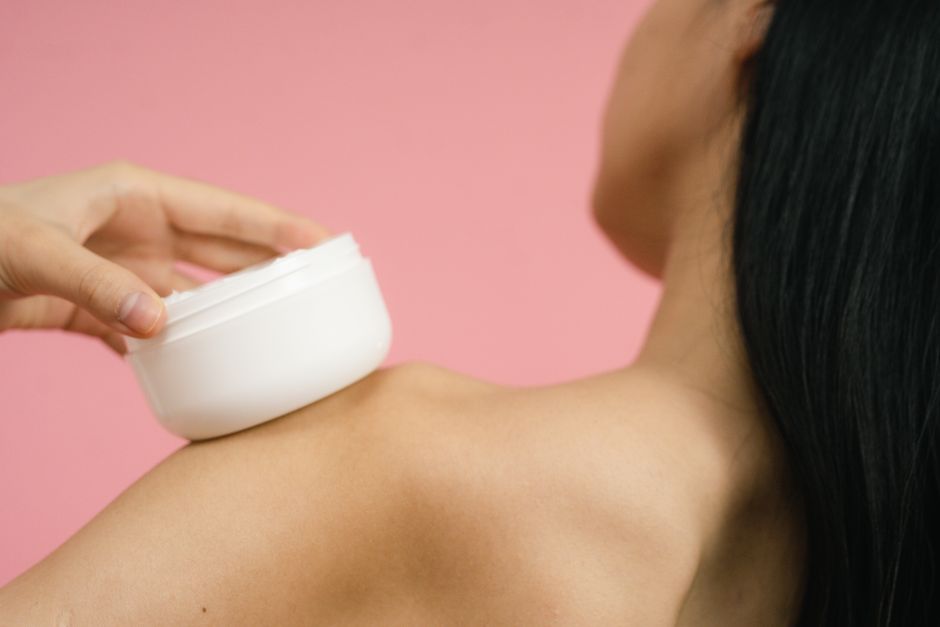
Hair moisturizer does not add water to your strands. It works by trapping the water that is already inside your hair and by smoothing the outer layer so moisture cannot escape as quickly. Dry hair lacks water in its cortex, the thick middle layer of the strand. A moisturizer acts as a barrier and a softening agent, which is why hair feels more flexible and looks less brittle after you use it.
How Moisturizer Actually Works On Your Hair
Hair is not alive like your skin. The strand you see is made of a protein called keratin. Because it is dead tissue, it cannot repair itself. It relies entirely on external care to maintain its condition.
Your hair has three layers. The outer layer is the cuticle. It is made of overlapping scales that lie flat when hair is healthy. When those scales lift, water escapes from the cortex below. This is what causes frizz, dullness, and breakage.
Moisturizers work on the cuticle. They contain ingredients that fill in the gaps between the lifted scales. This makes the surface smoother. It also reduces the amount of water that can evaporate from the cortex.
Think of it like a wooden floor. Sealing the floor keeps moisture in the wood and prevents cracking. Moisturizer does the same for hair. It seals the cuticle so internal water stays put.
What Does Moisturizer Do To Your Hair Over Time
Consistent use changes how hair behaves. Hair that is regularly moisturized is easier to comb. It tangles less because the strands are smoother and slide past each other instead of catching.
Regular moisturizing also reduces mechanical damage. When you brush or style dry, brittle hair, the strands snap. When the hair is flexible, it bends instead of breaking. Over weeks and months, this means fewer split ends and less overall breakage.
Moisturized hair also holds style differently. Curls and waves form more defined patterns when the strand has proper water content. Straight hair appears shinier because light reflects off a smooth cuticle rather than scattering off a rough one.
One thing to understand: moisturizer does not change your hair’s natural texture. It will not make curly hair straight or straight hair curly. It restores the condition your hair was meant to have, but it does not alter the shape of the follicle that determines your curl pattern.
Moisturizer vs. Conditioner vs. Hair Oil
These three products are often confused. They do different jobs, and using the wrong one can leave your hair worse off.
Conditioner is primarily a detangler. It coats the hair to reduce friction. Most conditioners contain small amounts of moisturizing ingredients, but their main job is slip and manageability.
Moisturizer focuses on water retention. It contains humectants like glycerin or honey that draw water into the hair, and emollients that hold it there. It is a deeper treatment than conditioner.
Hair oil does not add water at all. Oils are occlusives. They sit on top of the hair and physically block water from escaping. Oil alone will not hydrate dry hair. It only locks in whatever moisture is already present.
The most effective routine uses all three in sequence. Conditioner smooths. Moisturizer adds and holds water. Oil seals everything in. Skipping the moisturizer and going straight to oil is a common mistake that leaves hair dry underneath a shiny surface.




Why Some Hair Types Need More Moisture Than Others
Hair texture is determined by the shape of the hair follicle. Round follicles produce straight hair. Oval or twisted follicles produce curly hair. The shape changes how oil from your scalp travels down the strand.
Sebum is the natural oil your scalp produces. In straight hair, sebum travels easily from root to tip. This provides natural lubrication and moisture retention. In curly or coily hair, the bends in the strand slow the sebum down. It gets stuck near the scalp and never reaches the ends.
This is why people with tightly curled hair often need much more external moisture than people with straight hair. It is not a marketing claim. It is a physical consequence of hair geometry.
Porosity also matters. High-porosity hair has a cuticle that stays lifted. Water enters easily but also leaves easily. Low-porosity hair has a tightly packed cuticle. Water struggles to get in, but once it does, it stays. Knowing your porosity tells you whether to focus on getting water in or keeping water from leaving.
How To Apply Moisturizer For Best Results
Application technique matters more than most people realize. Moisturizer applied to dry hair behaves differently than moisturizer applied to damp hair.
For maximum water retention, apply moisturizer to damp hair. The humectants in the product pull water from the surface of the strand into the cortex. If the hair is completely dry, there is no surface water to pull. The humectants will instead pull water from the air, which is less effective.
Work the product through in sections. Rubbing it between your palms and then running your hands over the surface of your hair only coats the outside. You need to distribute it strand by strand for the cuticle to be fully covered.
Focus on the ends. The ends are the oldest part of your hair. They have been through the most washing, brushing, heat styling, and sun exposure. They are also the furthest from your scalp’s natural oil. They need the most help.
Do not apply moisturizer to the scalp unless the product is specifically designed for it. Most hair moisturizers contain ingredients that can clog scalp follicles and cause buildup. The scalp produces its own oil. It does not need additional moisture from a hair product.
Can You Moisturize Hair Too Much
Yes. Over-moisturizing is a real condition, sometimes called hygral fatigue.
When hair repeatedly absorbs water and then dries, the cuticle swells and contracts. Over time this weakens the bonds that hold the cuticle scales together. The cuticle begins to lift permanently, which makes hair feel mushy, limp, or overly soft to the point of being fragile.
This is more common with high-porosity hair because water enters the cortex so easily. People who apply water-based moisturizers multiple times a day without sealing them with an oil can trigger this condition.
The fix is balance. Moisturize when hair feels dry, not on a fixed schedule. Seal with an oil or butter after moisturizing. Give hair time to fully dry between applications so the cuticle is not constantly swollen.
If your hair feels gummy or stretches when wet, you have likely over-moisturized. Stop moisturizing for a week and use a protein treatment instead. Protein rebuilds the structure that excessive moisture has weakened.
What Moisturizer Cannot Fix
Moisturizer is not a repair treatment. It is a preventive and cosmetic measure. It cannot rebuild broken protein bonds.
If your hair is damaged from bleach, heat, or chemical relaxers, the structural damage is permanent. The only true fix is to cut off the damaged portion. Moisturizer will make the hair feel better temporarily, but it will not restore its original strength.
Moisturizer also cannot fix a dry scalp. Scalp dryness is a skin condition that requires a scalp treatment, not a hair product. Hair moisturizers are formulated for the strand, not the skin underneath.
Finally, moisturizer cannot change the fact that hair is dead tissue. No product can “revive” or “nourish” hair in the way those words are used in marketing. The product can only coat, soften, and protect what is already there.
Choosing The Right Moisturizer Ingredients
Read the ingredient list, not the front label. Marketing terms like “deep hydration” or “intense moisture” are not regulated. The actual ingredients determine what the product does.
Humectants draw water into the hair. Common ones include glycerin, honey, aloe vera, and panthenol. These are best for low-porosity hair that struggles to absorb water.
Emollients soften and smooth. Look for fatty alcohols like cetyl alcohol or cetearyl alcohol, and plant butters like shea butter or cocoa butter. These fill gaps in the cuticle.
Occlusives block water loss. Mineral oil, jojoba oil, and dimethicone fall into this category. These are best for high-porosity hair that loses water quickly.
A good moisturizer contains at least two of these three categories. A product with only humectants will pull water in but let it escape. A product with only occlusives will seal but never hydrate. The combination is what creates lasting moisture.
If a product label lists water as the first ingredient and then a silicone like dimethicone, you are mostly buying a sealant. That is fine for some hair types, but it will not add meaningful water content to severely dry hair.
Frequently Asked Questions
Does moisturizer make your hair grow faster?
No. Moisturizer affects the hair strand you can see, not the follicle beneath your scalp. Hair growth happens at the root and is determined by genetics, hormones, and overall health.
Can I use body lotion on my hair?
It is not recommended. Body lotions contain ingredients formulated for skin, which can build up on hair and leave it heavy or greasy. Use a product designed specifically for hair.
How often should I moisturize my hair?
It depends on your hair type and porosity. Straight hair may need moisture once or twice a week, while tightly curled hair may need it every two to three days. Apply when hair feels dry, not on a fixed schedule.
Is leave-in conditioner the same as moisturizer?
Not exactly. Leave-in conditioner is a lightweight detangler that provides some moisture. A dedicated moisturizer contains a higher concentration of humectants and emollients for deeper water retention.
