
Friable asbestos is any asbestos-containing material that can be crumbled, pulverized, or reduced to powder by hand pressure alone. The word “friable” comes from the Latin for “crumbly,” and in asbestos work it describes material in a weakened state — pipe insulation that flakes when touched, old ceiling tiles that shed dust, spray-on fireproofing that powders under a fingernail. The opposite term is “non-friable,” meaning the asbestos is locked tightly inside a solid binder such as cement, vinyl, or asphalt. That single distinction drives most asbestos regulation, most abatement cost, and most of the real-world risk.
What Does Friable Asbestos Mean in Plain Terms?
Friability describes how easily a material releases fibers when disturbed. If you can break it apart with your hands, it is friable. If you would need a saw, grinder, or sledgehammer to break it, it is generally non-friable.
This matters because asbestos only causes harm when its fibers become airborne and are inhaled. Fibers trapped inside a solid matrix stay there. Fibers in crumbly material can float into the air with the slightest movement — a slammed door, a draft from an HVAC system, a broom, or a repair job.
The U.S. Environmental Protection Agency defines friable asbestos as material that can be crumbled or reduced to powder by hand pressure. That definition is used across federal and state asbestos rules, and it is the line that determines how a material must be handled during renovation or demolition.
One clarification worth making: friable does not mean the material is currently releasing fibers. It means the material has the potential to release fibers easily. A crumbling pipe wrap in a sealed, undisturbed room is friable, but the air in that room may still be clean. The risk depends on both the condition of the material and whether anything disturbs it.
What Kinds of Asbestos Materials Are Friable?
Friable asbestos shows up most often in older buildings — roughly pre-1980s construction — and in specific industrial settings where heat resistance was the priority.
- Thermal pipe and boiler insulation, especially the corrugated paper and block form
- Spray-applied fireproofing on structural steel and beams
- Acoustic and decorative ceiling textures, including “popcorn” ceilings
- Some older ceiling tiles and wallboard joint compounds
- Attic and wall insulation, including vermiculite insulation that may contain asbestos
- Heat shields, gaskets, and rope seals in furnaces and boilers
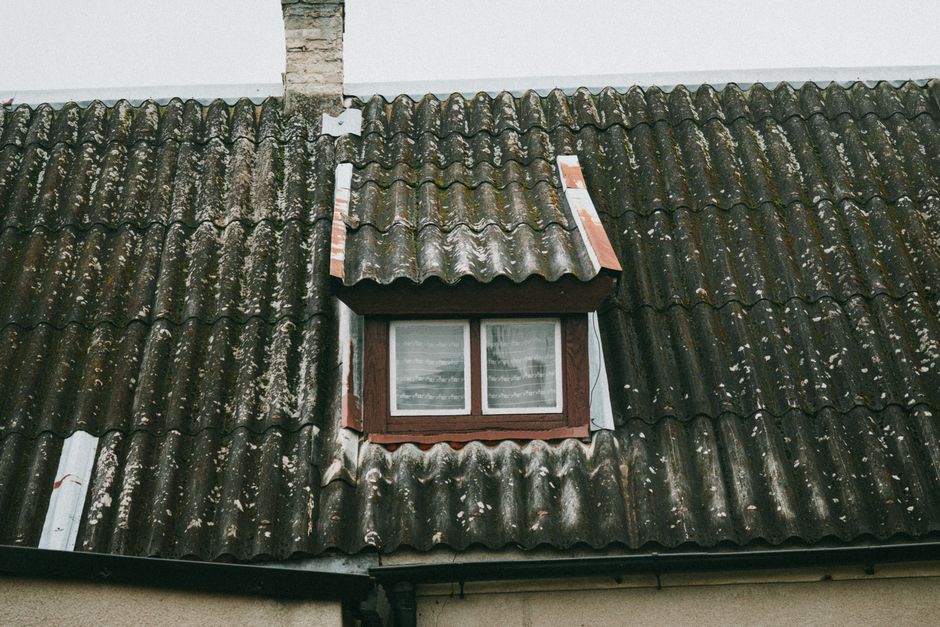
Non-friable materials include asbestos-cement siding and roofing, vinyl floor tiles, asphalt roofing felt, and brake pads. These hold fibers tightly. They can still become friable if they are sanded, ground, cut, or weathered over decades — which is why regulators treat “non-friable that has become friable” as friable for practical purposes.
How Does Friable Asbestos Become a Health Risk?
The danger is entirely about inhalation. Asbestos fibers are microscopic, and the smallest ones — thin enough to reach the deep lung — can lodge in tissue and stay there for decades. The body cannot break them down or clear them efficiently.
Persistent fiber presence in the lungs triggers chronic inflammation and scarring. Over many years this can lead to asbestosis (diffuse scarring of lung tissue), lung cancer, and mesothelioma, a cancer of the lining around the lungs or abdomen. These diseases have long latency periods, typically measured in decades from first exposure, not months.
Risk rises with the intensity and duration of exposure. A person who handled friable insulation daily for years faces far higher risk than someone who had a single brief encounter. That said, no exposure threshold has been identified below which risk is zero, which is why occupational safety agencies treat asbestos as a hazard to be controlled rather than a substance with a “safe” level of contact.
Smoking multiplies the lung cancer risk from asbestos substantially. The two exposures interact rather than simply adding together, which is one of the more consistent findings in occupational medicine.





How Do You Know If Asbestos Is Friable?
You generally cannot tell by looking. Asbestos has no distinctive color, smell, or texture, and it was mixed into hundreds of products over most of the 20th century.
The reliable path is laboratory testing. A certified inspector takes a small sample and sends it to an accredited lab, which identifies the mineral type and its percentage in the material. Testing is the only way to confirm both the presence and the type of asbestos.
The condition of the material is a separate judgment. A trained inspector assesses whether it is intact, damaged, delaminating, water-stained, or crumbling. That condition assessment — not just the lab result — determines whether it is classified as friable in practice.
If you suspect friable asbestos in your home, do not poke at it, sweep it, or vacuum it. Disturbing it is the main way a contained problem becomes an airborne one.
What Should You Do About Friable Asbestos?
Undamaged asbestos that is in good condition is often best left alone. This is a widely accepted principle in asbestos management: managing it in place is frequently safer than removing it, because removal itself creates the disturbance that releases fibers.
When material is damaged or friable, the options generally fall into a few categories.
- Repair and encapsulate — sealing the material with a binder so fibers stay locked in place. This works for some materials and not others.
- Enclose — building a physical barrier over the material so it cannot be disturbed.
- Abate — full removal, done under controlled conditions by licensed professionals.
For homeowners, the practical guidance is straightforward: hire a licensed asbestos professional for inspection and any work involving friable material. Federal rules do not require a licensed contractor for every residential situation, and state requirements vary, but friable asbestos is not a do-it-yourself material. Improper removal can contaminate an entire home and create a far larger problem than the one you started with.
For workplaces, friable asbestos falls under specific OSHA and EPA rules covering exposure limits, protective equipment, air monitoring, and disposal. Those are legal requirements, not suggestions.
Friable vs. Non-Friable Asbestos: A Direct Comparison
| Feature | Friable Asbestos | Non-Friable Asbestos |
|---|---|---|
| Hand pressure test | Crumbles or powders by hand | Requires tools to break |
| Fiber release potential | High when disturbed | Low unless cut, sanded, or weathered |
| Typical examples | Pipe insulation, spray fireproofing, popcorn ceilings | Cement siding, vinyl floor tiles, asphalt roofing |
| Regulatory handling | Strict controls, often licensed abatement | Varies; may become regulated if damaged |
| Management approach | Encapsulate, enclose, or remove | Often left in place if intact |
The key point in that table is the last row. Non-friable material is not automatically safe. It is safe as long as it stays intact. Once it is broken, sanded, or worn down, the same rules apply.
Why the Friable Label Matters So Much
Regulation, cost, and risk all hinge on this one property. Friable asbestos requires more protective equipment, more containment, more air monitoring, and more careful disposal. That is why abatement of friable material is significantly more expensive than handling intact non-friable material.
It is also why the label is not just bureaucratic. It reflects a real physical difference in how easily fibers escape into the air people breathe. A material that powders under a hand is a material that can contaminate a room in seconds.
The most useful thing to remember: intact asbestos is not an emergency. Damaged or crumbling asbestos is a problem to be handled by trained professionals, not by a homeowner with a shop vacuum.
Frequently Asked Questions
What does friable asbestos mean?
Friable asbestos is asbestos-containing material that can be crumbled or reduced to powder by hand pressure alone. This condition makes it far more likely to release airborne fibers when disturbed.
Is friable asbestos always dangerous?
Friable asbestos is dangerous when it is disturbed, because that is when fibers become airborne and can be inhaled. Undisturbed friable material may still be a hazard, but the immediate risk is lower until something moves it.
How can I tell if asbestos is friable?
You cannot reliably tell by appearance — laboratory testing by an accredited lab is the only way to confirm asbestos. A certified inspector then assesses the material’s condition to determine whether it is friable in practice.
Can I remove friable asbestos myself?
No — friable asbestos should be handled by licensed professionals because improper removal can spread fibers throughout a building. State licensing rules vary, but friable material is not a do-it-yourself project.
