
Exfoliation removes dead cells from the skin’s outermost layer, along with oils, dirt, and whatever product you applied before it. It also depletes things your skin needs — water, lipids, and sometimes beneficial microorganisms. That trade-off is the whole story.
The outer layer of your skin, the stratum corneum, is built from flattened cells called corneocytes that are essentially dead. They sit in a matrix of fats and proteins. Exfoliation strips some of those cells away. It does not know the difference between a flake that needs to go and a barrier that should stay.
What gets removed and what gets depleted are two different lists. Most people only think about the first one.
What Does Exfoliation Remove And Deplete From Skin?
Exfoliation removes the dead cells of the stratum corneum, surface oils, trapped dirt, and bacteria sitting on the skin. It depletes water, natural moisturizing factors, intercellular lipids, and part of the skin’s surface microbiome.
The stratum corneum is often described as a brick wall. The corneocytes are the bricks. The lipids between them — ceramides, cholesterol, and fatty acids — are the mortar. When you exfoliate, you disrupt both. Physical scrubs shear off bricks. Chemical exfoliants break the bonds holding them together.
What leaves with them:
- Dead corneocytes that would eventually shed on their own
- Sebum, the oil your sebaceous glands produce
- Dirt and pollution particles resting on the surface
- Some of the bacteria and yeast that live on your skin
- Fragments of the intercellular lipid matrix
- Natural moisturizing factor, a mix of amino acids and salts that holds water in the outer layer
The point worth understanding: your skin already does this. Corneocytes turn over in a cycle that typically runs about four weeks in adults, and they shed continuously. Exfoliation speeds up a process that is already happening. Push it too fast and you remove material the barrier still needs.
How Do Chemical and Physical Exfoliants Differ in What They Strip?
Chemical and physical exfoliants remove the same basic things, but they do it by different mechanisms. That changes how deep the effect goes and how much collateral damage occurs.
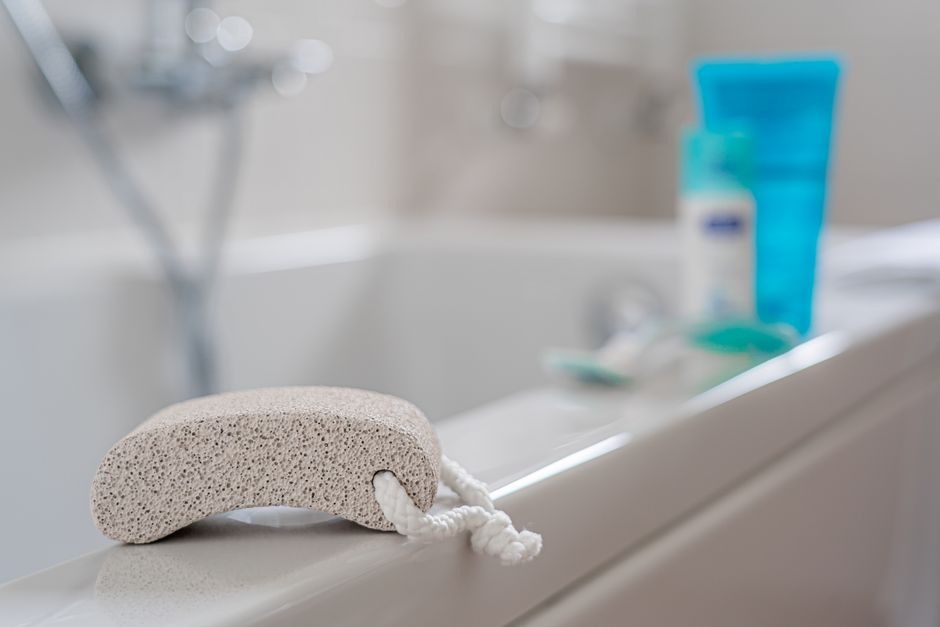
Physical exfoliants — scrubs, brushes, washcloths — work by friction. They lift cells off mechanically. The effect is mostly limited to the surface, but the force is uneven. You cannot control which areas get more pressure. Particle shape and size vary between products, and irregular or jagged particles can cause small abrasions.
Chemical exfoliants work by chemistry. Alpha-hydroxy acids like glycolic and lactic acid loosen the bonds between corneocytes. Beta-hydroxy acid, salicylic acid, is oil-soluble and can move into the pore lining. Polyhydroxy acids are larger molecules that act more slowly and stay closer to the surface.
Because chemical exfoliants act on the bonds rather than by force, they tend to produce a more even result. They also penetrate further, which means they can deplete more of the lipid matrix and cause more stinging if left on too long.
Neither type is inherently gentler. A mild lactic acid lotion and a rough walnut scrub both cause barrier disruption if overused. The variable that matters most is how often and how aggressively you use it, not which category it falls into.
What Happens to the Skin Barrier When You Exfoliate Too Much?
The skin barrier is a lipid seal that keeps water in and keeps irritants, allergens, and microbes out. When exfoliation removes too much of that lipid matrix, the seal weakens.
The immediate result is water loss. Your skin loses moisture to the air faster than it can replace it. It feels tight, looks dull, and may flake — which is the opposite of what most people exfoliate for.
Then the irritation follows. Without a functioning barrier, irritants that normally sit harmlessly on the surface get into living skin layers. That triggers redness, stinging, and inflammation. In people prone to eczema or rosacea, this can set off a flare that takes weeks to settle.
There is a counterintuitive part here. Over-exfoliated skin often looks shiny and feels smooth at first. That is because the surface has been thinned. It is not healthier skin. It is skin with less protection.
Signs you have crossed the line:
- Stinging or burning when you apply products that used to feel fine
- Redness that lingers after cleansing
- Flaking or rough patches that get worse with more exfoliation
- Increased sensitivity to sun and to temperature changes
- Breakouts that appear in new areas
Recovery is not instant. Barrier lipids take time to rebuild. Most dermatologists suggest pausing exfoliation and focusing on gentle cleansing and moisturizing until the skin settles. How long that takes varies by person and by how much damage was done.





Does Exfoliation Deplete the Skin Microbiome?
Yes, to some degree. Your skin hosts a community of bacteria, fungi, and viruses — collectively the skin microbiome — that lives on and in the outer layers. Exfoliation removes some of it.
The microbiome is not just along for the ride. These organisms compete with harmful microbes for space and nutrients. Some produce substances that help maintain the skin’s acidic surface. Disrupting the community can shift the balance.
The research here is still developing. Studies have found that the skin microbiome differs between healthy skin and skin with conditions like eczema and acne, but the direction of cause and effect is not always clear. Whether exfoliation meaningfully harms the microbiome in the long run, or whether the community recovers quickly, is not well established.
What is reasonable to say: aggressive, frequent exfoliation removes more surface microbes than gentle, occasional exfoliation. Whether that translates into a lasting health effect is not something current evidence can confirm.
Does Exfoliation Remove Ingredients You Want to Keep?
It can. This is one of the more overlooked points about exfoliation.
If you apply a serum, a treatment, or a moisturizer and then exfoliate, you are removing some of what you just put on. The same mechanical or chemical action that lifts dead cells also lifts product sitting on the surface.
This matters most with leave-on treatments. Retinoids, vitamin C, and prescription topicals need time on the skin to work. Exfoliating immediately before or after applying them reduces how much stays in contact with the skin long enough to have an effect.
It also matters for sunscreen. Physical sunscreens sit on the surface and form a film. Exfoliating after application removes that film. If you exfoliate in the morning, you need to reapply sunscreen afterward, not before.
The general principle: exfoliate first, then apply your leave-on products. Give the products time to absorb. Do not layer exfoliation on top of treatments you want to keep.
Is There Anything Exfoliation Does Not Remove?
Exfoliation does not remove wrinkles, scars, or pigment from deeper layers. It works on the surface. Anything below the stratum corneum is out of reach for a scrub or a wash-off acid.
It also does not remove blackheads permanently in most cases. A blackhead is a widened pore filled with oil and dead cells that has oxidized and darkened. Exfoliation can clear the surface opening, but the pore itself and the oil production that fills it are not changed by exfoliating. Salicylic acid can help keep the pore from clogging again, but it does not stop oil production.
And it does not remove skin cancer, precancerous lesions, or anything that needs medical evaluation. If you have a spot that bleeds, changes, or does not heal, exfoliating it is not the answer. That needs a doctor.
How Do You Exfoliate Without Depleting Too Much?
Less often and more gently than most product labels suggest. The goal is to help shedding along, not to force it.
For most people, exfoliating once or twice a week is enough to see a benefit without stripping the barrier. Some people with oily, resilient skin tolerate more. People with dry, sensitive, or reactive skin may do better with less, or with a gentler option like a polyhydroxy acid or a soft washcloth.
Practical points that reduce depletion:
- Start with a lower concentration and a shorter contact time if using acids
- Do not combine physical and chemical exfoliation on the same day
- Skip exfoliation on days you use retinoids or strong actives
- Moisturize after, every time, to help replace what was removed
- Wear sunscreen daily, since exfoliated skin is more sun-sensitive
If your skin stings, turns red, or flakes more after exfoliating, that is a signal to stop, not to push through. The barrier does not get stronger with more exfoliation. It gets weaker.
There is no clinical guideline that sets a universal exfoliation frequency. The right amount depends on your skin type, the product, and how your skin responds. That is why paying attention to your own skin matters more than following a schedule from a label.
Frequently Asked Questions
Does exfoliation remove dead skin cells?
Yes, exfoliation removes dead cells from the outermost layer of skin, called the stratum corneum. Your skin sheds these cells on its own, and exfoliation speeds up that process.
Does exfoliating strip your skin’s natural oils?
Yes, exfoliation removes surface oils along with dead cells. Over-exfoliating removes too much of the lipid barrier, which leads to dryness, tightness, and irritation.
Can exfoliation damage the skin barrier?
It can if done too often or too aggressively. The barrier is made of lipids between skin cells, and removing too much of that lipid matrix lets moisture escape and irritants enter.
How often should you exfoliate?
There is no universal clinical guideline. For most people, once or twice a week is enough to help shedding without stripping the barrier, though tolerance varies by skin type and product.
