
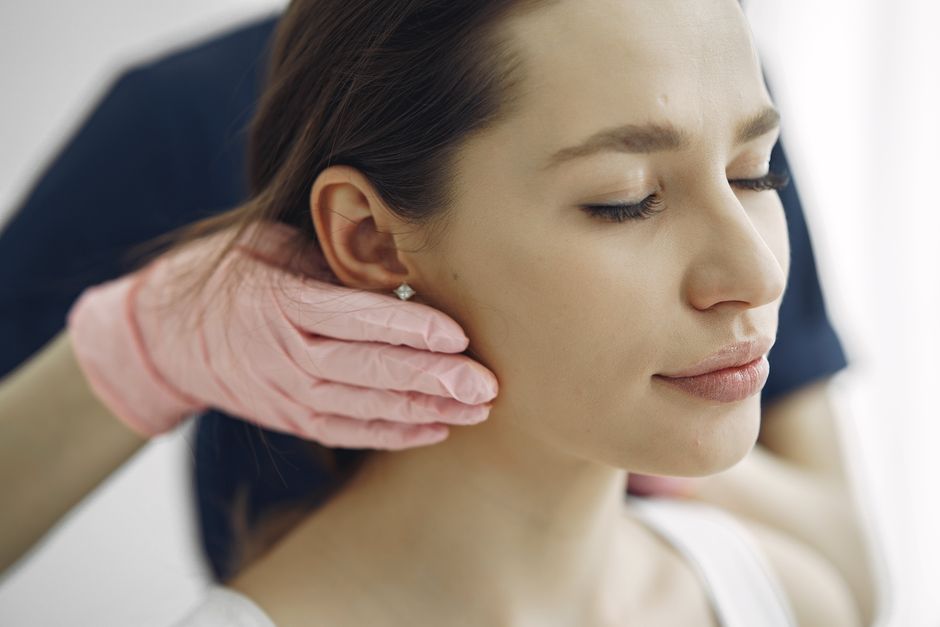
Skin tags are small, soft, flesh-colored growths that hang off the skin. They are harmless, but many people want them gone for cosmetic reasons. Essential oils are often promoted as a natural way to remove them at home, but the evidence is thin. Some oils may irritate the tag enough to make it fall off, but this approach carries real risks. Here is what you need to know about how to remove skin tags with essential oils safely, and why most dermatologists advise against it.
What Are Skin Tags and Why Do They Form?
Skin tags are made of loose collagen fibers and blood vessels surrounded by skin. They typically appear in areas where skin rubs against skin or clothing, such as the neck, armpits, eyelids, and groin.
They are extremely common. Studies suggest that nearly half of all adults will develop at least one skin tag in their lifetime. They become more frequent with age, and are more likely in people who are overweight or have type 2 diabetes. Hormonal changes during pregnancy can also trigger them.
Skin tags are not cancerous. They do not turn into cancer, and they are not a sign of poor hygiene. They are simply an overgrowth of normal skin tissue.
Do Essential Oils Actually Remove Skin Tags?
The short answer is that no clinical trials have confirmed that any essential oil can safely remove skin tags. The marketing claims you see online are not backed by published medical research.
Some people report success using tea tree oil, oregano oil, or frankincense oil. The theory is that these oils dry out the skin tag, causing it to shrivel and fall off over days or weeks. This can happen, but it is not a controlled or predictable process. You are essentially causing a chemical burn to the skin tag.
There is a meaningful difference between a skin tag falling off after being dried out and the tag being safely removed. The first is an injury response. The second requires proper technique and sterile conditions. Essential oils provide neither.
What Are the Risks of Using Essential Oils on Skin Tags?
Essential oils are highly concentrated plant compounds. Applying them directly to skin can cause contact dermatitis, which is a red, itchy, painful rash. This reaction can be worse on delicate areas like the eyelids or groin.
Burning the skin around the tag is a common complication. Essential oils can damage healthy skin adjacent to the tag, leaving a wound that is larger than the original tag. This wound can become infected, and infection is harder to treat than the tag itself.
Scarring is another real possibility. When you damage the skin with a chemical irritant, the body may respond by forming scar tissue. The result can be a darker spot or raised scar that is more noticeable than the original skin tag.
There is also the problem of misidentification. Not every small skin growth is a skin tag. Warts, moles, and even some types of skin cancer can look similar in their early stages. Treating an unknown growth with essential oils can delay a proper diagnosis. If you have a growth that is changing, bleeding, or painful, see a doctor before trying anything at home.




How To Remove Skin Tags With Essential Oils Safely — If You Choose To Try It
If you are determined to try essential oils despite the risks, there are ways to reduce the chance of harming yourself. No method is risk-free, but these steps may help limit damage.
First, confirm the growth is actually a skin tag. It should be soft, small, and attached by a thin stalk. If it is flat, hard, irregular in color, or growing quickly, do not treat it at home. See a dermatologist.
Always dilute the oil. Never apply undiluted essential oil directly to skin. A common dilution is one drop of essential oil mixed with a teaspoon of a carrier oil such as jojoba, coconut, or olive oil. This reduces irritation but does not eliminate it.
Apply the diluted oil only to the skin tag itself, not the surrounding skin. Use a cotton swab for precision. Avoid the eye area entirely. Essential oils near the eyes can cause severe irritation or corneal damage.
Wash the area with soap and water after a few minutes. Leaving oil on the skin for hours increases the risk of a burn. Some people apply the oil once or twice daily for up to a few weeks. If the tag does not fall off within that time, stop.
Watch for signs of trouble. If the area becomes red, swollen, painful, or starts oozing, wash it off immediately and stop treatment. These are signs of chemical burn or infection. Do not ignore them.
What Dermatologists Actually Recommend Instead
Dermatologists have safe, effective methods for removing skin tags. These are performed in a clinical setting and have a strong track record of success.
Cryotherapy involves freezing the tag with liquid nitrogen. It falls off within a week or two. This is quick, and most people tolerate it well. Minor discomfort during the freezing is common.
Cautery uses heat to burn the tag off. The doctor numbs the area first, then removes the tag with a heated instrument. This method also controls bleeding during the procedure.
Surgical removal is simply cutting the tag off with sterile scissors or a scalpel. For small tags, this takes seconds. The doctor may use a local anesthetic, though many skin tags can be removed without it.
These procedures are typically quick and performed in an office visit. They carry far lower risks of infection and scarring than at-home chemical methods. The main downside is cost, as these are usually considered cosmetic procedures and may not be covered by insurance.
Over-the-Counter Skin Tag Removers: Are They Safer?
Pharmacies sell freezing kits and removal patches marketed for skin tags. These products are regulated as medical devices or cosmetics, but they have not been held to the same standard as prescription treatments.
Freezing kits use a colder temperature than professional cryotherapy. That means they may not freeze deeply enough to be effective, or they may damage surrounding skin if applied imprecisely. Results vary widely.
Removal patches typically contain salicylic acid or similar compounds. They work by dissolving the skin tag over time. Like essential oils, they can irritate healthy skin and cause scarring if used incorrectly.
These products are not necessarily safer than essential oils. They are just more standardized in their formulation. The same warnings apply: confirm the growth is a skin tag, follow instructions exactly, and stop if irritation develops.
When To See a Doctor Instead of Treating at Home
See a doctor if the growth is on your eyelid or near your eye. Home treatment in this area is dangerous and should not be attempted.
See a doctor if the growth is large, bleeds easily, or has changed in appearance. These features may indicate a different type of lesion that needs professional evaluation.
See a doctor if you have diabetes or a weakened immune system. Your skin heals more slowly, and the risk of infection from any home treatment is higher.
See a doctor if you have many skin tags, especially if they appear suddenly. A rapid increase in skin tags can sometimes signal an underlying hormonal or metabolic issue that deserves attention.
A dermatologist can tell you with certainty what the growth is and recommend the safest removal method for your specific situation. That certainty is worth the visit.
Frequently Asked Questions
Can tea tree oil remove skin tags?
Some people report that tea tree oil dries out a skin tag until it falls off, but no clinical studies confirm this works. The oil can cause skin irritation, burns, and scarring, especially if used undiluted.
How long does it take for essential oils to remove a skin tag?
Reports vary from a few days to several weeks of consistent application. If the tag has not fallen off after two to three weeks, further use is unlikely to help and increases your risk of skin damage.
Is it safe to put essential oils on a skin tag near my eye?
No. Essential oils near the eye can cause severe irritation or damage to the cornea. See a dermatologist for safe removal of skin tags in this area.
What is the safest way to remove a skin tag at home?
No at-home method is completely safe, including essential oils and over-the-counter freezing kits. Professional removal by a dermatologist is the safest option with the lowest risk of infection and scarring.
