
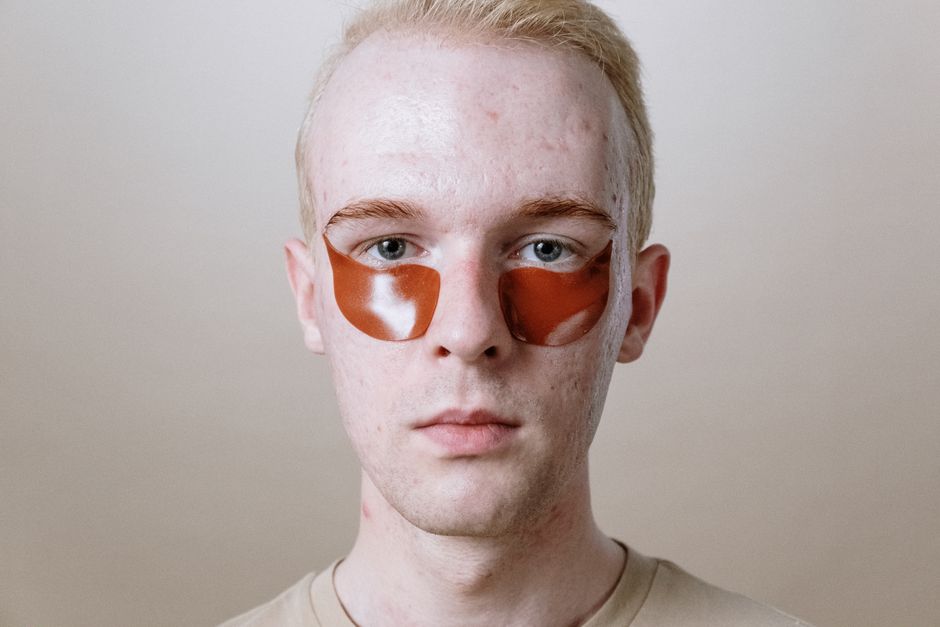
Cystic acne looks different under the skin than it does on the surface. What you see as a red, tender bump is the visible tip of a deep inflammatory process that starts in the sebaceous (oil) gland and the hair follicle. The clogged pore, the bacterial activity, and the pus-filled sac all sit well below the surface, sometimes a centimeter or more deep. That depth is exactly why cystic acne feels like a hard, painful lump rather than a simple surface pimple — and why it tends to leave scars.
What Does Cystic Acne Look Like Under The Skin?
Picture a hair follicle — a tiny tube that holds a hair and connects to a sebaceous gland. In cystic acne, that follicle becomes blocked. Dead skin cells and excess oil plug the opening. Below the blockage, the follicle wall swells and eventually ruptures.
When the wall breaks, the contents spill into the surrounding dermis — the thick middle layer of skin. This triggers an immune response. White blood cells rush in. The area becomes inflamed, swollen, and painful. A walled-off pocket of pus and debris forms: a cyst. That is the structure you feel as a deep, tender lump.
The key difference from a regular pimple is location and scale. A common pimple involves the upper layer of skin and comes to a head near the surface. A cyst forms deeper, often has no visible head, and can measure several millimeters across. Some nodules — solid, hard lesions without a clear pus pocket — form the same way but contain denser tissue instead of fluid.
Why Cystic Acne Forms So Deep In The Skin
Three things have to line up for a cyst to form: excess oil production, blocked follicles, and inflammation. Hormones drive the first one. Androgens — hormones present in both men and women — signal the sebaceous glands to produce more oil. This is why cystic acne often starts around puberty and why it can flare with hormonal shifts.
The blocked follicle is the second piece. When skin cells shed faster than normal and stick together, they plug the follicle opening. Oil builds up behind the plug. Pressure increases.
The third piece is the inflammatory response itself. The body does not recognize the follicle contents as belonging there. It attacks. This is the part many people miss: the swelling and pain of a cyst are not caused by the clog alone. They are caused by your immune system reacting to the clog.
One clarification worth making. The bacterium Cutibacterium acnes lives on everyone’s skin. Its presence alone does not cause cystic acne. The problem is what happens when it multiplies inside a blocked, oxygen-poor follicle and adds to the inflammation. So “killing the bacteria” is not the whole story, and it is not the whole treatment.
What Is the Difference Between a Cyst and a Nodule?
Both are deep, inflamed lesions. The difference is what is inside.
- A cyst contains fluid or pus. It often feels soft or squishy in the center, though the surrounding tissue can be firm and hard.
- A nodule is a solid, dense mass. It feels hard throughout and does not contain a drainable pocket of pus.
In practice, the two often overlap, and dermatologists sometimes use the term “nodulocystic” to describe severe acne with both types. Neither should be squeezed. The sac sits deep, and squeezing pushes inflammation sideways into healthy tissue, which increases the risk of scarring and spread.



Why Cystic Acne Scars and How the Damage Happens
Scarring comes from the inflammation, not from the pimple itself. When a cyst ruptures deep in the dermis, it destroys collagen and elastin — the proteins that give skin its structure and bounce. As the wound heals, the body lays down new collagen. If too little is laid down, you get a depressed scar (an atrophic scar). If too much is laid down, you get a raised scar.
This is why deep lesions scar more than surface pimples. The injury is happening in the layer responsible for skin’s structural support. The longer a cyst stays inflamed, the more surrounding tissue is damaged. That is the main argument for treating severe acne early rather than waiting for it to “run its course.”
Picking and squeezing makes this worse. It forces the rupture to happen at a wider radius and introduces more inflammation. It also raises the risk of infection. The scar you are trying to prevent is often the one you create by trying to pop the cyst.
What Cystic Acne Feels Like and Where It Appears
On the surface, cystic acne shows up as large, red, tender bumps. They may feel warm. Many have no white head, which is a defining feature — there is nothing to “come to a head” because the blockage is deep. Some take weeks to resolve. Some seem to fade and then return in the same spot.
Common locations include the jawline, chin, cheeks, back, chest, and shoulders. These areas have a high concentration of sebaceous glands, which is why they are prone to deep breakouts. Jawline and chin breakouts in particular are often linked to hormonal fluctuation.
The pain is a useful signal. A surface pimple is usually tender only when pressed. A cyst often aches on its own. That ache reflects the pressure and inflammation happening below.
How Doctors Treat Deep Cystic Acne
Over-the-counter products rarely resolve cystic acne on their own. They work on the surface, and the problem is below it. This is not a marketing claim — it follows from where the lesion sits.
Dermatologists typically turn to prescription treatments. The main categories include:
- Oral antibiotics, often combined with a topical retinoid, to reduce inflammation and bacterial activity. These are usually used for a limited period rather than long term.
- Isotretinoin, a powerful oral retinoid used for severe or scarring acne. It requires close medical monitoring because of significant side effects, including serious risks in pregnancy.
- Hormonal treatments such as certain combined oral contraceptives or spironolactone, used in some women when hormones are a driving factor.
- Intralesional corticosteroid injections, where a doctor injects a dilute steroid directly into a large cyst to reduce inflammation quickly. This is a clinic procedure, not a home remedy.
Which option fits depends on severity, location, scarring, and individual factors like pregnancy status. Some people need a combination. Response times vary, and improvement is usually measured over weeks to months, not days. A dermatologist is the right person to weigh these choices — this is not a condition to self-treat with internet advice.
What Actually Helps and What Does Not
Some widely shared advice holds up. Some does not.
What the evidence supports: gentle cleansing, avoiding picking, and using non-comedogenic (non-pore-clogging) skin products. For many people, prescription treatment is the difference-maker. Starting it earlier, especially when scarring is a risk, tends to matter.
What the evidence does not support: the idea that diet alone causes or cures cystic acne. Some research suggests certain dietary patterns may influence acne in some people, but the findings are mixed and the effect is generally modest compared with the role of hormones and genetics. Cutting out a food group is not a reliable treatment for deep cysts.
Also unsupported: toothpaste on spots, harsh scrubbing, and “drying out” the cyst. These irritate the surface without reaching the lesion, and irritation can worsen inflammation. There is no home method that safely drains a cyst sitting in the dermis.
When to See a Dermatologist
See a doctor if you have deep, painful lumps, if lesions are leaving marks or scars, or if over-the-counter products have not helped after a reasonable trial. Cystic acne is a medical condition, not a hygiene problem, and it is not something you caused by washing wrong.
Early treatment is the most reliable way to limit scarring. If you are unsure whether what you have is cystic acne, a dermatologist can tell the difference between a cyst, a nodule, and other skin conditions that can look similar.
Frequently Asked Questions
What does cystic acne look like under the skin?
It looks like a blocked hair follicle that has ruptured deep in the dermis, forming a walled-off pocket of pus, oil, and debris surrounded by inflammation. That is why it appears on the surface as a large, red, tender lump with no visible head.
Is cystic acne a cyst or a pimple?
It is a deep inflammatory lesion, not a simple surface pimple. A true cyst contains fluid or pus, while a nodule is a solid mass, and both form far below the surface where a regular pimple does not.
Why does cystic acne hurt so much?
The pain comes from pressure and inflammation deep in the skin, where the ruptured follicle triggers an immune response. Because the lesion sits below the surface, it often aches on its own rather than only when touched.
Does squeezing cystic acne make it worse?
Yes. Squeezing forces the rupture to spread sideways into healthy tissue and increases inflammation, which raises the risk of scarring and infection.
