
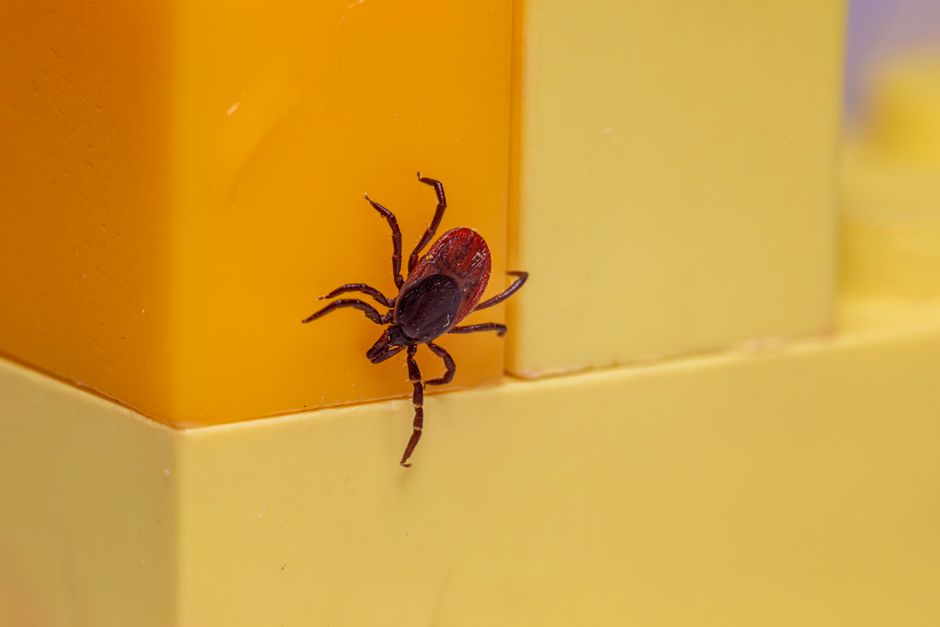
Many people worry that a tick can burrow completely under their skin and disappear. The short answer is no. A tick cannot be fully embedded under human skin. Only the tick’s mouthparts enter the skin to feed. The rest of its body stays on the surface. This is a common fear, but the anatomy of a tick makes full burial impossible.
What Does a Tick Actually Do When It Bites?
A tick does not dig its way into your body. It uses specialized mouthparts to cut a small hole in your skin. Then it inserts a barbed feeding tube called a hypostome. This tube has backward-facing barbs that help it stay anchored.
The tick’s body remains outside your skin the entire time. It swells as it feeds on blood. But it never sinks below the surface. The CDC explains that ticks attach to the skin, they do not burrow under it. If you see a dark spot that looks like a tick but no body is visible, it is likely something else.
Some people mistake a scab or a small skin tag for an embedded tick. Others confuse the tick’s dark body with a mole. The key is that a tick always has a visible body on the surface, even if it is very small.
Why Do People Think Ticks Are Fully Embedded?
The fear comes from a few real experiences. Sometimes when you try to remove a tick, the head or mouthparts break off and stay in the skin. That can look like a small dark speck under the surface. People then assume the whole tick is buried.
Another reason is the way nymph ticks look. Nymphs are young ticks about the size of a poppy seed. They are very small and flat before feeding. When attached, they can look like a tiny speck of dirt. It is easy to miss them or think they are fully under the skin.
Research published in the Journal of Medical Entomology confirms that tick mouthparts are the only part that enters the skin. The body cannot fit through the small hole the mouthparts make. So the idea of a fully buried tick is a myth.
Some viral social media posts claim to show ticks completely under the skin. These are usually misidentified. They might be botfly larvae or other parasites that do burrow. But for ticks, it simply is not possible.
Can A Tick Be Fully Embedded Under The Skin in Animals?
This question comes up often for pet owners. The answer is the same for dogs, cats, and other mammals. Ticks attach the same way on animals as they do on humans. Only the mouthparts enter the skin.
However, animals with thick fur can make it look different. A tick might be hidden under the fur and hard to see. When you part the fur, you will still find the tick’s body on the surface. It is not buried in the skin.
The American Veterinary Medical Association advises checking pets thoroughly after time outdoors. Run your fingers through their fur to feel for small bumps. A feeding tick feels like a small pea attached to the skin. It is not a lump under the skin.
If you feel a hard lump under your pet’s skin that does not have a visible tick on top, it is probably something else. Cysts, tumors, and insect stings can cause lumps. A vet should check any unexplained lump on your pet.





What Should You Do If You Find an Attached Tick?
Finding a tick is not a reason to panic. The key is to remove it quickly and correctly. Use fine-tipped tweezers. Grasp the tick as close to your skin as possible. Pull upward with steady, even pressure. Do not twist or jerk.
After removal, clean the bite area with rubbing alcohol or soap and water. Then wash your hands. Dispose of the tick by putting it in alcohol, sealing it in a bag, or flushing it down the toilet. Do not crush it with your fingers.
Some people try home remedies like using nail polish, petroleum jelly, or heat to make the tick detach. These do not work and can make the tick salivate more, which increases disease risk. The CDC strongly recommends tweezers only.
What to Avoid When Removing a Tick
Many old methods are still shared online. They are not safe and can cause problems. Here is what to avoid:
- Do not use your fingers to pull the tick. You might squeeze the body and push infected fluids into your skin.
- Do not apply nail polish, petroleum jelly, or alcohol to the tick before removal. These do not make the tick let go.
- Do not try to burn the tick off with a match or lighter. This can burn your skin and cause the tick to burst.
- Do not wait for the tick to fall off on its own. The longer it stays attached, the higher the risk of disease transmission.
If a tick’s mouthparts break off and stay in your skin, do not dig them out. Your body will push them out naturally over a few days. Digging can cause infection. Just clean the area and watch for signs of infection like redness or swelling.
How to Tell a Tick Bite From Other Skin Issues
Tick bites are usually painless at first. You might not feel anything. The tick itself is the main clue. If you see a small dark bump with legs, it is a tick. If you see a red bump without a tick attached, it could be a mosquito bite or a spider bite.
Some conditions look like tick bites but are not. A scab from a scratch can look dark and round. An ingrown hair can cause a small red bump. A blackhead can look like a dark speck. None of these have the tick’s body on the surface.
Lyme disease causes a distinctive rash in some cases. It looks like a bullseye with a red outer ring and a clear center. But not everyone with Lyme gets this rash. The absence of a rash does not mean you are safe from tick-borne illness.
If you develop a fever, headache, fatigue, or muscle aches after a tick bite, see a doctor. These can be signs of Lyme disease, anaplasmosis, or other tick-borne infections. Early treatment is important.
When to See a Doctor After a Tick Bite
Most tick bites do not cause illness. But some do. You should see a doctor if you cannot remove the tick completely, or if part of it stays in your skin and becomes infected. Signs of infection include increasing redness, warmth, or pus.
You should also see a doctor if you develop a rash or flu-like symptoms within a few weeks of a tick bite. The CDC recommends seeking medical attention promptly. Tell your doctor about the tick bite so they can consider tick-borne diseases.
Some doctors prescribe a single dose of doxycycline to prevent Lyme disease after a high-risk tick bite. This is only appropriate in certain situations. The tick must have been attached for at least 36 hours, and the treatment must start within 72 hours of removal. Not all bites need this.
| Condition | Looks Like | What to Do |
|---|---|---|
| Attached tick | Small dark bump with legs on skin surface | Remove with tweezers |
| Retained mouthparts | Tiny dark speck under skin after removal | Leave alone, clean area |
| Scab or blackhead | Dark spot, no legs, no body | Not a tick, no action needed |
| Infected bite | Red, warm, swollen, or oozing | See a doctor |
| Bullseye rash | Red ring with clear center | See a doctor for possible Lyme |
How to Prevent Tick Bites in the First Place
Prevention is better than dealing with a bite. When you are in wooded or grassy areas, use EPA-approved insect repellents. Products with DEET, picaridin, or oil of lemon eucalyptus work well. Treat clothing and gear with permethrin for extra protection.
Wear long sleeves and long pants when possible. Tuck your pants into your socks. Light-colored clothing makes ticks easier to spot. Stay on cleared trails and avoid walking through tall grass or leaf litter.
After being outdoors, do a full body check. Use a mirror to check hard-to-see areas like your back and scalp. Ticks like warm, dark places. Check under your arms, behind your knees, in your belly button, and around your ears.
Shower within two hours of coming indoors. This can wash off unattached ticks and helps you feel for attached ones. Put your clothes in the dryer on high heat for 10 minutes to kill any ticks that might be on them.
Frequently Asked Questions
Can a tick lay eggs under my skin?
No. Ticks do not lay eggs under human skin. They lay eggs on the ground, not on a host.
What happens if a tick head stays in my skin?
Your body will usually push it out on its own within a few days. Keep the area clean and watch for signs of infection.
How long can a tick stay attached before it falls off?
A tick can stay attached for several days to two weeks depending on its life stage and species. It falls off once it is fully engorged.
Can a tick bite cause a hard lump under the skin?
A tick bite itself does not cause a hard lump. But an allergic reaction or infection can cause swelling that feels like a lump.
