
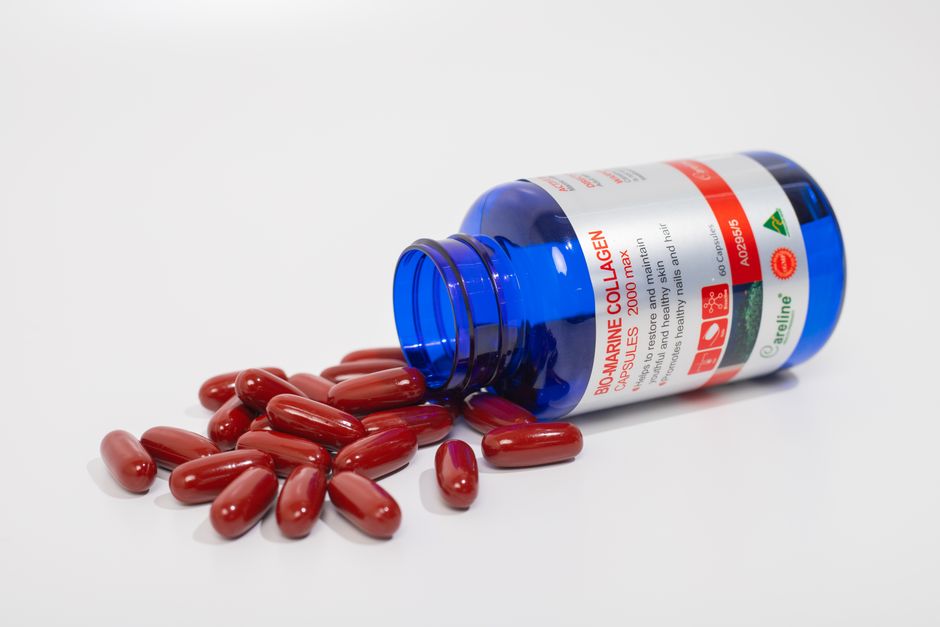
Collagen is the most abundant protein in the human body. It gives skin its structure, helps hold bones together, and supports joints, blood vessels, and other tissues. Women’s collagen levels naturally decline with age, and that decline shows up in ways you can see and feel.
Collagen is not just a beauty ingredient. It is a structural protein that makes up a large share of your skin, bones, tendons, and cartilage. Understanding what it actually does helps separate real biology from supplement marketing.
What Does Collagen Do For Womens Skin Bones And More?
Collagen is a fibrous protein that forms a scaffold in your body’s connective tissues. Think of it as the framework that gives tissues shape and strength.
In the skin, collagen sits in the dermis, the middle layer beneath the surface. It works alongside elastin, which lets skin stretch and bounce back. Collagen provides firmness and structural support. When collagen breaks down or decreases, skin can become thinner and more prone to sagging and wrinkling.
In bones, collagen makes up a large part of the bone matrix. Bone is not just calcium. It is a mix of minerals and protein. Collagen fibers give bone flexibility so it can bend slightly under stress rather than shatter. Minerals like calcium and phosphate harden that framework.
Beyond skin and bones, collagen is found in:
- Tendons and ligaments, where it provides tensile strength
- Cartilage, which cushions joints
- Blood vessel walls, where it helps them withstand pressure
- Corneas and other eye tissues
- Dentin in teeth
- Wound tissue during healing
There are at least 28 known types of collagen in the human body. Types I, II, and III are the most studied and the most abundant. Type I is the main form in skin, bone, and tendons. Type II is the primary type in cartilage. Type III is found in skin, blood vessels, and other soft tissues.
How Does Collagen Change With Age In Women?
Collagen production declines steadily starting in early adulthood. Most people lose a percentage of their skin collagen each year after their mid-20s, though the exact rate varies from person to person.
For women, menopause appears to accelerate this process. Estrogen plays a role in supporting collagen production in the skin. When estrogen drops during and after menopause, skin collagen can decline more quickly. Research has linked lower estrogen to thinner skin and reduced elasticity. This is part of why some women notice more visible skin changes in their 50s than in their 40s.
The visible effects often include:
- Thinner, drier skin
- More fine lines and deeper wrinkles
- Less elasticity and slower skin recovery
- Increased joint stiffness for some women
Bone collagen also changes with age. The protein framework in bone becomes less organized, and bone density tends to decline after menopause. This combination raises fracture risk over time.
Does Eating Collagen Or Taking Supplements Actually Help?
This is where the science gets more complicated than the marketing suggests. When you eat collagen, your digestive system breaks it down into amino acids and short chains of amino acids called peptides. Your body does not directly send those pieces to your skin or joints. It uses them wherever the body needs protein at that moment.
That said, some studies suggest collagen peptides may have modest effects. Research on hydrolyzed collagen supplements has looked at skin elasticity, hydration, and joint discomfort. Results have been mixed. Some trials show small improvements, while others show little difference compared to a placebo.
A key limitation: many of these studies are small, short, and sometimes funded by supplement companies. That does not make them invalid, but it means the evidence is not as strong as it is for, say, calcium and vitamin D for bone health.
What the evidence supports:
- Collagen supplements are generally well tolerated by most people
- Some studies indicate small improvements in skin elasticity and hydration
- Some research suggests possible mild relief for joint discomfort
- Results vary widely between studies and individuals
What the evidence does not support:
- Claims that collagen supplements “rebuild” skin or reverse aging
- Claims that they target specific areas like the face or knees
- Claims that they are more effective than eating enough protein overall
If you eat enough total protein, your body has the amino acids it needs to make its own collagen. Glycine, proline, and hydroxyproline are the key amino acids in collagen. Your body can make glycine and proline on its own, and you also get them from meat, poultry, fish, eggs, dairy, and legumes.



What Supports Your Body’s Own Collagen Production?
Your body makes collagen constantly. Supporting that process is less about eating collagen and more about giving your body what it needs to build it.
Vitamin C is required for collagen synthesis. Without it, the enzymes that stabilize collagen cannot work properly. Severe vitamin C deficiency causes scurvy, which includes poor wound healing and fragile blood vessels. Most people get enough vitamin C from fruits and vegetables, but it is worth knowing that this vitamin is not optional for collagen formation.
Protein intake matters. Collagen is a protein, and your body needs adequate total protein to make it. Most adult women need roughly 0.8 grams of protein per kilogram of body weight per day as a baseline, though needs can be higher with age, activity, or illness. That baseline comes from established dietary reference standards.
Copper and zinc are also involved in collagen cross-linking and synthesis. These are trace minerals you can get from nuts, seeds, whole grains, and animal foods.
Avoiding excessive sun exposure matters because ultraviolet radiation damages collagen fibers in the skin. This is one of the best-established factors in skin aging. Smoking also damages collagen and reduces blood flow to the skin.
Other factors that may affect collagen:
- Chronic stress and poor sleep may affect skin repair
- High sugar intake can lead to glycation, which stiffens collagen fibers
- Regular physical activity supports joint and bone health broadly
None of these are magic fixes. They are basic inputs your body uses to maintain connective tissue.
How Does Collagen Relate To Bone Health After Menopause?
Bone is about one-third collagen by weight. The rest is mineral. This protein framework matters because it gives bone its ability to absorb impact without breaking.
After menopause, bone loss accelerates for many women. Estrogen helps regulate bone remodeling, the ongoing process where old bone is broken down and new bone is formed. When estrogen declines, bone breakdown can outpace bone formation.
Collagen supplements are sometimes marketed for bone health. The evidence here is limited. Some studies suggest collagen peptides may have small effects on bone mineral density, but the research is not strong enough to replace established approaches.
What is well established for bone health:
- Adequate calcium intake, which for most adult women is around 1,000 to 1,200 mg per day depending on age, per established guidelines
- Vitamin D, which helps the body absorb calcium
- Weight-bearing exercise like walking, dancing, or resistance training
- Not smoking and limiting alcohol
If you are concerned about bone density, talk to your doctor about bone density testing. Osteoporosis often has no symptoms until a fracture occurs.
Do Collagen Creams And Topical Products Work?
Collagen molecules are too large to penetrate the skin’s outer layer. When you apply a collagen cream, the protein mostly sits on the surface. It can act as a moisturizer and may temporarily plump the skin by holding water, but it does not replace collagen in the dermis.
That does not mean all topical products are useless. Ingredients like retinoids, vitamin C, and certain peptides have evidence for supporting skin appearance or collagen production in the skin. But collagen itself in a cream is not doing what the label often implies.
If a product claims to “boost collagen” topically, the honest answer is that the collagen in the jar is not reaching the layer where your collagen lives.
What Should You Realistically Expect From Collagen Products?
Collagen supplements are not harmful for most healthy adults, but they are also not a proven solution for aging skin or joint pain. The evidence is modest at best, and results vary.
If you choose to try a collagen supplement, understand that:
- Any effects are likely small
- Benefits, if any, may take weeks to notice
- Stopping the supplement likely means any effects fade
- It is not a substitute for adequate protein, vitamin C, or bone-protective habits
Food sources of collagen include bone broth, meat with connective tissue, and fish. These also provide other nutrients. But your body does not distinguish between collagen from a supplement and amino acids from chicken or beans when building its own proteins.
The most reliable ways to support your skin, bones, and joints are not glamorous. Eat enough protein. Get vitamin C, calcium, and vitamin D. Stay active. Protect your skin from too much sun. Do not smoke. These steps have decades of evidence behind them.
Frequently Asked Questions
Does collagen really help skin?
Collagen is essential for skin structure, but taking it as a supplement has only modest evidence for improving skin elasticity or hydration. Your body breaks down dietary collagen into amino acids and uses them where needed, not specifically for skin.
At what age do women lose collagen?
Collagen production begins declining in early adulthood, and the loss accelerates around menopause when estrogen drops. The exact rate varies widely between individuals.
Can collagen supplements rebuild bone?
The evidence that collagen supplements improve bone density is limited and not strong enough to replace established bone health strategies. Calcium, vitamin D, and weight-bearing exercise have much stronger evidence for protecting bone.
Is collagen cream effective for wrinkles?
Collagen molecules are too large to penetrate the skin’s outer layer, so collagen creams mostly act as moisturizers. They do not replace collagen in the deeper skin layers where wrinkles form.
