
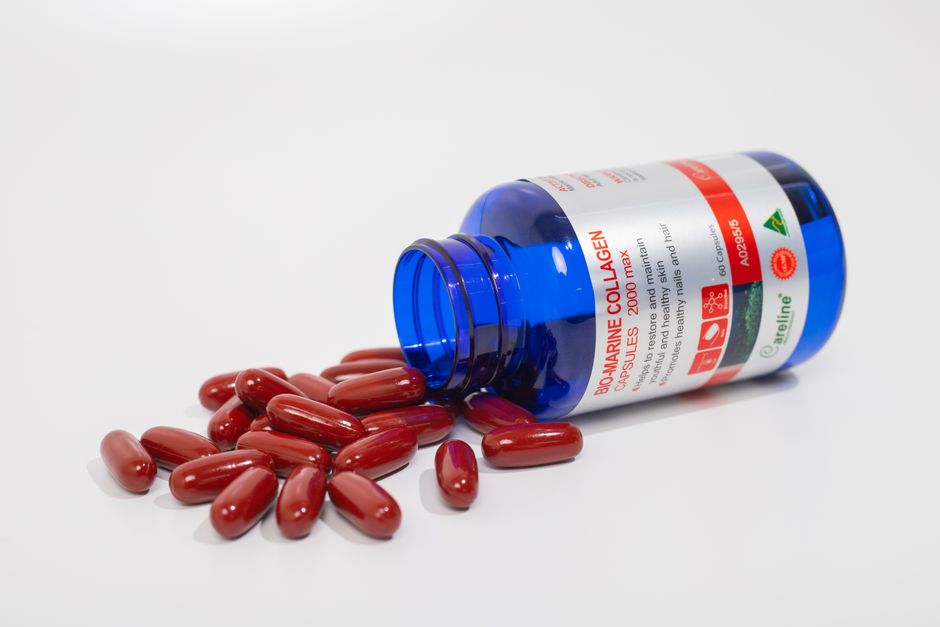
Collagen supplements are widely marketed for joint pain, skin, and connective tissue support. For people with Ehlers-Danlos syndromes (EDS), that marketing often sounds like a direct answer to their problem. The science, however, does not support the idea that swallowing collagen rebuilds defective collagen in EDS. Here is what the evidence actually shows.
What Are Ehlers-Danlos Syndromes?
Ehlers-Danlos syndromes are a group of inherited conditions that affect connective tissue. Connective tissue is the material that holds the body together — skin, joints, blood vessel walls, and organs all depend on it. In EDS, one or more proteins that build this tissue are faulty or in short supply.
The most common type, hypermobile EDS (hEDS), causes joints that move beyond the normal range, chronic joint pain, and skin that stretches easily. Other types involve fragile blood vessels or skin that tears easily. The genetic causes of several rare types are well documented. The genetic basis of hEDS itself has not been identified, which is one reason diagnosis relies on clinical criteria rather than a single lab test.
The key point for this article: in most types of EDS, the problem is a defect in how collagen is built, folded, or cross-linked — not simply a shortage of collagen protein in the diet.
Do Collagen Supplements Help EDS? What Science Says
No clinical trials have shown that collagen supplements correct the underlying connective tissue defect in EDS. There is no evidence that eating or drinking collagen changes the faulty collagen structure that defines these conditions.
This is not a case of “the research is early.” It is a case of a mechanism that does not fit the disease. In EDS, the collagen gene itself carries a mutation, or the enzymes that process collagen do not work properly. Adding more collagen protein to the diet does not fix a gene. It does not repair an enzyme. The body still builds collagen the same faulty way.
Some small studies have looked at collagen supplements for joint pain in the general population, not in EDS. Those studies are limited in size and quality, and their results cannot be assumed to apply to people with a genetic connective tissue disorder.
How Collagen Supplements Actually Work in the Body
When you eat collagen — whether from a supplement, bone broth, or a steak — your digestive system breaks it into amino acids and small peptides. These building blocks enter the bloodstream and are distributed throughout the body. They are not delivered intact to your joints or skin.
Your body then uses those amino acids wherever it needs them. It does not preferentially route them to connective tissue. And it does not use them to rebuild collagen according to a corrected blueprint, because in EDS the blueprint itself is the problem.
This is a common misunderstanding. Many people assume that eating collagen directly replenishes collagen in joints or skin. The digestive process makes that impossible. The amino acids from a collagen supplement are the same amino acids you would get from any protein source.





Why the Marketing for EDS Is Misleading
Collagen supplement companies often use language like “supports joint health” or “promotes connective tissue strength.” These claims are vague enough to avoid regulatory action, but specific enough to sound meaningful to someone with EDS.
The problem is that no study has confirmed these claims in an EDS population. The evidence for collagen supplements in general joint health is mixed at best, and even the positive studies involve people without genetic connective tissue disorders.
Some companies imply that their product provides “the right type” of collagen for EDS. This is not based on any clinical evidence. EDS is not caused by a deficiency of a specific collagen type that can be corrected with a supplement. It is caused by a genetic mutation that affects how collagen is produced or processed.
What Does the Evidence Actually Show for Collagen Supplements?
Outside of EDS, some research suggests collagen supplements may modestly improve skin elasticity or reduce joint pain in certain groups. The evidence is not strong. Many studies are small, short, and funded by industry. Results vary.
For osteoarthritis, for example, some trials have shown small improvements in pain scores. Other trials have shown no difference from placebo. The overall picture is uncertain.
None of this research included people with EDS. Even if collagen supplements had a small benefit for osteoarthritis, that would not mean they help EDS. These are different conditions with different causes.
What Actually Helps Manage EDS Symptoms?
There is no cure for EDS. Management focuses on reducing pain, preventing injury, and improving quality of life. What works varies by type and by person.
Physical therapy is widely recommended, often with a therapist who understands hypermobile conditions. The goal is to strengthen muscles that support unstable joints without pushing them too far. Some clinicians also recommend bracing or splinting for specific joints.
Pain management may include over-the-counter medications, prescription options, or non-drug approaches. No single approach works for everyone. What helps one person with EDS may not help another.
For people with vascular EDS, blood pressure control and avoiding high-impact activities are important. This is a different situation from hEDS and requires specialized care.
If you have EDS, any treatment decision should involve a clinician familiar with the condition. Self-treating with supplements is unlikely to help and may delay more effective care.
Are There Risks to Taking Collagen Supplements?
Collagen supplements are generally considered safe for most people. Side effects are uncommon and usually mild, such as digestive discomfort.
However, “generally safe” does not mean “proven effective” or “appropriate for everyone.” Some collagen products contain additional ingredients, including herbs or other compounds that may interact with medications or have their own risks.
For people with EDS, the bigger risk is not the supplement itself. It is the delay in getting proper care. Spending money and time on a product that cannot address the underlying problem may mean missing out on physical therapy or other approaches that could actually help.
What About Other Supplements Marketed for EDS?
Collagen is not the only supplement marketed for EDS. Vitamin C, glucosamine, chondroitin, and various herbal products are also promoted. The evidence for these in EDS is similarly limited or absent.
Vitamin C does play a role in collagen synthesis. Severe vitamin C deficiency causes scurvy, which affects connective tissue. But taking extra vitamin C does not correct a genetic collagen defect. If you are not deficient, extra vitamin C is unlikely to help.
Some people with EDS report benefit from certain supplements. Reports are not the same as evidence. It is possible that some people feel better for reasons unrelated to the supplement — placebo effect, natural fluctuation in symptoms, or other changes they made at the same time.
The Bottom Line on Collagen and EDS
Collagen supplements do not fix the underlying problem in EDS. The condition is caused by genetic mutations that affect how collagen is made or processed. Eating more collagen does not change that.
Some people may find collagen supplements helpful for general joint comfort, but this has not been studied in EDS. If you want to try one, discuss it with your doctor. Do not expect it to treat the root cause of your condition.
The most effective approaches for EDS focus on managing symptoms and preventing complications. That usually means working with clinicians who understand the condition, not searching for a supplement that promises to rebuild your connective tissue.
Frequently Asked Questions
Do collagen supplements help EDS?
No clinical evidence shows that collagen supplements correct the genetic defect that causes EDS. They may be safe to take, but they do not treat the underlying condition.
Can collagen supplements rebuild connective tissue in EDS?
No. The body breaks down dietary collagen into amino acids and uses them wherever needed. It does not rebuild defective collagen according to a corrected blueprint, because the genetic mutation remains.
What supplements are recommended for EDS?
No supplement is established as a treatment for EDS. Some clinicians may recommend vitamin C or other nutrients if a deficiency is present, but this is not the same as treating the condition itself.
Is it safe to take collagen if I have EDS?
Collagen supplements are generally considered safe for most people, but they are not proven to help EDS. Talk to your doctor before starting any supplement, especially if you take medications or have other health conditions.
