
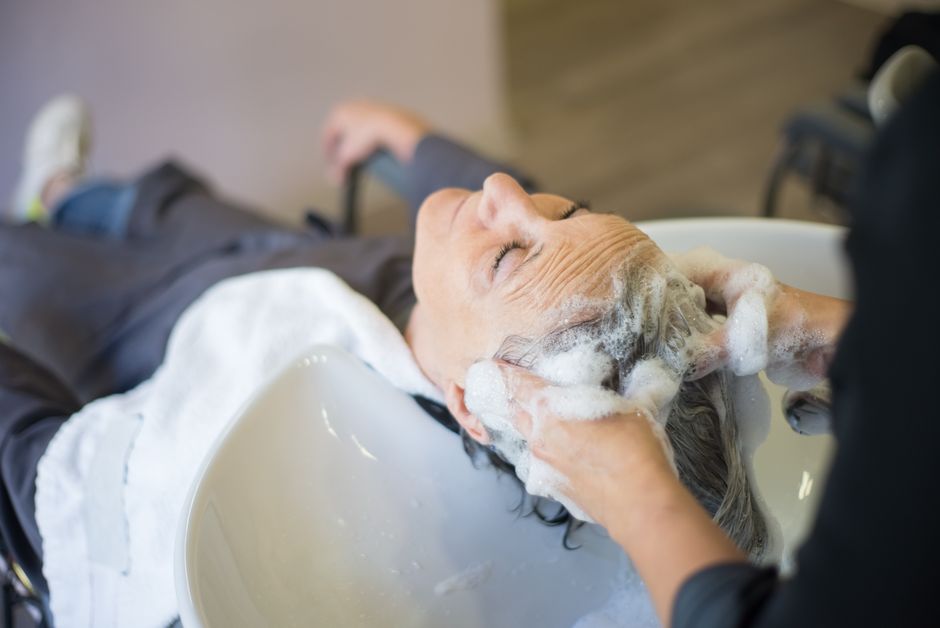
Clarifying shampoo strips away the residue that regular shampoo leaves behind. That residue comes from conditioners, styling gels, dry shampoo, hard water minerals, and your scalp’s own oils. A clarifying formula uses stronger surfactants — the cleansing agents in shampoo — to lift that buildup so hair can feel lighter and look cleaner. It is not a treatment for damaged hair, and it is not meant for daily use.
What Does Clarifying Shampoo Do That Regular Shampoo Doesn’t?
Regular shampoo cleans your hair. Clarifying shampoo cleans the things regular shampoo cannot remove.
Most everyday shampoos are formulated to be gentle. They contain milder surfactants that lift surface oil and dirt without stripping the hair completely. That is good for routine washing. But over time, some ingredients cling to the hair shaft and do not rinse away with a mild wash.
These include:
- Silicones from conditioners and leave-in products, which coat the hair to make it feel smooth
- Polymers and resins from gels, mousses, and hairsprays
- Mineral deposits from hard water, mainly calcium and magnesium
- Oils and butters from deep conditioners and serums
- Powder residue from dry shampoo
A clarifying shampoo uses a stronger detergent system to break down these layers. The result is hair that feels different — often rougher at first, because the coating that made it feel silky is gone.
That rough feeling surprises people. It is not damage. It is what your hair actually feels like without product on it.
How Do You Know If You Need a Clarifying Shampoo?
Buildup is usually obvious once you know the signs. The most common one is hair that looks dull or limp even after you wash it.
Other signs include:
- Hair that feels coated, waxy, or heavy near the roots
- Products that used to work and now seem to sit on top of the hair
- Scalp that feels greasy soon after washing
- Color that looks flatter than it did
- Volume that disappears within hours
These signs can also come from other causes. Dry, damaged hair can look dull. A flaky scalp can feel greasy. If your hair is breaking, shedding, or your scalp is irritated, that points to something else and a clarifying shampoo will not fix it.
If your hair is genuinely coated and heavy from products, clarifying is a reasonable step. If it is dry and brittle, clarifying can make it worse.
Does Clarifying Shampoo Strip Natural Oils?
Yes. That is the trade-off, and it is worth understanding before you use one.
Your scalp produces sebum, a natural oil that keeps hair conditioned. Clarifying shampoos remove more of it than gentle shampoos do. For some people that is exactly what they want. For others it leads to a dry, tight scalp and hair that feels straw-like.
The amount of stripping depends on the formula. Some clarifying shampoos use sulfates, which are strong cleansers. Others use gentler surfactants and rely on chelating agents — ingredients that bind to minerals like calcium and magnesium and help rinse them away. Chelating formulas are often marketed for hard water.
If you have dry or chemically treated hair, a chelating formula may be a better fit than a harsh sulfate-based one. If your main problem is product buildup, either type can work.





How Often Should You Use Clarifying Shampoo?
For most people, once every week or two is enough. Some people need it only once a month.
There is no universal number, and no clinical guideline sets a frequency for cosmetic hair washing. The right interval depends on how much product you use, how hard your water is, and how your hair responds.
Signs you are using it too often:
- Scalp feels tight, itchy, or dry after washing
- Hair feels brittle or tangles more easily
- Color fades faster than expected
- Hair looks frizzy rather than clean
If any of these show up, space out your clarifying washes. Go back to your regular shampoo in between.
One thing worth knowing: clarifying shampoo is not a deep conditioner and does not replace one. After clarifying, many people find their hair needs moisture. A conditioner applied after clarifying helps restore some of what was removed.
Is Clarifying Shampoo Safe for Color-Treated Hair?
It can fade color. This is one of the most common concerns, and it has a real basis.
Color dyes sit in and on the hair shaft. Strong surfactants can lift some of that dye out, especially in the first couple of weeks after coloring. The more often you clarify, the more opportunity there is for color to fade.
If you color your hair, consider these points:
- Wait at least a week or two after coloring before clarifying
- Choose a sulfate-free or chelating formula over a harsh one
- Clarify less often — every few weeks rather than weekly
- Follow with a color-safe conditioner
Some color-safe clarifying products exist, but even these can cause some fading. There is no clarifying shampoo that removes buildup while leaving color completely untouched.
Clarifying Shampoo vs. Regular Shampoo: What’s the Difference?
The main difference is the strength of the cleansing system and what it targets.
| Feature | Regular Shampoo | Clarifying Shampoo |
|---|---|---|
| Main purpose | Remove surface oil and dirt | Remove buildup and residue |
| Surfactant strength | Mild to moderate | Stronger |
| Removes silicones | Limited | Yes |
| Removes hard water minerals | Limited | Yes, especially chelating types |
| Effect on natural oils | Gentle | Strips more |
| Effect on hair color | Minimal | Can cause fading |
| Recommended frequency | As needed, often daily or every few days | Every 1-2 weeks or less |
Neither type is better in general. They do different jobs. Using a clarifying shampoo as your everyday wash is likely to leave hair dry and scalp irritated over time.
What Clarifying Shampoo Does Not Do
Clarifying shampoo is a cleaning product. It does not repair hair, treat the scalp, or promote growth.
It cannot fix split ends. It does not restore protein or moisture to damaged hair. It does not treat dandruff, psoriasis, or seborrheic dermatitis — those need medicated shampoos with active ingredients like zinc pyrithione, ketoconazole, or salicylic acid, depending on the cause.
It also does not make hair grow faster. No shampoo does. Hair growth happens at the follicle below the scalp, and what you apply to the visible hair shaft does not reach it.
If you are dealing with hair loss, scalp pain, or persistent flaking, a clarifying shampoo is not the answer. Those need a doctor or dermatologist.
How Should You Use a Clarifying Shampoo?
Use it the same way you use regular shampoo, with a few adjustments.
- Wet hair thoroughly first
- Apply to the scalp and roots, where buildup concentrates
- Massage gently, then rinse well
- Repeat only if hair is very coated
- Follow with conditioner on the mid-lengths and ends
You do not need to leave it on. Clarifying shampoos work on contact. Leaving it in longer does not make it clean better and may increase irritation.
If your goal is removing hard water minerals, a chelating shampoo may work better than a standard clarifying one. The two are often grouped together, but they are not identical. Clarifying targets product buildup. Chelating targets minerals.
When to Skip Clarifying Shampoo
Some hair and scalp types do better without it.
Skip it if your hair is very dry, highly porous, or already damaged. Skip it if you have a sensitive or irritated scalp. Skip it if you recently bleached or relaxed your hair, since these processes already leave hair fragile.
If you are unsure whether your hair needs clarifying or something else, the safest approach is to try it once, watch how your hair responds over the next few days, and adjust from there. Hair care is not one-size-fits-all, and the evidence behind most cosmetic hair claims is thin. What works for one person may not work for you.
Frequently Asked Questions
What does clarifying shampoo do to your hair?
It removes buildup from silicones, styling products, oils, and hard water minerals that regular shampoo leaves behind. This can make hair feel lighter and look cleaner, but it also strips more natural oil than a gentle shampoo.
Can I use clarifying shampoo every day?
No, daily use is likely to leave hair dry and the scalp irritated. Most people do well with once every week or two, or even once a month.
Does clarifying shampoo damage hair?
It does not damage hair directly, but frequent use can leave it dry and brittle by removing too much natural oil. If your hair already feels dry or damaged, clarifying can make it worse.
Is clarifying shampoo the same as regular shampoo?
No, clarifying shampoo uses stronger cleansing agents and targets buildup rather than everyday dirt and oil. Regular shampoo is milder and meant for routine washing.
