
Body lice are small parasitic insects that live on clothing and bedding, not directly on the skin. They are about the size of a sesame seed, roughly 2 to 4 millimeters long, and have a flat, elongated body. Their color ranges from grayish-white to reddish-brown, depending on whether they have recently fed on blood. Unlike head lice or pubic lice, body lice are rarely seen on the person themselves — you are more likely to find them in the seams of clothing or in bed linens.
What Does Body Lice Look Like Compared to Other Lice?
Body lice look very similar to head lice and pubic lice, but there are key differences. All three are types of lice that feed on human blood, but they prefer different areas of the body and behave differently.
Body lice are generally the largest of the three. They are slightly bigger than head lice and noticeably larger than pubic lice. Their color is usually a pale gray or tan, but they turn a darker reddish-brown after feeding.
Head lice are typically smaller, about 1 to 2 millimeters, and are often found crawling on the scalp. Pubic lice, sometimes called “crabs,” are even smaller and have a rounder, crab-like body shape with large front claws. Body lice have a more elongated, narrow body without the prominent claws.
| Feature | Body Lice | Head Lice | Pubic Lice |
|---|---|---|---|
| Size | 2-4 mm | 1-2 mm | 1-2 mm |
| Color | Grayish-white to reddish-brown | Tan to gray | Grayish-white |
| Body Shape | Elongated, narrow | Elongated, narrow | Round, crab-like |
| Primary Location | Clothing seams, bedding | Scalp, hair shafts | Pubic hair, eyelashes |
| Legs | Six legs, no large claws | Six legs, no large claws | Six legs, large front claws |
What Do Body Lice Eggs Look Like?
Body lice lay eggs, called nits, on clothing fibers, not on the body. This is a critical distinction. The eggs are tiny, about 0.8 millimeters long, and are oval-shaped with a small cap at one end. They are white or yellowish-white and can be mistaken for dandruff or lint.
Unlike dandruff, nits are firmly attached to fabric fibers with a strong glue-like substance. They do not flake off easily. If you try to pick them off, they resist. Dandruff or lint will slide off or crumble easily. Nits are usually found in the seams of clothing, especially around the collar, waistband, and armpits.
The eggs hatch in about 6 to 9 days. After hatching, the empty egg case remains attached to the fabric and looks like a small, whitish, empty shell. You may also see live nits that are still developing, which appear slightly darker and fuller.
What Do Body Lice Look Like on Skin?
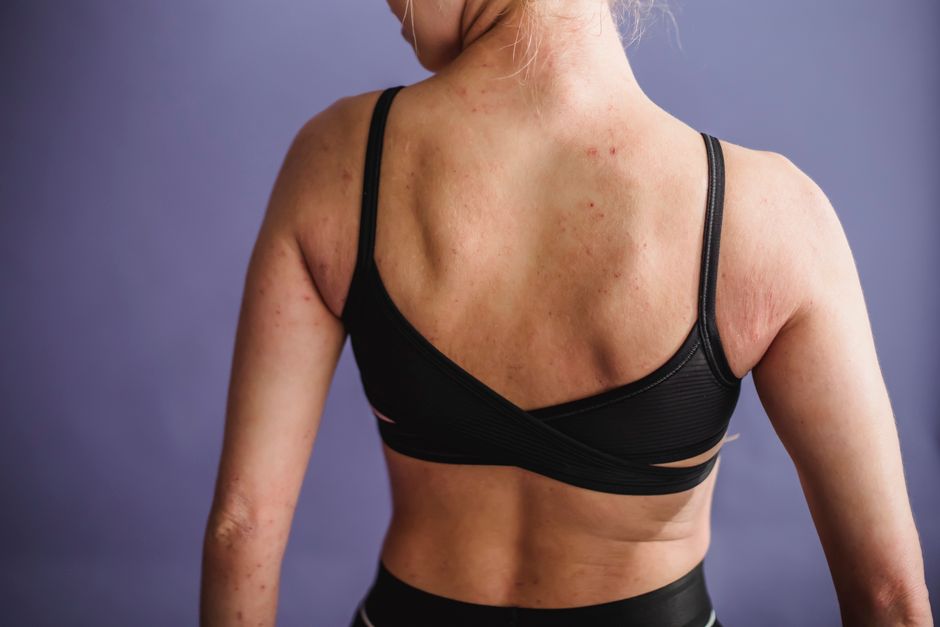
Body lice themselves are rarely seen directly on the skin. They feed on blood but then crawl back into clothing or bedding. However, their presence causes visible skin reactions.
The most common sign is intense itching, especially around the waist, groin, armpits, and shoulders. Scratching leads to red, irritated skin. You may see small red bumps or welts, similar to mosquito bites. Over time, chronic scratching can cause the skin to thicken and darken, a condition called vagabond’s disease.
If you look closely at the skin during an active infestation, you might see tiny, moving specks of gray or brown. These are the adult lice feeding. They are most active when the body is warm and at rest, such as during sleep. But again, you are far more likely to find them in the seams of a shirt than on your skin.





How Can You Tell If You Have Body Lice?
Diagnosis is usually based on symptoms and finding lice or nits in clothing. A doctor or public health worker will examine the seams of your clothing, especially underwear, shirts, and pants. They look for adult lice, nymphs (young lice), and nits.
If you suspect body lice, check your clothing carefully. Turn garments inside out and inspect the seams with good lighting. Use a magnifying glass if available. Look for small, moving insects or tiny white eggs attached to the fabric.
Common signs that point to body lice include:
- Intense itching that is worse at night
- Red bumps or rash on the waist, armpits, or groin
- Small, dark specks (lice droppings) on clothing or bedding
- Visible nits or lice in the seams of clothing
- Thickened, darkened skin in areas of chronic scratching
Body lice are strongly linked to crowded living conditions and poor hygiene. They are rare in people who bathe regularly and change clothes often. If you have itching and you live in clean conditions, head lice or scabies is a more likely cause.
What Does Research on Body Lice Show?
Research published by the CDC shows that body lice are primarily a problem in homeless populations, refugee camps, and disaster settings. They are not a common problem in the general US population. The CDC reports that body lice can transmit serious diseases, including epidemic typhus, trench fever, and louse-borne relapsing fever, though these are rare in the United States.
Studies have found that body lice are highly sensitive to temperature. They cannot survive for long away from a human host. Without a blood meal, adult lice die within 5 to 7 days. Nits can survive longer, up to 30 days, but they require warmth to hatch.
Some research suggests that body lice are becoming resistant to certain insecticides, particularly permethrin. This is a concern for treatment in institutional settings. However, for most individuals, the simple removal of infested clothing and proper hygiene is effective.
Evidence indicates that body lice do not jump or fly. They crawl. Transmission occurs through direct contact with infested clothing or bedding, not through casual contact like shaking hands.
How Do You Get Rid of Body Lice?
Treatment is straightforward and does not always require medication. The primary step is to wash all clothing, bedding, and towels in hot water (at least 130°F or 54°C) and dry them on high heat for at least 20 minutes. This kills both adult lice and nits.
Items that cannot be washed can be sealed in a plastic bag for two weeks. Without a host, any remaining lice or nits will die. Dry cleaning also kills lice.
If washing is not immediately possible, you can use an over-the-counter lice treatment containing permethrin or pyrethrin. Apply it to the body as directed, but remember that the lice live in clothing, not on the skin. The medication only kills lice that are on your body at that moment. Re-infestation from unwashed clothing is common if you do not treat the clothing too.
Prescription treatments are available for severe cases or when resistance is suspected. Your doctor may recommend malathion or benzyl alcohol lotion. However, for most people, hygiene and washing are enough.
Common Misconceptions About Body Lice
One widespread myth is that body lice are the same as head lice. They are not. While they look similar, they are different species with different behaviors. Head lice stay on the scalp. Body lice live in clothing.
Another myth is that body lice are a sign of being dirty. While poor hygiene and infrequent clothing changes increase risk, body lice do not discriminate based on cleanliness alone. They require crowded, unsanitary conditions to spread. A clean person can get body lice if they sleep in infested bedding.
Some people believe that body lice burrow into the skin. This is false. They do not burrow. They feed on the surface and then retreat to clothing. The itching is caused by an allergic reaction to their saliva, not by them digging into the skin.
Finally, many think that body lice are harmless. They are not. As mentioned, they can carry serious diseases. While rare in the US, outbreaks of typhus have occurred in homeless shelters. Treatment is important not just for comfort but for public health.
Frequently Asked Questions
Can you see body lice with the naked eye?
Yes, adult body lice are visible without a magnifying glass. They are about the size of a sesame seed and can be seen crawling on clothing seams.
Do body lice look like dandruff?
No, but their eggs (nits) can be mistaken for dandruff. Nits are firmly attached to fabric, while dandruff flakes off easily.
How long can body lice live off the human body?
Adult body lice die within 5 to 7 days without a blood meal. Nits can survive up to 30 days but need warmth to hatch.
Can body lice cause a rash?
Yes, the bites cause small red bumps and intense itching. Chronic scratching can lead to thickened, darkened skin.
