
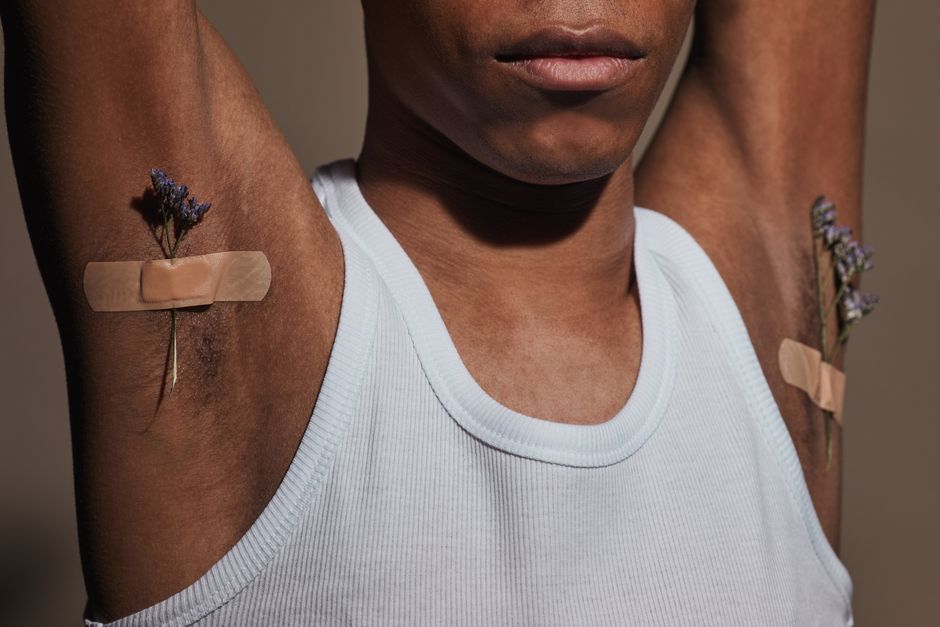
Armpit fungus usually shows up as a patch of skin that is red, pink, brown, or darker than the surrounding area, often with a sharp or scaly border. On lighter skin the color is typically red or pink. On medium and darker skin it often looks brown, purple-brown, or gray, and it can look darker than the rest of the body rather than red. The surface may be flaky, itchy, and sometimes ring-shaped.
Color is the part people get wrong most often. A rash in the armpit is not always red, and on darker skin tones it frequently is not. That single fact is why many people miss the problem or treat it as simple irritation for weeks.
What Does Armpit Fungus Look Like On Any Skin Tone?
The color shifts with your natural skin tone, but the texture and shape stay fairly consistent.
On lighter skin, the affected area tends to appear red or pink. On medium skin, it may look red-brown or salmon-colored. On darker skin, it commonly appears brown, dark brown, purple-brown, or gray. On all tones, the patch can look slightly darker than the skin around it, and the border is often more noticeable than the center.
The surface is usually the giveaway. You may see fine scaling, a flaky or powdery texture, or a raised edge with a clearer middle. The patch can be round, oval, or irregular. Itching is common, and it often worsens with heat and sweat.
One detail people miss: the rash may not be uniform. It can start as a small spot and spread outward, so you sometimes see a ring with a calmer center. That ring pattern is more typical of some fungal infections than others, so it is a clue, not a diagnosis.
Why Armpit Fungus Is Easy to Confuse With Other Rashes
The armpit is a warm, dark, moist fold, which is exactly the environment many fungi and yeasts prefer. That same environment also causes several non-fungal rashes. The result is a lot of overlap in how these conditions look.
Eczema, psoriasis, allergic contact dermatitis, and irritation from deodorant or shaving can all produce a red, itchy, scaly patch in the armpit. So can a bacterial infection. To the eye, they can be hard to tell apart, especially early on.
This is why color alone cannot confirm a fungal cause. A dermatologist often needs to look at a skin scraping under a microscope or under a special light to identify what is actually growing. If a rash keeps coming back or does not respond to treatment, that step matters more than guessing.
There is also a practical trap. Some treatments for eczema and some for fungus are not the same, and using the wrong one can make things worse or simply waste time. A steroid cream, for example, can calm inflammation from several causes but does not treat a fungus, and using it alone on a fungal rash can let the infection spread.
Common Causes of Fungal Rashes in the Armpit
Several different organisms can cause a fungal rash in this area, and they do not all look identical.
- Dermatophyte infections are caused by molds that feed on keratin in the outer skin. They often produce a scaly, ring-shaped patch with a raised border.
- Yeast infections, most often from Candida, tend to appear in skin folds as a red, moist, sometimes raw-looking patch with smaller spots around the edges.
- Pityriasis versicolor, caused by a yeast that lives on most people’s skin, can produce patches that are lighter or darker than the surrounding skin. It is more common on the chest and back but can appear in the armpit.
These are not the only possibilities, and the same person can have more than one issue at once. Sweat, friction, and occlusive clothing raise the odds by keeping the skin warm and damp.




What Makes Someone More Likely to Get It
Heat and moisture are the biggest drivers. Anything that keeps the armpit damp or traps sweat against the skin raises the risk.
Other factors that some studies link to fungal skin infections include a weakened immune system, diabetes, obesity, and living in a hot or humid climate. Taking antibiotics can shift the balance of organisms on the skin and allow yeast to overgrow. Sharing towels or clothing with someone who has a contagious fungal infection can spread certain types.
None of these factors guarantees you will get a rash, and having a rash does not mean you have an underlying condition. They simply change the odds.
When It Is Probably Not Fungus
A rash that clears up quickly with better hygiene and a breathable shirt is often just irritation, not an infection. So is one that appears right after switching deodorants or shaving.
A few signs point away from fungus. A rash that is intensely painful, blistered, or spreading fast may be bacterial or another condition. A rash with a clear allergic trigger, like a new detergent, often follows that exposure. A rash that comes and goes with stress or weather changes may be eczema or psoriasis.
If you are not sure, getting it looked at is faster than trial and error. A clinician can often tell the difference in a single visit.
How Armpit Fungus Is Usually Treated
Most uncomplicated fungal skin infections are treated with topical antifungal creams, lotions, or powders. Some are available over the counter, and some require a prescription. The specific choice depends on which organism is involved and how widespread the rash is.
Treatment usually needs to continue for a set period even after the rash looks better, because the visible skin can clear before the fungus is gone. Stopping early is a common reason rashes return. For stubborn or widespread cases, a clinician may prescribe an oral antifungal.
Because the right treatment depends on the specific cause, this is a case where a proper diagnosis saves time. A cream that works for one type of fungus may not work for another.
If you have diabetes or a weakened immune system, or if the rash is spreading or not improving, see a clinician rather than self-treating for long. That is general guidance, not a substitute for an exam.
Everyday Steps That Reduce the Chance of It Coming Back
Keeping the area dry and cool does more than any single product. Fungi need moisture, so removing it makes the environment less friendly.
- Wash the armpits daily and dry them fully, including the fold itself.
- Choose loose, breathable fabrics, especially in hot weather or during exercise.
- Change out of sweaty clothing promptly after workouts.
- Use a clean towel each time and do not share towels or razors.
- If you use antiperspirant or deodorant, let the skin dry before applying.
These steps lower the odds, but they are not a guarantee. Some people are simply more prone to these rashes, and recurrence is common.
What Armpit Fungus Is Not
A rash in the armpit is not automatically a sign of poor hygiene. Many people with good hygiene get fungal rashes because of sweat, climate, or their own skin biology.
It is also not something you can reliably self-diagnose from a photo. Color, lighting, and skin tone all change how a rash looks on a screen. A picture that looks like fungus could be eczema, and the reverse is just as true.
Frequently Asked Questions
What does armpit fungus look like on dark skin?
On darker skin, armpit fungus often appears brown, purple-brown, or gray rather than red. The patch may look darker than the surrounding skin, with a scaly or raised border.
Is armpit fungus always itchy?
Itching is common but not universal. Some fungal rashes itch a lot, while others are mainly a visible, scaly patch with little or no itch.
Can armpit fungus go away on its own?
Mild cases sometimes improve with better hygiene and drier skin, but many fungal rashes need antifungal treatment to clear fully. If it is not improving, see a clinician.
How can I tell if it is fungus or just a rash?
You usually cannot tell for certain by looking, because eczema, irritation, and fungal infections can look alike. A skin scraping or exam by a clinician is the reliable way to know.
