
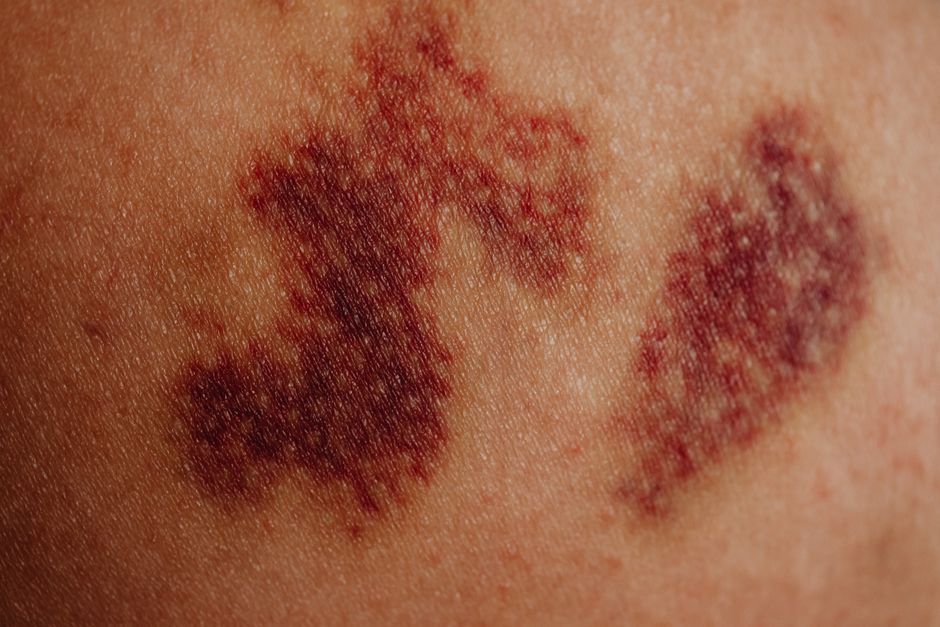
A bruise starts red within minutes of an injury. That red color is fresh blood pooling under your skin. The blood contains oxygen, which gives it that bright red hue. As time passes, the blood loses oxygen and the bruise changes color, moving through purple, blue, green, and yellow before fading completely.
What Happens Inside Your Body When You Get Hit
When you bump into something, small blood vessels called capillaries break. These vessels sit close to the surface of your skin. When they rupture, blood leaks out into the tissue around them.
Your body responds immediately. White blood cells rush to the area. Platelets start forming clots to stop the bleeding. This whole process begins within seconds of the impact.
The red appearance comes from hemoglobin, the protein in red blood cells that carries oxygen. Freshly leaked blood is full of oxygen. Oxygenated hemoglobin reflects red light, which is why the bruise looks red at first.
This initial red stage is brief. Most bruises turn purple or blue within a few hours as the trapped blood loses oxygen.
Why Does The Bruise Look Red At The First Stage Rather Than Purple
People often expect bruises to be purple or black right away. That expectation comes from seeing older bruises, not fresh ones. The color change is a direct result of oxygen levels in the trapped blood.
Fresh blood contains hemoglobin bound to oxygen. This oxygenated hemoglobin has a bright red color. Think of arterial blood, which is always red because it carries oxygen from the lungs. The blood that leaks into your bruise is the same kind of blood.
Within hours, the red blood cells in the bruise begin to break down. The hemoglobin loses its oxygen. Deoxygenated hemoglobin appears darker, more purple or blue. This is why older bruises look purple, just like deoxygenated blood in your veins looks blue through the skin.
So the red first stage is simply a snapshot of freshly oxygenated blood sitting in your tissue before chemical changes begin.
The Full Color Timeline of a Bruise
Bruises follow a predictable color sequence as your body clears the trapped blood. Not every bruise goes through every color, and the timeline varies from person to person.
- Red: First few hours. Fresh blood with oxygen.
- Purple or blue: 1 to 2 days. Hemoglobin loses oxygen.
- Green: 5 to 7 days. Hemoglobin breaks down into biliverdin, a green pigment.
- Yellow or brown: 7 to 10 days. Biliverdin converts to bilirubin, a yellow pigment.
- Fading: 10 to 14 days. Your body clears the remaining debris.
This breakdown process is natural and requires no treatment. Your immune system gradually removes the dead red blood cells and recycles the useful components.
Bruises on the legs and feet often take longer to heal than bruises on the face or arms. Gravity keeps blood pooling in the lower extremities, and those areas have lower blood flow than the head and neck.




Why Some Bruises Skip Colors or Stay Red Longer
Not every bruise follows the textbook color sequence. Deep bruises may never appear red at all. If the bleeding happens deep in the muscle, the color may only become visible once it reaches purple or green stages.
Some bruises stay red for several days. This usually means bleeding is ongoing. Conditions that thin the blood, such as aspirin or blood thinners, can prolong the red stage. So can repeated injury to the same spot.
Certain medical conditions affect bruise color and healing time. People with iron deficiency anemia may heal bruises more slowly. Liver disease can impair clotting. Platelet disorders can cause more extensive bruising.
If a bruise remains red, warm, and painful for more than a couple of days, it could indicate a hematoma. A hematoma is a larger collection of blood that has clotted. These sometimes need medical drainage if they are large or in a sensitive location.
When Should a Bruise Worry You
Most bruises are harmless and heal on their own. But some bruises signal a problem that needs medical attention.
Seek medical care if you experience any of the following:
- A bruise that keeps growing after 24 hours
- Bruising that happens without any known injury
- Bruises accompanied by severe pain or swelling
- Bruising that does not change color over two weeks
- Bruises that appear after starting a new medication
- Frequent large bruises that seem to appear easily
Unexplained bruising can indicate a bleeding disorder or a problem with your platelets. If you notice this pattern, especially with nosebleeds or bleeding gums, talk to your doctor.
Bruises near the eye can be dangerous if they affect vision or cause double vision. Bruises on the head or torso after a fall or accident warrant evaluation even if they look small. Internal bleeding can be hidden beneath a surface bruise.
What Helps a Bruise Heal Faster
You cannot make a bruise disappear overnight. The body needs time to break down and clear the trapped blood. But you can support the process.
Cold therapy works best in the first 24 to 48 hours. Apply an ice pack wrapped in a thin cloth for 15 to 20 minutes at a time. Cold constricts blood vessels, which may reduce the amount of blood that leaks out of damaged capillaries.
After the first two days, switch to warmth. A warm compress increases blood flow to the area, which helps your immune system clear the breakdown products faster. Warmth also relaxes surrounding muscles that may have tensed up from the injury.
Elevation helps if the bruise is on an arm or leg. Raising the limb above heart level reduces blood flow to the area, which limits additional pooling.
Over-the-counter pain relievers like acetaminophen are generally safe for bruise pain. Avoid ibuprofen and aspirin in the first 48 hours after injury. These medications thin the blood and can make bruising worse.
Myths About Bruises That You Should Ignore
Several home remedies circulate online, and most have no evidence behind them. Arnica cream is popular for bruising. Some research suggests it may help, but the evidence is not strong enough to confirm consistent benefit.
Vitamin K cream is sometimes recommended. Your body needs vitamin K for clotting, but applying it to the skin after a bruise forms does not reverse damage that has already happened.
Pineapple and papaya contain enzymes that break down protein. Some people apply these fruits to bruises. No clinical evidence confirms that this speeds healing, and applying fruit to broken skin can introduce bacteria.
Massaging a bruise does not help. In fact, massage in the first 48 hours can break more capillaries and make the bruise larger. Gentle massage after the first week may help with muscle soreness, but it does not clear the bruise faster.
When the Color Pattern Changes Unexpectedly
Bruises that do not follow the expected color pattern deserve attention. A bruise that turns black and hard may be a deep hematoma. A bruise that becomes increasingly red and warm over several days may be infected.
Infected bruises are rare but serious. Signs include expanding redness, warmth, fever, and pus. If you notice these symptoms, seek medical care promptly. An infected bruise may require antibiotics.
Some people develop bruises that never change color. This can happen with certain blood disorders or with long-term steroid use. If a bruise stays the same color for more than three weeks, have it evaluated.
Frequently Asked Questions
How long does a bruise stay red?
A bruise typically stays red for the first few hours after injury. Most bruises turn purple or blue within 24 hours as the trapped blood loses oxygen.
Is a red bruise a bad sign?
No, a red bruise is normal and simply means the blood is fresh and recently leaked. Red is the expected first color of any new bruise.
Why is my bruise red after several days?
A bruise that stays red for more than a couple of days may indicate ongoing bleeding. This can happen with blood-thinning medications or repeated injury to the same area.
Can you stop a bruise from turning purple?
No, you cannot prevent the color change. The purple color is a natural chemical breakdown of hemoglobin, and it happens regardless of treatment.
