
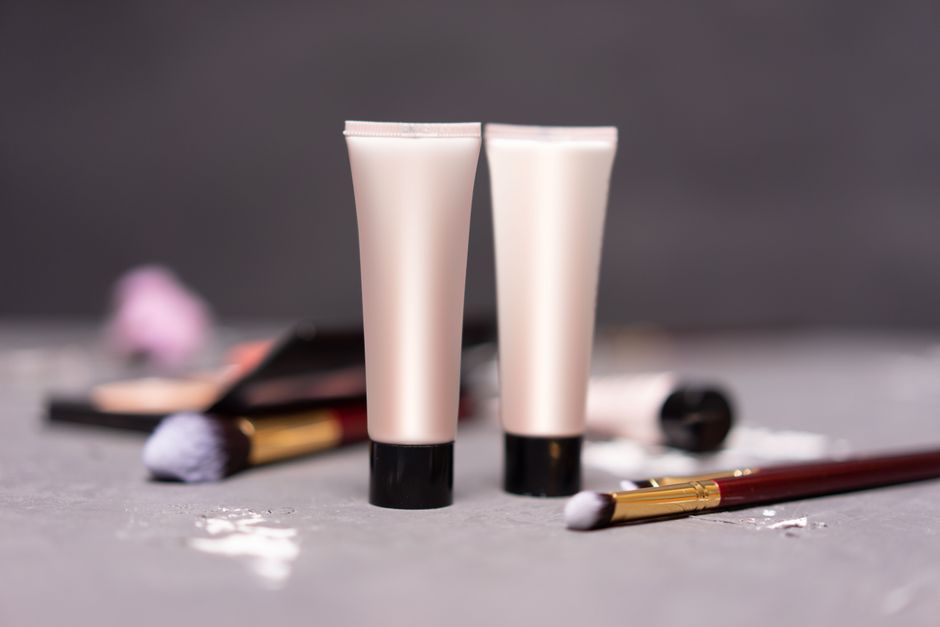
A face primer sits between your skincare and your makeup. Its main job is to create a smoother surface for foundation and to help makeup last longer. But the science of how it works on your skin is more interesting than most product labels suggest. Primers do not change your skin permanently. They change the surface conditions temporarily so that makeup adheres better and looks more even.
What Does A Primer Do Skin Surfaces Science Explain About Adhesion?
Think about painting a wall. If the wall is rough and dusty, the paint goes on uneven and peels quickly. A primer coat gives the paint something to grip. Face primers work on the same basic principle of surface chemistry.
Your skin is not a flat canvas. It has texture from pores, fine lines, and tiny hairs. It also produces oil and sweat. These natural features make it hard for makeup to stay in place. A primer fills in the micro-depressions on your skin and creates a uniform layer. This layer gives foundation a consistent surface to cling to, which improves adhesion and longevity.
Most primers are silicone-based, usually containing ingredients like dimethicone or cyclopentasiloxane. These silicones form a thin, breathable film. This film smooths the skin and repels water and oil. It is this film that creates the “blurred” look many primers promise. The light scatters off the silicone film rather than catching on the edges of pores or fine lines.
How Do Primers Interact With Different Skin Types?
Primers are not one-size-fits-all. The formulation matters based on your skin’s natural state.
Oily skin produces excess sebum. Sebum breaks down makeup over the course of the day. A mattifying primer usually contains ingredients like silica or clay that absorb oil. Silica particles are highly porous. They soak up sebum on the surface and keep it away from your foundation. These primers feel powdery or velvety to the touch.
Dry skin has the opposite problem. It lacks oil, so makeup can look patchy or flaky. Hydrating primers are typically water-based and contain humectants like glycerin or hyaluronic acid. These ingredients pull moisture into the outer layer of the skin. They create a smooth, slightly damp surface that helps foundation blend evenly.
Combination skin needs a balanced approach. Some people use different primers on different areas of the face. A mattifying primer on the T-zone and a hydrating primer on the cheeks is a common strategy. There is no rule that says you must use one primer for your whole face.
Can Primers Actually Minimize Pores and Fine Lines?
Primers do not shrink pores. No cosmetic can physically change pore size. What a primer does is fill the opening of the pore with a silicone or powder-based formula. This creates a smooth, level surface. Visually, the pore appears smaller because it is no longer casting a shadow.
The same logic applies to fine lines. A primer settles into the crease of a fine line and levels it with the surrounding skin. The line does not disappear. It becomes less visible because the surface is flat.
This effect is temporary. It lasts only as long as the primer and makeup remain on your skin. Once you wash your face, pores and lines return to their natural appearance. The optical blurring is a physical effect, not a biological change.





What Is the Difference Between Primer and Moisturizer?
This is a common point of confusion. Both products are applied before foundation and both can make skin feel smoother. But they serve different functions.
A moisturizer is a skincare product. It delivers water, oils, and beneficial ingredients into the stratum corneum, which is the outermost layer of the skin. Its purpose is to improve the health and hydration of the skin barrier over time.
A primer is a makeup product. It sits on the surface of the skin rather than penetrating it. Its purpose is to modify the surface texture and chemistry to optimize makeup wear. Most primers have no long-term skincare benefit.
Some hybrid products exist. They contain moisturizing ingredients and film-forming silicones. These can do both jobs to some degree. But a true primer is not a replacement for a moisturizer, especially if you have dry skin.
Is Primer Necessary or Just a Marketing Step?
Primer is optional. It is not a required step in a makeup routine. Many people wear foundation without primer and look perfectly fine. The question is whether the primer improves the outcome enough to justify the extra product and time.
For people with oily skin, a good mattifying primer can meaningfully extend the wear time of foundation. Research and clinical observation support that oil control is the single biggest factor in makeup longevity.
For people with very smooth, normal skin, a primer may make little visible difference. The skin already provides a good surface for makeup. In this case, the primer is an unnecessary extra layer.
There is no clinical evidence that primers harm the skin when used as directed. Silicones are generally considered safe for cosmetic use. They are non-comedogenic in most formulations, meaning they do not clog pores. However, if you are prone to breakouts, check the ingredient list. Some primers contain oils or waxes that could be problematic for acne-prone skin.
How Should You Apply Primer for Best Results?
Application technique affects how well a primer works. The product needs to form a continuous, even film across the skin.
Start with a clean, moisturized face. Wait a few minutes for your skincare to absorb before applying primer. If you apply primer over a wet or tacky moisturizer, the two products can mix and pill, creating small balls of product on your skin.
Use a small amount. A pea-sized drop is usually enough for the whole face. More product does not mean better results. A thick layer of primer can feel heavy and may cause foundation to slide around.
Press the primer into the skin rather than rubbing it. Use your fingertips or a damp sponge. Pressing helps the product settle into pores and lines rather than sitting on top of them. Pay extra attention to areas where makeup tends to fade, like the nose and the center of the forehead.
Let the primer set for 60 to 90 seconds before applying foundation. This gives the silicone film time to form. If you apply foundation too quickly, you can disturb the primer layer and reduce its effectiveness.
Are There Any Risks or Downsides to Using Primer?
Primers are low-risk cosmetics for most people. The main concerns are irritation and breakouts.
Silicone-based primers can cause breakouts in some individuals, even though silicones themselves are generally non-comedogenic. This is often due to other ingredients in the formulation, such as oils, waxes, or fragrance. If you notice new breakouts after starting a primer, stop using it and check the label.
Fragrance is a common irritant. People with sensitive skin or conditions like rosacea should choose fragrance-free primers. The skin barrier on compromised skin is more permeable, so irritating ingredients have a greater chance of causing a reaction.
Some people report that long-term use of silicone primers makes their skin feel different. This is not supported by clinical evidence. There is no indication that silicones damage the skin barrier or cause dependence. The “different” feeling is likely the result of product residue that was not fully cleansed away.
Always remove primer and makeup at the end of the day. A gentle cleanser or double cleansing method is sufficient. Leaving silicone films on overnight is not harmful, but it can trap dead skin cells and oil against the skin, which may contribute to clogged pores over time.
Frequently Asked Questions
Does primer work on bare skin without moisturizer?
Yes, primer can be applied to bare skin, but it works better on moisturized skin. Dry, dehydrated skin has a rough texture that prevents the primer film from forming evenly.
Can primer replace sunscreen?
No. Unless a primer clearly states it contains SPF and you apply it in the recommended amount, it does not provide adequate sun protection. You need a separate sunscreen underneath your primer.
How long does primer actually make makeup last?
Most primers extend makeup wear by several hours, especially for oily skin types. The exact duration varies by product, skin type, and environmental conditions like humidity.
Is silicone in primer bad for your skin?
No. Cosmetic-grade silicones are considered safe and non-toxic for topical use. They do not penetrate the skin and are not absorbed into the bloodstream.
