
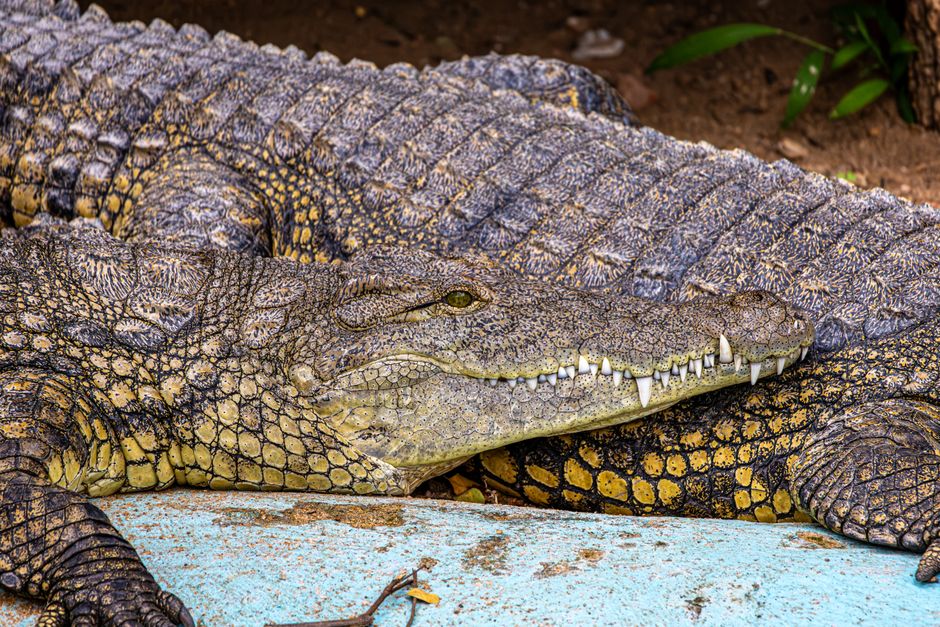
Crocodile skin is among the toughest natural materials on the planet. It is not just thick; it is a complex layered armor designed to resist bites, claws, and environmental wear. The science behind its toughness comes down to a unique combination of bony plates, dense collagen fibers, and a rugged outer surface that heals quickly.
What Makes Crocodile Skin So Tough?
The toughness starts with the skin’s structure. Crocodile skin has two main layers: the outer epidermis and the thicker inner dermis. The dermis contains dense, interwoven collagen fibers. These fibers are arranged in a crisscross pattern, much like the layers of a tire. This arrangement makes the skin highly resistant to tearing and puncture.
Beneath the collagen, crocodiles have bony plates called osteoderms. These are hard, calcified structures embedded in the skin, mostly on the back. Osteoderms act like built-in body armor. They are connected to the skin and muscles, and they provide a rigid shield against attacks. The belly skin lacks these plates, which is why it is softer and more flexible.
The outer layer of the skin is covered in tough, keratinized scales. Keratin is the same protein found in human fingernails and rhino horns. In crocodiles, these scales are thick and heavily reinforced, creating a rough, abrasive surface that resists cuts and scrapes.
How Does It Compare to Other Animal Skin?
When comparing animal hides, crocodile skin stands apart from mammals. Cowhide is strong but lacks the bony plates. Elephant skin is thick but not as rigidly armored. Shark skin is rough but thin. The combination of collagen, keratin, and bone makes crocodile skin uniquely resistant to both blunt force and sharp penetration.
A useful comparison is to think of leather. Standard leather is durable, but it is just treated animal skin. Crocodile leather, once tanned, is prized for its strength and distinctive scale pattern. It is used in high-end shoes, belts, and bags because it holds up well under repeated stress.
In terms of raw toughness, a crocodile’s back can withstand bites from other crocodiles. That is important because crocodiles fight each other regularly over territory and mates. Their skin is an evolutionary response to living among dangerous predators.
How Thick Is Crocodile Skin?
Thickness varies by species and body location. On the back, where the osteoderms sit, the skin can be quite thick. In large species like the saltwater crocodile, the skin on the back can be over an inch thick in some areas. The belly skin is thinner, typically around a quarter of an inch, which is why it is preferred for leather goods.
The thickness is not uniform. The neck and tail have different densities of collagen and bone. The tail is muscular and covered with heavily reinforced scales. The head is covered with bone fused to the skull, making it nearly impenetrable.
Juvenile crocodiles have softer skin. As they grow, the collagen densifies and the osteoderms calcify. This means older, larger crocodiles are significantly harder to injure than young ones.




Does Crocodile Skin Heal Fast?
Yes. Crocodiles have a remarkable ability to heal wounds quickly and without infection. This is unusual among reptiles. Research has shown that crocodile blood contains powerful antimicrobial proteins. These proteins help prevent infections in wounds that would likely kill other animals.
Scientists have observed crocodiles with missing limbs, deep bite wounds, and even broken jaws that healed and survived. The skin itself regenerates, and the collagen fibers re-form in a way that maintains structural strength. This rapid healing is one reason crocodiles can live for decades in harsh, bacteria-filled environments.
Some research suggests that crocodile immune systems are exceptionally strong. Their blood can kill a wide range of bacteria, including some that are resistant to human antibiotics. This is an active area of study for potential medical applications, though no human treatments have been developed from it yet.
Can a Bullet Penetrate Crocodile Skin?
This is a common question, and the answer is nuanced. A small-caliber bullet or a shotgun pellet may be stopped by the osteoderms on the back. The bony plates can deflect or absorb the impact. However, a high-velocity rifle round will penetrate. No natural armor can stop a modern high-powered rifle bullet.
The belly is more vulnerable. Without osteoderms, the skin is tough but not bulletproof. A bullet to the belly from a standard handgun would likely penetrate. The head is the most protected area because the skull is fused with thick bone.
It is important to be clear: crocodile skin is not bulletproof in the way that Kevlar is. It is tough against bites and claws, but it is not designed to stop bullets. Anyone who claims otherwise is overstating the science.
Why Is Crocodile Leather So Expensive?
The cost comes from the difficulty of farming and tanning. Crocodiles grow slowly and require specific conditions. They are also dangerous to handle. Tanning crocodile skin is a specialized process that takes months. The scales must be preserved without cracking, and the natural pattern is the main selling point.
Supply is limited. Crocodile farming is regulated in most countries because wild populations were once hunted to near extinction. Legal farming now exists, but it is expensive to maintain. The result is a high price for finished leather products.
The toughness of the skin also adds to the value. Products made from crocodile leather last longer than those made from cowhide. That durability justifies the price for many buyers, though it is still a luxury item.
Does Crocodile Skin Have Any Weaknesses?
Yes. The skin is not uniformly armored. The belly, the inner thighs, and the areas around the joints are softer. These areas lack osteoderms and have thinner collagen layers. Predators, including other crocodiles, will target these spots.
Young crocodiles are also vulnerable. Their skin has not fully calcified, and their osteoderms are not fully formed. They rely on hiding and speed rather than armor for survival. As they mature, their defenses improve.
Another weakness is that the skin is not flexible in all directions. The collagen fibers are arranged to resist tearing along certain lines, but a sharp blade can still cut between scales if applied with enough force. This is why crocodile skin is difficult to work with but not impossible to cut.
Frequently Asked Questions
Can crocodile skin stop a knife?
A knife can cut crocodile skin, but it requires significant force. The collagen and scales resist slashing, though a sharp blade can penetrate between the scales or through the softer belly.
Is crocodile skin stronger than steel?
No. Steel is far stronger in terms of tensile strength. Crocodile skin is tough for biological tissue, but it does not compare to metal.
Why is crocodile skin so hard to bite through?
The combination of keratin scales, dense collagen fibers, and bony osteoderms creates a layered defense. Each layer absorbs and disperses force, making it difficult for teeth to penetrate.
Does crocodile skin feel like leather?
Raw crocodile skin is stiff and rough. Once tanned, it becomes supple like leather but retains a firm texture. The scales create a distinct bumpy surface that is easy to identify.
