
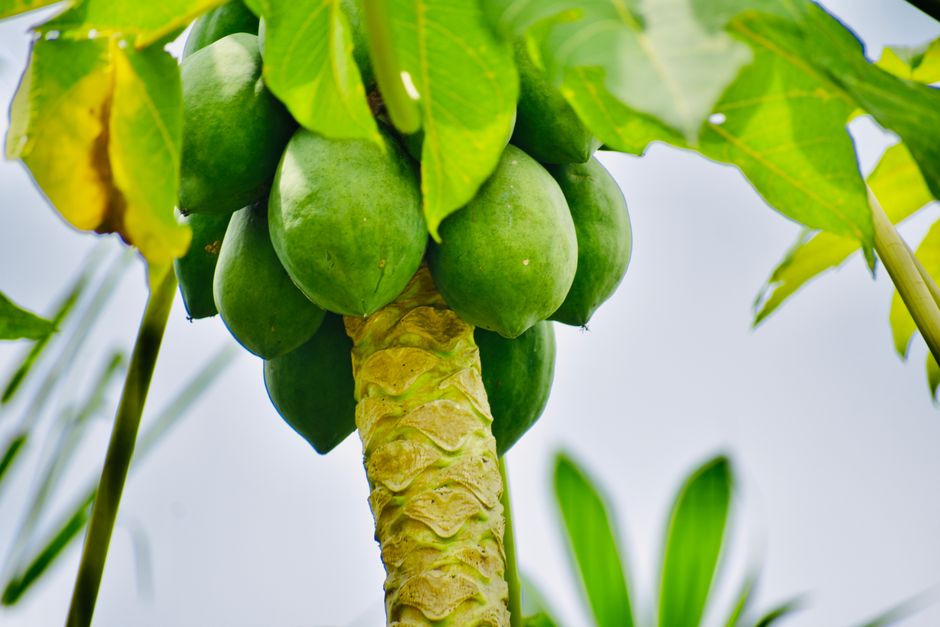
Ripe papaya tastes like a soft, sweet melon with a musky, slightly floral note. Think of the mildest cantaloupe you have ever eaten, then make it creamier and a little earthier. Some people pick up hints of peach, apricot, or vanilla. Others say it reminds them of squash or pumpkin.
The flavor shifts a lot depending on ripeness. A fully ripe papaya is sweet and tender. A green, unripe papaya is firm, mild, and closer to a vegetable than a fruit. That difference explains why the same fruit shows up in smoothies and in savory dishes like Thai green papaya salad.
What Does a Ripe Papaya Taste Like?
Ripe papaya is sweet but not sharp. Its sugars are mild compared to mango or pineapple, so it never tastes sour or acidic the way citrus does. The texture is soft and buttery, similar to a ripe avocado, though juicier.
The smell is a big part of the experience. Ripe papaya has a distinct musky, almost funky aroma. For some people that scent is pleasant and tropical. For others it is the reason they dislike the fruit. That reaction is real and personal, not a sign the fruit is bad.
Two things drive the flavor:
- Ripeness. Underripe papaya is bland and firm. As it ripens, starches turn to sugar and the flesh softens.
- Variety. The two main types sold in the US taste noticeably different.
Mexican or Caribbean papayas (often called “Solo” types) are smaller, weighing around 1 to 2 pounds. Their flesh is reddish-orange and quite sweet. Asian varieties are much larger, sometimes 5 to 10 pounds, with yellow-orange flesh and a milder flavor.
One non-obvious point: papaya is often served with a squeeze of lime. That is not just decoration. The acid cuts the musky note and makes the sweetness read more clearly. If you have tried papaya and found it flat or odd, lime or a little salt can change your impression.
Why Does Papaya Sometimes Taste Bitter or Soapy?
Papaya contains an enzyme called papain. It is concentrated in the skin, seeds, and the milky sap of unripe fruit. Papain breaks down proteins, which is why papaya has long been used as a meat tenderizer.
In an unripe or partially ripe papaya, papain can leave a bitter or soapy taste. So can the latex-like sap that sits just under the skin. This is one reason underripe papaya is usually cooked rather than eaten raw.
Some people are also more sensitive to the musky compounds in papaya. If the fruit tastes soapy to you even when ripe, that is likely your perception of those aroma compounds rather than a problem with the fruit.
To reduce bitterness:
- Choose fruit that is mostly yellow or orange, not green.
- Peel away the layer just under the skin, where sap lingers.
- Scoop out all seeds and the thin membrane around them.
- Chill it. Cold mutes bitter and musky notes and makes sweetness more noticeable.
What Does Unripe Green Papaya Taste Like?
Green papaya tastes mild, crisp, and slightly bitter, closer to a raw vegetable than a fruit. It has very little sugar. The texture is firm and crunchy, similar to a green apple or a raw carrot.
Because it is so neutral, green papaya takes on whatever flavors it is paired with. In Thai som tam, it is shredded and tossed with lime, fish sauce, chili, and peanuts. The papaya provides crunch and a blank canvas, not sweetness.
Cooking changes it again. Boiled or stewed green papaya softens and turns mild and slightly starchy, much like a winter squash or chayote. In many tropical countries it is used in soups and stews this way.





How Can You Tell If a Papaya Is Ripe?
Color and feel are the two most reliable signals. A ripe papaya is mostly yellow or orange with little green left. It gives slightly when you press it gently, like a ripe avocado. If it is hard as a rock, it is not ready.
Smell matters too. A ripe papaya has a noticeable sweet, musky scent at the stem end. If there is no smell, it is probably underripe. If the smell is very strong or the fruit feels mushy, it is likely past its best.
A few practical notes:
- Papayas continue to ripen after harvest. Leave a firm one on the counter for a few days.
- To slow ripening, refrigerate it once it is ripe. Cold storage will dull the flavor over time, so use it within a few days.
- Cut papaya browns and softens quickly. Once cut, refrigerate it in a sealed container and eat it soon.
How Does Papaya Compare to Other Tropical Fruit?
Papaya sits at the mild end of the tropical fruit spectrum. It is less sweet and less acidic than mango, pineapple, or passion fruit. That makes it a gentle option for people who find those fruits too tart or too intense.
| Fruit | Sweetness | Acidity | Texture | Flavor Notes |
|---|---|---|---|---|
| Papaya | Mild | Low | Soft, buttery | Musky, melon-like, floral |
| Mango | High | Medium | Soft, fibrous | Sweet, resinous, tropical |
| Pineapple | High | High | Firm, fibrous | Tangy, bright, sharp |
| Cantaloupe | Medium | Low | Soft, juicy | Sweet, mild, melon |
| Banana | High | Low | Soft, creamy | Sweet, mild, starchy |
The closest comparison is probably cantaloupe, but papaya is creamier and has that extra musky edge. If you like cantaloupe, you will likely find papaya familiar. If you do not, papaya may not win you over.
Is Papaya Good for You?
Papaya is a solid source of vitamin C and vitamin A. According to USDA nutritional data, one cup of fresh papaya cubes (about 145 grams) provides roughly 60 milligrams of vitamin C and about 65 micrograms of vitamin A as retinol activity equivalents. It also supplies folate and potassium.
The fruit is low in calories and provides fiber, mostly from the flesh and seeds. Papaya also contains the enzyme papain, which is the basis for its long use as a digestive aid and meat tenderizer.
Here is where caution is warranted. Papain is often marketed for digestion, inflammation, and other health benefits. The evidence for those claims in humans is limited. Papain does break down proteins in a test tube, but that does not automatically mean it does the same thing in your digestive tract after you eat it. Biological plausibility is not the same as demonstrated clinical benefit.
Two safety points worth knowing:
- Latex allergy. Papaya contains natural latex. People with a latex allergy may react to papaya, especially unripe fruit. This is a recognized cross-reactivity concern.
- Papaya seeds. They are sometimes promoted as a digestive or antiparasitic remedy. The evidence is limited, and eating large amounts is not advisable. Small amounts used as a seasoning are generally how they are consumed in food.
If you are pregnant, breastfeeding, or managing a medical condition, talk to your clinician before using papaya extracts, supplements, or seeds for any health purpose. No clinical guidelines currently exist for using papaya or papain as a treatment.
How Do People Usually Eat Papaya?
The simplest way is fresh. Cut the fruit in half lengthwise, scoop out the seeds, and spoon out the flesh or slice it. A squeeze of lime or a pinch of salt sharpens the flavor.
Common uses include:
- Fresh cubes in fruit salads or yogurt
- Blended into smoothies, where its mild flavor pairs well with stronger fruits
- Green papaya shredded into savory salads
- Green papaya cooked in soups and stews
- Ripe papaya blended into drinks and desserts
Papaya is also used to tenderize meat, thanks to papain. That is a culinary use with a clear mechanism, not a health claim.
Why Do People Either Love or Hate Papaya?
The divide comes down to that musky aroma. Papaya contains a group of sulfur-containing and other volatile compounds that give it its distinctive smell. Some people perceive these as sweet and tropical. Others perceive the same compounds as unpleasant or soapy.
This kind of variation is normal. Aroma perception is partly genetic and partly learned. The same compound can smell appealing to one person and off-putting to another. Cilantro is a well-known example of the same principle.
So if you have avoided papaya because someone told you it tastes strange, it may be worth trying a ripe one with lime. And if you have tried it and disliked it, that is a legitimate response, not a failure of your palate.
Frequently Asked Questions
What does papaya taste like?
Ripe papaya tastes sweet, soft, and melon-like with a musky, slightly floral note. It is milder and less acidic than mango or pineapple.
Is papaya supposed to taste like soap?
Some people perceive papaya as soapy because of its aroma compounds and the enzyme papain. Choosing a fully ripe fruit, removing the layer under the skin, and adding lime can reduce that taste.
Does green papaya taste the same as ripe papaya?
No. Green papaya is firm, mild, and slightly bitter, closer to a raw vegetable than a fruit. It is usually shredded or cooked rather than eaten ripe.
How do you pick a sweet papaya?
Choose one that is mostly yellow or orange, gives slightly when pressed, and has a sweet smell at the stem end. A hard, all-green papaya is not ripe yet.
