
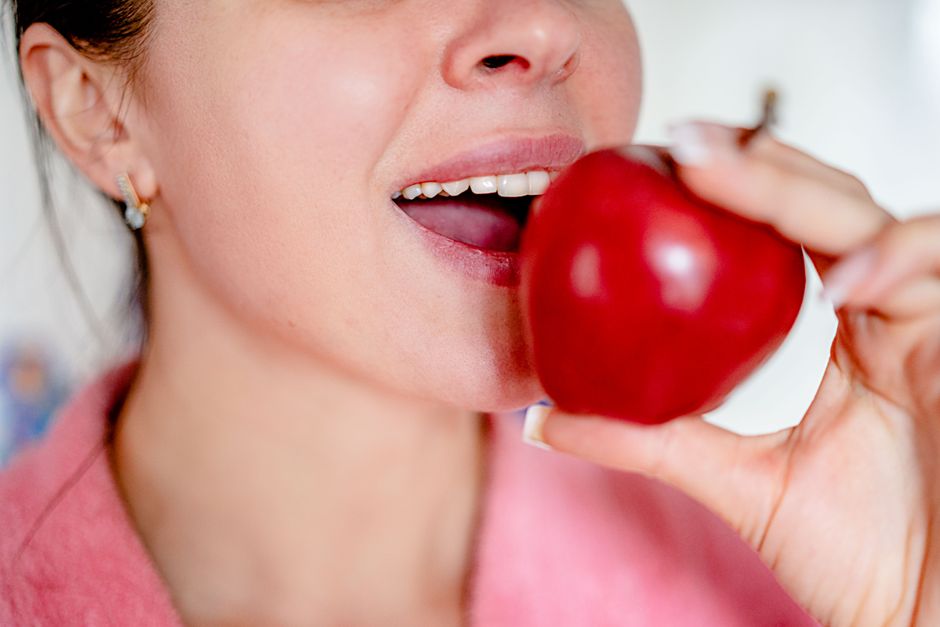
The rose apple is a crisp, mild fruit that most people find light and refreshing rather than intensely sweet. It tastes like a cross between a pear, a cucumber, and a mild apple, with a watery crunch and a faint floral note. Rose apples are low in calories and provide some vitamin C and fiber, and they are eaten fresh, added to salads, or used in drinks and preserves in many tropical regions.
What Is A Rose Apple Taste Nutrition And Uses?
The rose apple is the fruit of trees in the genus Syzygium, most commonly Syzygium jambos. It goes by many names depending on where you are: rose apple, water apple, wax apple, bell fruit, and Malay apple are all used, sometimes for slightly different species. This overlap in names causes real confusion, because a fruit sold as “rose apple” in one market may be a different species than one sold under the same name elsewhere.
The fruit is bell-shaped or pear-shaped, usually pale green, yellow, pink, or red when ripe, and about the size of a small plum. The skin is thin and waxy. The flesh is white, crisp, and very watery. Inside there is usually one to several small brown seeds, though some varieties are nearly seedless.
It grows on evergreen trees native to Southeast Asia and is now cultivated across tropical regions worldwide, including parts of the Caribbean, Central America, and Hawaii. The trees are also grown as ornamentals because of their showy flowers.
How Would You Describe the Taste and Texture?
The flavor is delicate and easy to miss if you expect the sweetness of a ripe apple. Most people describe it as mildly sweet with a fresh, almost neutral taste. The floral note some detect comes from aromatic compounds in the skin and flesh, but the impression is subtle, not perfumed.
The texture is where the fruit stands apart. It is crisp and snaps when bitten, and it releases a lot of water. That high water content is why it feels cooling and why it does not hold up well to cooking or long storage.
How sweet it tastes depends heavily on ripeness and variety. Underripe fruit can be bland and slightly astringent. Fully ripe fruit is sweeter but never intensely so. The waxy skin is edible but some people peel it because of its texture.
What Nutrients Does a Rose Apple Contain?
Rose apples are mostly water. Like most watery fruits, they are low in calories and provide modest amounts of a few vitamins and minerals. The table below reflects general values reported for the fresh fruit. Exact amounts vary with variety, ripeness, and growing conditions, so treat these as approximate.
| Nutrient | General amount |
|---|---|
| Calories | Low — roughly 25–30 kcal per 100 g |
| Water | About 90% or more |
| Carbohydrate | Mostly sugars and some fiber |
| Vitamin C | Present, but not a high source |
| Fiber | Modest amounts, mostly in the skin |
| Potassium | Present in small amounts |
One point worth being honest about: the rose apple is not a nutritional powerhouse. It is a pleasant, hydrating fruit, not a concentrated source of any single nutrient. Anyone promoting it as a superfood is stretching the evidence. No large human studies have shown that eating rose apples produces specific health outcomes.
Some traditional medicine systems use different parts of the Syzygium plants, including leaves and bark, for various purposes. Laboratory studies have looked at compounds in these plant parts. Laboratory findings are not the same as proven effects in people, and no clinical trials have confirmed health benefits from eating the fruit.





What Are the Common Uses of Rose Apples?
In the regions where they grow, rose apples are eaten mostly fresh, out of hand. Because they are so watery and crisp, they work well in light dishes where a heavy fruit would overwhelm the other ingredients.
- Fresh eating: The most common use. Often chilled before serving.
- Salads: Sliced into fruit or savory salads for crunch and mild sweetness.
- Drinks: Blended into juices, smoothies, or steeped in water for a light flavor.
- Preserves: Made into jams, jellies, and pickles in some cultures.
- Garnishes: Used to decorate dishes because of their color and shape.
Cooking is not a strong suit. The flesh breaks down quickly when heated, so the fruit is rarely baked or stewed the way apples are. When it is cooked, it is usually in preserves where the texture no longer matters.
Is a Rose Apple the Same as a Wax Apple or Malay Apple?
No. These are related but distinct fruits, and the naming is genuinely messy. This is one of the areas where a little clarification saves a lot of confusion.
The true rose apple is usually Syzygium jambos. The wax apple, also called the Java apple, is typically Syzygium samarangense. The Malay apple is Syzygium malaccense. All three belong to the same genus and look broadly similar, which is why markets and writers often use the names interchangeably.
The practical differences are in shape, color, and texture. Wax apples tend to be more bell-shaped with a pronounced waxy sheen and are often the sweetest and crispest of the group. Malay apples are usually larger and more pear-shaped with a deeper red or purple skin. Rose apples are typically rounder and pale.
If you are buying one of these fruits and want to know what you are getting, the species name is the only reliable guide. Common names will not tell you.
How Should You Store and Choose Rose Apples?
Choose fruit that feels firm and heavy for its size, with smooth, unblemished skin. Soft spots or a dull, wrinkled surface usually mean it is past its best. A slight give is fine; mushiness is not.
Because of the high water content, rose apples do not keep long. They are best eaten within a day or two of purchase. Refrigeration slows the decline but does not stop it, and cold can dull the flavor. A paper bag in the crisper drawer is a reasonable middle ground.
Wash the fruit under running water before eating. If you plan to eat the skin, this matters more, since the waxy surface can hold dirt and residue. Peeling removes the skin and most of the fiber along with it.
Are There Any Risks or Cautions?
For most people, eating the ripe fruit is unremarkable. The main considerations are practical rather than serious.
The seeds contain compounds that can be unpleasant or mildly toxic if eaten in quantity, so they are usually discarded. This is common to many stone and pome fruits, and it is not a reason to avoid the flesh. Spit out or remove the seeds rather than chewing them.
As with any fruit, a person can have an allergic reaction, though rose apple allergy is not widely reported. If you have known sensitivities to related fruits, introduce it cautiously.
People with diabetes should account for the fruit’s carbohydrate content in their overall intake, as they would with any fruit. The amounts are modest, but “modest” still counts.
There is no established clinical guidance on eating rose apple during pregnancy or breastfeeding, and no specific safety data for infants and young children. If you are in one of these groups, treat it as you would any unfamiliar fruit and check with a clinician if you have concerns.
Frequently Asked Questions
What does a rose apple taste like?
It tastes mildly sweet and very mild overall, closer to a crisp pear or cucumber than to a tart apple. The flesh is watery and crunchy with a faint floral note.
Is a rose apple good for you?
It is a low-calorie, hydrating fruit that provides some vitamin C and fiber, but it is not a concentrated source of nutrients. No clinical trials have shown specific health benefits from eating it.
Can you eat rose apple skin and seeds?
The skin is edible and holds most of the fiber, though some people peel it for texture. The seeds are usually discarded and should not be eaten in quantity.
Is rose apple the same as wax apple?
No, they are related but different species, though markets often use the names interchangeably. Wax apple is typically Syzygium samarangense, while the true rose apple is usually Syzygium jambos.
