
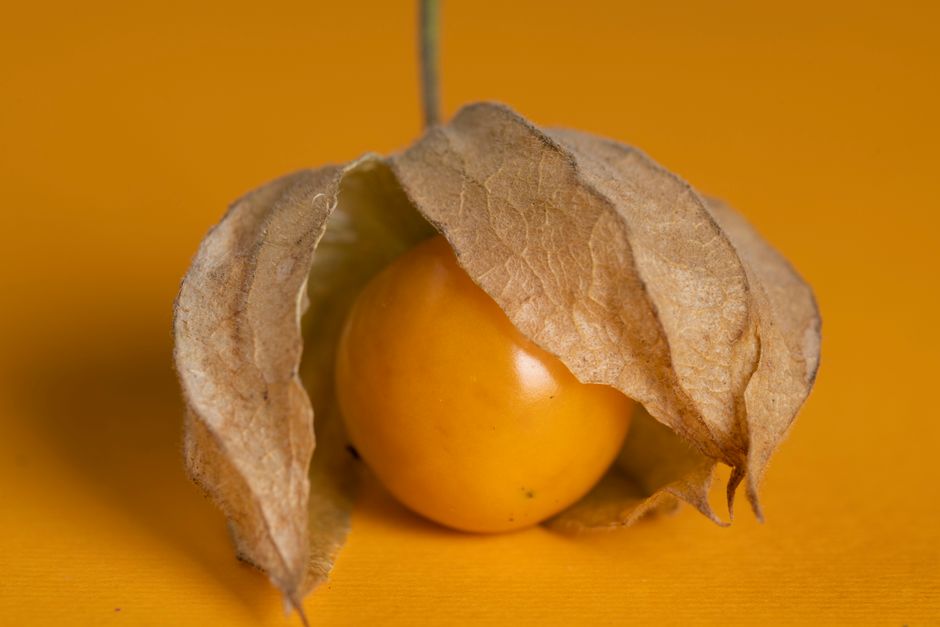
Husk cherries are small, lantern-wrapped fruits that grow inside papery husks. They taste like a cross between pineapple and vanilla, with a mild sweetness and a hint of tartness. They are eaten fresh, dried, or cooked into jams and desserts, and they provide vitamin C, vitamin A, and antioxidants.
You may know them as ground cherries, golden berries, or by their scientific name Physalis. They are related to tomatillos and Cape gooseberries. All of these fruits share that distinctive papery wrapper. Despite the name, husk cherries are not true cherries at all.
What Are Husk Cherries Taste Uses Nutrition?
Husk cherries (Physalis species) are members of the nightshade family, the same plant family as tomatoes, peppers, and potatoes. The most commonly sold type is Physalis peruviana, often called Cape gooseberry or goldenberry. A related species, Physalis pruinosa, is what most American gardeners mean when they say “ground cherry.”
The fruit itself is small and round, roughly the size of a marble. It sits inside a papery, lantern-shaped husk called a calyx. That husk protects the fruit and must be peeled away before eating. The fruit inside is yellow to orange when ripe.
Husk cherries grow well in temperate climates and are native to parts of South America. They have spread around the world and are now grown in home gardens across the United States, particularly in the Midwest and Northeast. They often self-seed, meaning a single planting can return year after year.
What do husk cherries taste like?
The flavor is often described as tropical. Ripe husk cherries have a sweet-tart profile with notes of pineapple, vanilla, and sometimes a faint tomato-like undertone. The vanilla note is subtle but distinctive. Some people detect a slight citrus quality as well.
Unripe husk cherries are tart and can be unpleasant. The flavor sweetens considerably as the fruit ripens and the husk turns from green to tan or brown. A fully ripe husk cherry will often fall from the plant on its own — hence the name “ground cherry.”
The texture is similar to a cherry tomato, with a thin skin and juicy interior containing many tiny seeds. The seeds are edible and soft.
How are husk cherries used?
Husk cherries are versatile. Common uses include:
- Eaten fresh, straight from the husk
- Baked into pies, tarts, and muffins
- Cooked into jams, jellies, and sauces
- Dried like raisins for snacking
- Added to salads for a sweet-tart contrast
- Used as a garnish for desserts and cocktails
- Made into salsa, similar to tomatillo salsa
Dried goldenberries are sold commercially and have a chewy texture with concentrated sweetness. In some markets they are sold as “Inca berries.”
What nutrients do husk cherries provide?
Husk cherries are a source of several vitamins and minerals. Based on USDA nutritional data for goldenberries (Physalis peruviana), a 100-gram serving provides approximately:
| Nutrient | Amount per 100g |
|---|---|
| Calories | 53 |
| Carbohydrates | 11.2 g |
| Fiber | 4.9 g |
| Protein | 1.9 g |
| Vitamin C | 11 mg |
| Vitamin A | 36 µg RAE |
| Thiamin (B1) | 0.11 mg |
| Riboflavin (B2) | 0.04 mg |
| Niacin (B3) | 2.8 mg |
| Iron | 1 mg |
| Phosphorus | 40 mg |
| Potassium | 170 mg |
The fiber content is notable. At nearly 5 grams per 100 grams, husk cherries provide more fiber than many common fruits. Fiber supports digestive health and can help with feelings of fullness.
They also contain carotenoids, including beta-carotene and lutein, along with polyphenols. These plant compounds have antioxidant activity in laboratory studies. Whether that antioxidant activity translates into specific health benefits in humans is less clear. No large clinical trials have confirmed disease-prevention effects from eating husk cherries.
Are Husk Cherries the Same as Cape Gooseberries and Ground Cherries?
They are closely related but not always the same species. The terms overlap in common usage, which causes confusion.
Cape gooseberry usually refers to Physalis peruviana. This is the type most often sold dried or in grocery stores. It is native to the Andes region of South America.
Ground cherry in American gardening usually refers to Physalis pruinosa, also called the strawberry tomato or husk tomato. It is smaller and sweeter than Cape gooseberry.
Husk cherry is a general term that can apply to either. In farmers markets and seed catalogs, the names are often used interchangeably.
All three produce fruit inside a papery husk and share a similar tropical-sweet flavor profile. For nutritional purposes, they are broadly comparable.
Are Husk Cherries Safe to Eat?
The ripe fruit is safe to eat. The husk and the rest of the plant are not.
The green parts of the plant — leaves, stems, and unripe fruit — contain solanine and other alkaloids that can cause digestive upset if eaten in quantity. This is the same class of compounds found in green potatoes and tomato leaves. Ripe husk cherries have much lower levels and are considered safe.
Always remove the husk before eating. Some people are sensitive to the sticky residue on the outside of the fruit and prefer to rinse it. The fruit should be fully ripe — yellow or orange, not green — before consumption.
People with allergies to other nightshades (tomatoes, peppers, eggplant) may want to approach husk cherries with caution, though cross-reactivity is not well documented. If you have a known nightshade allergy, talk to your doctor before trying them.
As with any new food, start with a small amount to see how your body responds.





Do Husk Cherries Have Proven Health Benefits?
Husk cherries contain nutrients and plant compounds that are associated with health benefits. But the evidence for specific health outcomes from eating husk cherries is limited.
What is well established:
- They provide dietary fiber, which supports digestive health
- They contain vitamin C, which supports immune function and collagen production
- They contain vitamin A, which supports vision and skin health
- They provide potassium, which is important for blood pressure regulation
What is not well established:
- Specific disease prevention from eating husk cherries
- Anti-inflammatory effects in humans
- Any role in cancer prevention or treatment
- Weight loss benefits
Some laboratory studies have examined extracts from Physalis species for anti-inflammatory and antimicrobial activity. These are cell and animal studies. They do not demonstrate that eating the fruit produces these effects in people.
Marketing language around goldenberries sometimes claims they “boost immunity” or “fight disease.” No clinical evidence currently confirms these claims. They are a nutritious fruit, not a medicine.
How Do You Choose and Store Husk Cherries?
Look for fruit with dry, papery husks that are tan or brown. The fruit inside should be yellow to orange and slightly firm. Avoid fruit with green husks or green fruit, which means it is unripe.
Fresh husk cherries keep in the refrigerator for about one to two weeks. Leave the husks on until you are ready to eat them — the husk protects the fruit and helps it last longer. Store them in a single layer or in a paper bag. Moisture speeds spoilage.
You can freeze husk cherries whole. Remove the husks, rinse, and spread them on a baking sheet before transferring to a freezer bag. They keep for several months this way.
Dried goldenberries should be stored in an airtight container away from heat and light. Check the label for added sugar, which is common in some commercial dried products.
Can You Grow Husk Cherries at Home?
Yes. Husk cherries are relatively easy to grow in most of the United States. They are annual plants in colder zones and can act as perennials in warm climates.
They prefer full sun and well-drained soil. Plants grow bushy and can spread, so give them space. They produce fruit from midsummer until frost. The fruit is ready when it falls to the ground or when the husk turns brown and papery.
One practical note: husk cherries often self-seed readily. If you plant them once, you may find volunteers coming up the following year without any effort on your part. Some gardeners consider this a bonus. Others find them weedy.
They have few serious pest problems, though flea beetles and cutworms can occasionally affect young plants.
How Do Husk Cherries Compare to Other Berries?
Husk cherries are lower in calories than most sweet fruits but higher in fiber than many. Here is a rough comparison per 100 grams:
| Fruit | Calories | Fiber | Vitamin C |
|---|---|---|---|
| Husk cherry | 53 | 4.9 g | |
| Strawberry | 32 | 2 g | 59 mg |
| Blueberry | 57 | 2.4 g | 10 mg |
| Raspberry | 52 | 6.5 g | 26 mg |
Strawberries provide substantially more vitamin C. Raspberries provide more fiber. Husk cherries hold their own on calories and offer a distinct flavor that other berries do not.
They are not a nutritional replacement for more common fruits. They are a pleasant addition to a varied diet.
Frequently Asked Questions
What do husk cherries taste like?
They taste sweet and slightly tart, with tropical notes of pineapple and vanilla. The flavor is often compared to a cross between a pineapple and a tomato.
Are husk cherries the same as ground cherries?
In common usage, yes. Ground cherry usually refers to Physalis pruinosa, while husk cherry is a broader term that can include Cape gooseberry (Physalis peruviana). Both produce fruit inside a papery husk.
Can you eat husk cherries raw?
Yes, ripe husk cherries are safe to eat raw once you remove the papery husk. Unripe green fruit and the rest of the plant should not be eaten.
Are husk cherries good for you?
They provide fiber, vitamin C, vitamin A, and potassium, making them a nutritious fruit. No clinical trials have confirmed specific disease-prevention benefits from eating them.
