
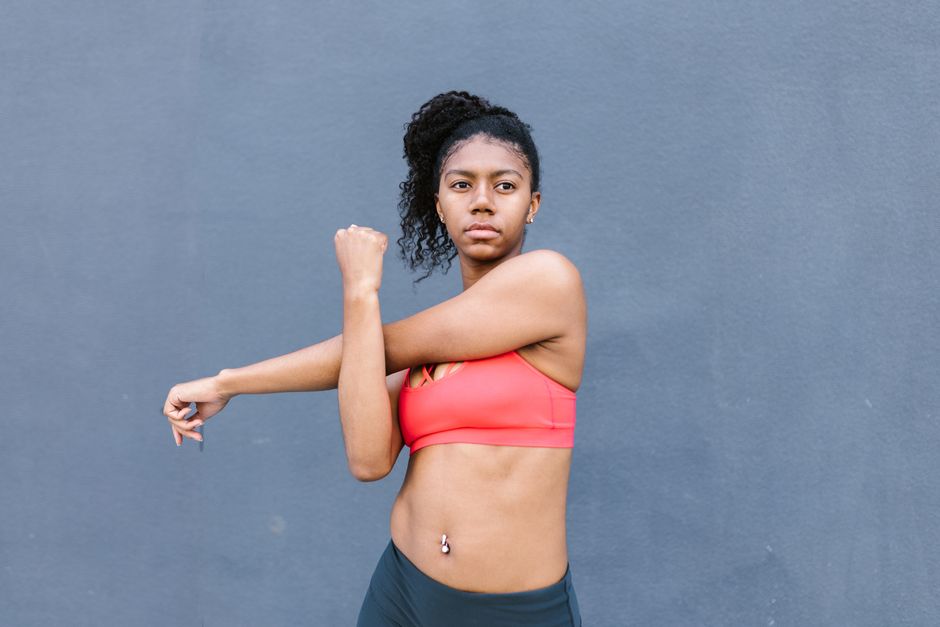
Twenty percent body fat looks noticeably different on men and women because of how each sex stores fat. On a man, 20% body fat typically means a soft stomach, some fat on the chest, and a less defined waist — the outline of abdominal muscles is gone. On a woman, 20% body fat usually appears as a smooth, athletic shape with some hip and thigh fullness, visible muscle tone in the arms and legs, and the start of a waistline. This is a common, healthy range for active people, though the visual difference between sexes at this same percentage is striking.
What Does 20% Body Fat Actually Look Like on a Man?
At 20% body fat, a man has lost most visible muscle definition. The veins on his arms and legs are not visible. His abdominal muscles are completely covered by a layer of fat, creating a smooth or slightly rounded stomach.
You will see some fat accumulation on the chest, which can look like mild gynecomastia in some men. The love handles — fat over the obliques — are present but not extreme. The jawline starts to soften, though it is still visible. The shoulders and upper back still look broad, but the V-taper is less dramatic than at lower body fat levels.
Research from the American Council on Exercise places 20% body fat in the “acceptable” range for men, not the “athletic” or “lean” ranges. Many men who do not actively track their diet or exercise sit around this level.
What Does 20% Body Fat Actually Look Like on a Woman?
On a woman, 20% body fat looks athletic and fit. This is considered a lean body fat percentage for women, close to what many female athletes maintain. The difference comes down to essential fat — women need more body fat for hormonal health and reproduction.
A woman at 20% body fat will have visible muscle definition in her arms, shoulders, and thighs. Her stomach is flat with some visible muscle separation, though not a full six-pack. The hips and thighs carry more fat storage, which is normal and healthy. Her face appears lean with a clear jawline and visible cheekbones.
According to the American Council on Exercise, 20% body fat for women falls in the “fitness” category, while the same percentage for men is only “acceptable.” This is the single most important fact to understand — the same number means completely different things depending on sex.
How Does 20% Body Fat Compare to Other Percentages?
Seeing these numbers side by side makes the differences clear. Here is how 20% stacks up against common body fat levels for both sexes.
| Body Fat % | Male Appearance | Female Appearance |
|---|---|---|
| 10-12% | Ripped. Visible abs, vascular arms. Uncomfortable to maintain long-term. | Very lean. Visible muscle striations. Often disrupts menstrual cycle. |
| 15-17% | Lean and defined. Abs visible when flexing. Beach body range. | Fit and athletic. Flat stomach, visible muscle tone. Common for athletes. |
| 20% | Soft stomach. No abs. Some chest fat. Normal healthy look. | Lean and athletic. Visible definition. Flat stomach. Healthy and sustainable. |
| 25% | Rounder stomach. Fuller face. Love handles more prominent. | Smooth curves. Less muscle definition. Soft stomach. Still healthy. |
| 30%+ | Large stomach. Fat deposits on back and sides. Health risks increase. | Fuller body shape. Belly fat visible. Increased health risks. |
The key takeaway from this table is simple. A man at 20% looks average. A woman at 20% looks fit. Do not compare yourself to someone of the opposite sex using the same number.




What Causes a Person to Reach or Maintain 20% Body Fat?
Body fat percentage is determined by the balance between calories eaten and calories burned. But there are specific factors that push people toward the 20% mark.
Diet composition matters more than people think. A diet high in processed foods, added sugars, and refined carbohydrates makes it harder to maintain lower body fat. These foods spike insulin, which promotes fat storage, especially around the midsection. Protein intake also plays a role — lower protein diets make it harder to preserve muscle, so a higher percentage of your total weight comes from fat.
Activity level is the second major factor. Sedentary lifestyles lead to gradual fat gain over years. The CDC reports that only about 23% of US adults meet both aerobic and muscle-strengthening guidelines. Most people who sit at desks and do not exercise will drift toward 20% or higher body fat over time.
Sleep and stress are often overlooked. Chronic sleep deprivation raises cortisol levels, which encourages abdominal fat storage. Studies published in the journal Sleep have linked short sleep duration with higher body fat percentages, even when calorie intake is controlled.
The honest truth is that 20% body fat is the default for many people living modern lifestyles. It takes deliberate effort to be lower, and deliberate neglect to be much higher.
How Can You Accurately Measure Body Fat Percentage?
This is where most people get confused. The number on the scale tells you nothing about your body composition. Two people can weigh the same and look completely different because of their body fat percentage.
DEXA scans are the gold standard for accuracy. They use low-dose X-rays to measure bone density, lean mass, and fat mass. Research published in the Journal of Clinical Densitometry has confirmed DEXA as one of the most reliable methods. The downside is cost — typically $50 to $150 per scan — and limited availability.
Hydrostatic weighing and Bod Pod measurements are also accurate. These use water displacement or air displacement to calculate body density. Most universities and some gyms offer these services for around $50.
Bioelectrical impedance scales are the most common home method. They send a small electrical current through your body to estimate fat percentage. The problem is accuracy. These scales can vary by 4-8% depending on hydration, food intake, and time of day. They are useful for tracking trends over time but not for getting a true number.
Caliper measurements are cheap and reasonably accurate when done by a trained professional. A skilled technician using a seven-site measurement can get within 3-4% of your actual body fat. Home use with a single-site caliper is much less reliable.
What does not work? Visual estimates from photos, BMI calculations, and online calculators. BMI specifically is useless for body fat estimation — it cannot distinguish between muscle and fat. A muscular athlete can have a BMI in the “overweight” range while having very low body fat.
What Are the Health Implications of 20% Body Fat?
For both men and women, 20% body fat is generally healthy. The risks of metabolic disease, heart disease, and type 2 diabetes increase substantially above 25% for men and 30% for women. At 20%, you are well below those thresholds.
However, there are important caveats. Where you carry fat matters. Visceral fat — the fat stored deep in the abdomen around your organs — is more dangerous than subcutaneous fat under the skin. A person at 20% body fat with most of their fat stored in the belly has higher health risks than someone at the same percentage with fat stored in the hips and thighs.
Waist circumference is a better predictor of health risk than body fat percentage alone. The National Institutes of Health states that a waist measurement over 40 inches for men or 35 inches for women indicates increased health risk, regardless of body fat percentage.
For women, dropping below 20% body fat can cause problems. Essential body fat for women is around 10-13%. Going too low can disrupt menstrual cycles, reduce bone density, and impair immune function. Many female athletes who compete at 15-18% body fat experience these issues. The “fitness” look of 20% body fat for women is actually a healthy balance point.
For men, 20% is not dangerous, but it is not optimal for performance. Men at this level may have lower testosterone compared to leaner men, though the difference is usually small. A study in the European Journal of Applied Physiology found that weight loss in overweight men increased testosterone levels, but the benefits plateaued once they reached normal body fat ranges.
Common Misconceptions About 20% Body Fat
The biggest myth is that 20% body fat looks the same on everyone. It does not. Two people at the exact same body fat percentage can look completely different due to muscle mass, fat distribution, and bone structure.
A man with 20% body fat who lifts weights and has significant muscle mass will look much leaner than a man at the same body fat percentage with little muscle. The muscle pushes the skin outward, making the fat layer thinner in appearance. This is called the “athletic fat” look — soft on top but solid underneath.
Another misconception is that you need to get to 10% body fat to be healthy or attractive. This is false. The body fights hard to stay below 10-12% for men and 18-20% for women because it perceives that level of leanness as a threat. Hunger hormones increase, metabolism slows, and energy drops. Maintaining 10% body fat long-term is difficult and often unhealthy.
Some people claim that spot reduction — doing ab exercises to lose belly fat — works at 20% body fat. It does not. You cannot choose where your body loses fat. The only way to lose belly fat is to lower your overall body fat percentage through diet and exercise. Ab exercises build muscle underneath, but they will not burn the fat on top.
Finally, there is a myth that 20% body fat means you are out of shape. This is not true for women and only partially true for men. A woman at 20% body fat is often in excellent cardiovascular shape. A man at 20% may not have visible abs, but he can still run, lift, and be healthy. Body fat percentage is one metric, not the whole picture.
What Actually Works to Change Body Fat Percentage?
If you want to move toward 20% body fat or away from it, the approach is the same. Focus on the fundamentals that have the strongest evidence behind them.
- Calorie deficit for fat loss. You must consistently eat fewer calories than you burn. There is no way around this. The National Institutes of Health confirms that all effective weight loss methods work by creating a calorie deficit.
- Protein prioritization. Eating enough protein — around 0.7 to 1 gram per pound of body weight — preserves muscle during fat loss. This keeps your metabolism higher and prevents the “skinny fat” look.
- Resistance training. Lifting weights or doing bodyweight strength exercises preserves and builds muscle. More muscle means a lower body fat percentage at the same weight.
- Sleep consistency. Seven to nine hours per night helps regulate hunger hormones. Poor sleep increases ghrelin and decreases leptin, making you hungrier.
- Patience. Safe fat loss is 0.5 to 1 percent of body weight per week. Faster loss usually means losing muscle and water, not just fat. Sustainable changes take months, not weeks.
What does not work? Detoxes, cleanses, and extreme restriction diets. These cause rapid water weight loss and muscle loss, not fat loss. The weight comes back quickly once normal eating resumes. There is no shortcut to changing body composition.
Frequently Asked Questions
Can you see abs at 20% body fat?
No. For men, abdominal muscles are completely covered at 20% body fat. For women, some muscle definition may be visible, but a full six-pack requires much lower body fat.
Is 20% body fat healthy for a man?
Yes. The American Council on Exercise considers 20% body fat within the acceptable range for men. Health risks increase significantly above 25%.
Is 20% body fat healthy for a woman?
Yes. For women, 20% body fat falls in the fitness range and is considered lean and healthy. Most female athletes maintain body fat around this level.
How long does it take to go from 20% to 15% body fat?
For most people, it takes 8 to 12 weeks of consistent calorie deficit and exercise. The exact time depends on starting weight, diet adherence, and activity level.
