
Every second, your bone marrow releases about 2 million new red blood cells into your bloodstream. These cells are the reason a cut stops bleeding, the reason your muscles get oxygen during a sprint, and the reason a simple blood test can tell a doctor so much about your health.
Red blood cells carry oxygen from your lungs to every tissue in your body and bring carbon dioxide back to your lungs to be exhaled. They do this using hemoglobin, a protein that binds oxygen and gives blood its red color. A typical red blood cell lives about 120 days before your body breaks it down and replaces it.
That is the short answer. The full picture involves shape, size, production, and the many ways things can go wrong — all of which show up in routine blood work.
What Do Red Blood Cells Do In Your Body?
Their main job is oxygen transport. Red blood cells pick up oxygen in the lungs, where oxygen levels are high, and release it in tissues where oxygen levels are low. Hemoglobin makes this possible. Each red blood cell contains roughly 270 million hemoglobin molecules, and each hemoglobin molecule can carry four oxygen molecules.
They also carry carbon dioxide back to the lungs. Most carbon dioxide travels in the blood as bicarbonate dissolved in plasma, but red blood cells play a key role in that conversion. They also help regulate blood pH by managing the balance between carbon dioxide and bicarbonate.
Red blood cells have no nucleus and no mitochondria. That sounds like a disadvantage, but it works in your favor. Without a nucleus, there is more room for hemoglobin. Without mitochondria, the cell does not consume the oxygen it is carrying. It generates energy through anaerobic glycolysis instead.
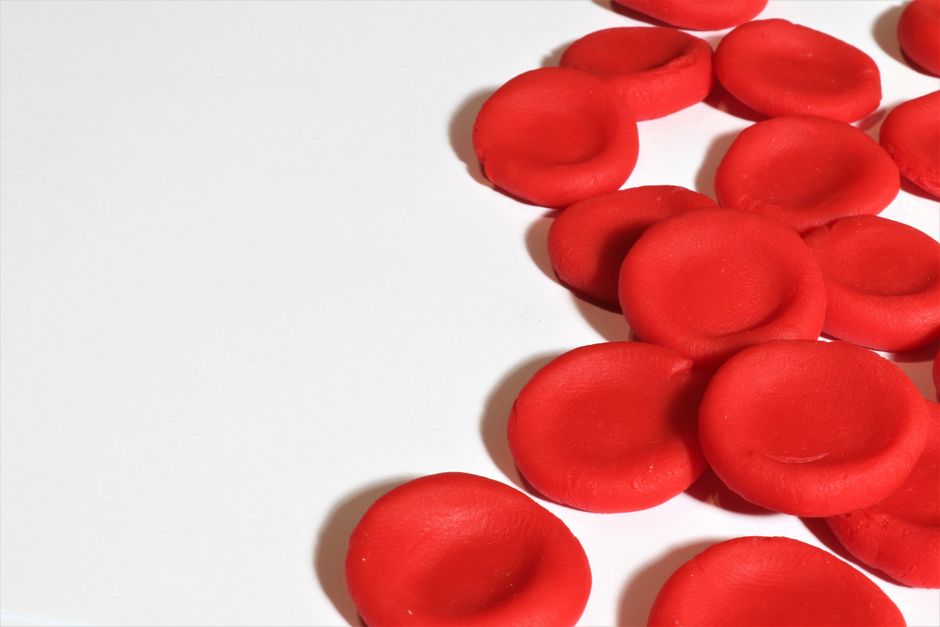
Their shape matters too. A red blood cell is a biconcave disc — thicker at the edges, thinner in the center. This shape gives it a high surface-area-to-volume ratio, which speeds up gas exchange. It is also flexible enough to fold and squeeze through capillaries narrower than the cell itself.
How Are Red Blood Cells Made and Recycled?
Red blood cells are produced in bone marrow through a process called erythropoiesis. The kidneys sense when oxygen levels in the blood are low and release erythropoietin, a hormone that signals the bone marrow to ramp up production. This is why chronic kidney disease often leads to anemia — damaged kidneys do not produce enough erythropoietin.
Production requires several nutrients. Iron is needed to build hemoglobin. Vitamin B12 and folate are needed for DNA synthesis in developing red blood cells. Without enough of these, the bone marrow produces fewer cells or abnormally shaped ones.
After about 120 days in circulation, red blood cells are removed by the spleen and liver. The iron from hemoglobin is recycled and used to make new red blood cells. The rest of the hemoglobin breaks down into bilirubin, which is processed by the liver and excreted. This is why conditions that destroy red blood cells too quickly can cause jaundice — the buildup of bilirubin turns the skin and eyes yellow.
The system is remarkably efficient. Your body produces and destroys roughly 1 percent of your red blood cells every day, keeping the total count stable.
What Do Red Blood Cell Counts and Related Tests Measure?
A complete blood count (CBC) measures several things related to red blood cells. Each measurement gives a different piece of the picture.
| Test | What It Measures | Typical Adult Reference Range |
|---|---|---|
| Red blood cell count (RBC) | Number of red blood cells per volume of blood | About 4.5–5.9 million cells per microliter (men); 4.1–5.1 million (women) |
| Hemoglobin | Amount of oxygen-carrying protein in blood | About 13.5–17.5 g/dL (men); 12.0–15.5 g/dL (women) |
| Hematocrit | Percentage of blood volume made up of red blood cells | About 41–53% (men); 36–46% (women) |
| MCV | Average size of red blood cells | About 80–100 femtoliters |
| MCH | Average hemoglobin per cell | About 27–33 picograms |
| RDW | Variation in red blood cell size | About 11.5–14.5% |
Reference ranges vary slightly between laboratories. What matters is how your results compare to the range your lab provides, and how they fit with your symptoms and history.
Doctors also look at reticulocyte count, which measures young red blood cells recently released from bone marrow. A high reticulocyte count suggests the bone marrow is responding to something — blood loss or red blood cell destruction. A low count suggests the bone marrow itself is not producing enough.





What Happens When Red Blood Cell Levels Are Too Low?
Low red blood cell levels, low hemoglobin, or both define anemia. The most common symptoms are fatigue, shortness of breath with activity, pale skin, and feeling cold. These symptoms happen because tissues are not getting enough oxygen.
Anemia has many causes, and identifying the type matters because treatment differs. Iron deficiency is the most common cause worldwide. It can result from blood loss, poor dietary intake, or poor absorption. Vitamin B12 or folate deficiency causes a different type of anemia where red blood cells are large and underdeveloped. Chronic disease, kidney disease, and inherited conditions like sickle cell disease or thalassemia are other causes.
Iron deficiency anemia is not just about low iron. It usually means something is causing the loss. In adults, especially men and postmenopausal women, doctors look for sources of chronic blood loss, particularly in the gastrointestinal tract. This is why iron deficiency anemia is often investigated rather than simply treated with supplements.
Treating anemia depends entirely on the cause. Iron supplements help iron deficiency but do nothing for B12 deficiency or anemia of chronic disease. Taking iron when you do not need it can cause side effects and mask the real problem.
What Happens When Red Blood Cell Levels Are Too High?
High red blood cell counts are less common but can be serious. When the hematocrit rises above the normal range, blood becomes thicker and flows less easily. This raises the risk of clots, stroke, and heart attack.
Some people have high counts because of a bone marrow disorder called polycythemia vera. Others have secondary polycythemia, where something else is driving up production. Chronic low oxygen — from sleep apnea, chronic lung disease, or living at high altitude — can trigger the kidneys to release more erythropoietin. Smoking and some tumors also raise red blood cell counts.
Dehydration can make hematocrit look elevated on a blood test even when red blood cell mass is normal. This is called relative polycythemia and resolves with fluids.
What Affects Red Blood Cell Health?
Several factors influence how well red blood cells do their job.
- Nutrition: Iron, vitamin B12, folate, and vitamin B6 are all needed for normal red blood cell production. Iron from animal sources is absorbed more efficiently than iron from plant sources, but vitamin C improves absorption of plant-based iron.
- Hydration: Dehydration concentrates red blood cells and raises hematocrit temporarily. Staying hydrated helps keep blood viscosity normal.
- Exercise: Regular aerobic exercise can increase red blood cell mass over time as the body adapts to higher oxygen demand. Intense endurance training can sometimes cause a temporary drop in hemoglobin, a condition sometimes called sports anemia.
- Smoking: Carbon monoxide in cigarette smoke binds to hemoglobin more tightly than oxygen does, reducing oxygen delivery. Smokers often have higher red blood cell counts as the body tries to compensate.
- Altitude: Living at high altitude triggers increased red blood cell production to compensate for lower oxygen levels in the air.
- Medications and medical conditions: Some medications suppress bone marrow. Chemotherapy, certain antibiotics, and immunosuppressants can all lower red blood cell production. Chronic diseases affecting the kidneys, thyroid, or bone marrow also play a role.
Red blood cells are not static. Their production and destruction respond constantly to what is happening in your body. A blood test captures one moment, but the trends over time often tell a more useful story than any single result.
Frequently Asked Questions
How long do red blood cells live?
Red blood cells live about 120 days in circulation before the spleen and liver remove them. Your body replaces them continuously to keep the total count stable.
What is the main function of red blood cells?
Their main function is carrying oxygen from the lungs to tissues throughout the body using hemoglobin. They also help transport carbon dioxide back to the lungs and regulate blood pH.
What happens if your red blood cell count is low?
A low red blood cell count means your tissues may not be getting enough oxygen, which can cause fatigue, shortness of breath, and pale skin. The cause needs to be identified because treatment depends on whether the problem is iron, vitamin B12, blood loss, or another condition.
Can you increase red blood cells naturally?
If you have a nutritional deficiency, correcting it through diet or supplements prescribed by a doctor can help. If your red blood cell count is low for another reason, no dietary change will fix it, and the underlying cause needs medical evaluation.
