
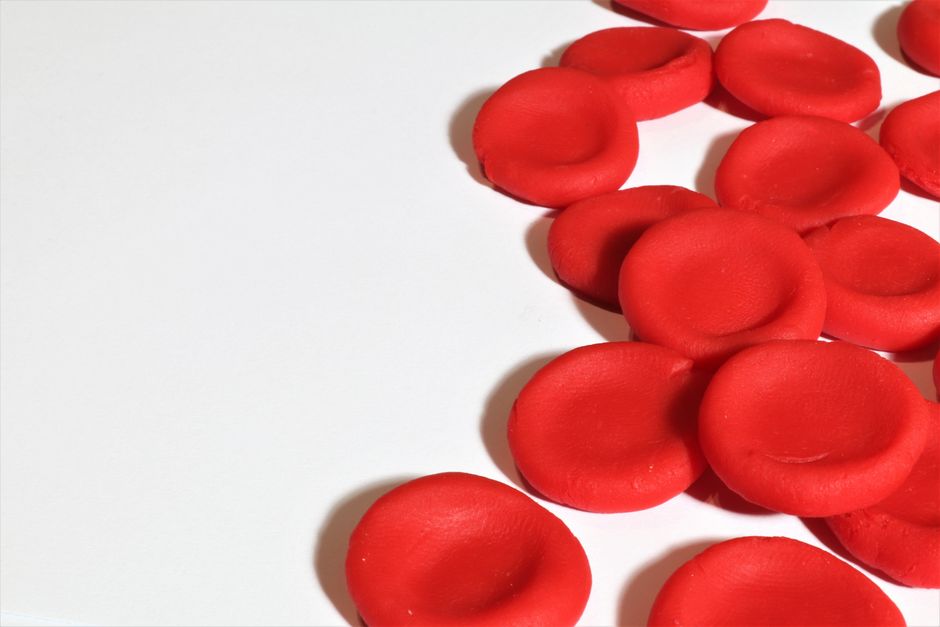
Red blood cells are the most common cell in your blood. They carry oxygen from your lungs to every tissue in your body, and they carry carbon dioxide back to your lungs to be exhaled. That single job keeps your cells alive, and when it goes wrong, you feel it quickly.
Most people have trillions of them moving through their bloodstream at any moment. They are built for one purpose, and almost every part of their structure serves it. Understanding how they work explains a lot about fatigue, breathlessness, and the blood tests your doctor orders.
What Are Red Blood Cells And What Is Their Function?
Red blood cells, also called erythrocytes, are disc-shaped cells that transport oxygen from the lungs to the rest of the body. They contain hemoglobin, a protein that binds oxygen and gives blood its red color. They also help carry carbon dioxide away from tissues back to the lungs.
What makes them unusual is what they lack. A mature red blood cell has no nucleus and no mitochondria. Losing the nucleus frees up space for more hemoglobin, and without mitochondria they do not consume the oxygen they carry. They generate energy through a different pathway that does not use oxygen at all.
The shape matters too. A red blood cell is a biconcave disc — round, flattened, and dimpled in the middle like a donut without the hole. This shape gives it more surface area for gas exchange and makes it flexible enough to fold and squeeze through capillaries narrower than the cell itself.
How Do Red Blood Cells Carry Oxygen?
The oxygen carrier is hemoglobin, a protein built from four subunits, each holding an iron-containing molecule called heme. Iron is what actually binds oxygen. Each hemoglobin molecule can carry up to four oxygen molecules, and each red blood cell holds roughly 270 million hemoglobin molecules.
Hemoglobin does not bind oxygen evenly. The first oxygen molecule attaches with some difficulty. Once it does, the protein changes shape slightly, and the remaining oxygen molecules bind more easily. This is why oxygen loading happens efficiently in the lungs, where oxygen is plentiful.
In tissues where oxygen is low, the reverse happens. Hemoglobin releases its oxygen more readily. Several conditions shift this release in useful ways — higher temperature, more acidic blood, and higher carbon dioxide all make hemoglobin let go of oxygen more easily. That means active tissues, which are warmer and more acidic, get more oxygen exactly when they need it.
Carbon dioxide travels differently. Most of it is converted to bicarbonate in the blood rather than carried directly on hemoglobin. Hemoglobin still plays a role, but the carbon dioxide story is mostly a chemical buffering system, not a simple piggyback ride.
Where Are Red Blood Cells Made And How Long Do They Live?
Red blood cells are made in the bone marrow, the spongy tissue inside your larger bones. In adults, most production happens in the marrow of the spine, ribs, pelvis, and sternum. In infants and young children, marrow in the long bones of the arms and legs is also active.
Production runs through a process called erythropoiesis. Stem cells in the marrow commit to becoming red blood cells, then mature over several days, packing in hemoglobin and eventually ejecting their nucleus. The finished cell enters the bloodstream and circulates for about 120 days.
That lifespan is well established. What is less obvious is the scale of replacement. Because cells wear out continuously, your marrow must replace them constantly to keep your count stable. When old or damaged red blood cells reach the end of their life, they are broken down in the spleen and liver, and the iron is recovered and reused.
The hormone erythropoietin, made mostly in the kidneys, signals the marrow to speed up production. When oxygen levels in the blood drop — from blood loss, high altitude, or lung disease — the kidneys release more erythropoietin, and the marrow responds by making more red blood cells. This feedback loop is one of the clearest examples of the body sensing a problem and correcting it.





What Do Red Blood Cell Counts And Lab Results Mean?
A complete blood count measures several things about your red blood cells. The results are reported as ranges, and normal values differ slightly by lab, age, and sex. The figures below are widely used reference ranges for adults.
| Measurement | What It Reflects | Typical Adult Reference Range |
|---|---|---|
| Hemoglobin | Oxygen-carrying capacity | About 13.5–17.5 g/dL (men); 12.0–15.5 g/dL (women) |
| Hematocrit | Percentage of blood that is red cells | About 41–50% (men); 36–48% (women) |
| RBC count | Number of red cells per volume | About 4.5–5.9 million/µL (men); 4.1–5.1 million/µL (women) |
| MCV | Average red blood cell size | About 80–100 femtoliters |
These ranges vary between laboratories, so your report’s own reference range is the one that applies to you. A value slightly outside the range is not automatically a problem, and a value inside it does not rule one out.
MCV, or mean corpuscular volume, tells your doctor about cell size. Small cells often point toward iron deficiency. Large cells can point toward vitamin B12 or folate deficiency, among other causes. Size alone does not diagnose anything — it narrows the possibilities.
What Happens When You Do Not Have Enough Red Blood Cells?
Too few red blood cells, or too little hemoglobin, is called anemia. The most common symptom is fatigue, because muscles and organs are not getting enough oxygen. Shortness of breath with exertion, pale skin, dizziness, and a fast heartbeat are also common.
Anemia is a finding, not a diagnosis. It always has a cause, and finding that cause matters more than the number itself. The main categories are:
- Blood loss — from heavy menstrual periods, gastrointestinal bleeding, or surgery. This is a leading cause of iron deficiency.
- Decreased production — from iron, vitamin B12, or folate deficiency, kidney disease, or bone marrow problems.
- Increased destruction — red cells broken down faster than they are made, from conditions affecting the cells themselves or the spleen.
Iron deficiency is the most common cause worldwide, according to the World Health Organization. It develops gradually, and mild cases can cause no symptoms at all. This is part of why routine blood work catches problems people did not know they had.
Symptoms of anemia are easy to blame on stress, poor sleep, or getting older. That is a real risk. Persistent fatigue that does not improve with rest is worth a conversation with a clinician and a simple blood test.
What Affects Red Blood Cell Health?
Several factors influence how well your body makes and maintains red blood cells. Some are within your control, and some are not.
Iron is essential for hemoglobin, and iron from animal sources is absorbed more readily than iron from plant sources. Vitamin C eaten with plant-based iron improves absorption. Calcium and tea or coffee consumed with a meal can reduce it.
Vitamin B12 and folate are needed for red blood cell maturation. B12 occurs naturally in animal foods, so people eating little or no animal products are at higher risk of deficiency. Some clinicians recommend B12 supplementation for vegans, though individual needs vary and should be discussed with a healthcare provider.
Kidney function matters because the kidneys produce erythropoietin. Chronic kidney disease commonly causes anemia for this reason, and it is a recognized complication clinicians monitor for.
Blood loss is often hidden. Slow gastrointestinal bleeding can go unnoticed for a long time while depleting iron stores. This is one reason unexplained anemia in older adults prompts further investigation.
Things that do not help: there is no evidence that “blood-boosting” supplements without a documented deficiency improve energy or performance in people with normal red blood cell counts. Taking iron when you are not deficient does not make you more energetic, and excess iron can cause harm.
How Does the Body Keep Red Blood Cell Levels Stable?
Red blood cell levels stay remarkably steady in healthy people, and the control system is mostly automatic. The kidneys continuously sense oxygen delivery. When it falls, they release erythropoietin, which tells the bone marrow to produce more red blood cells. When oxygen delivery is adequate, production slows.
There is a limit to how fast this works. The marrow can increase output, but new cells take days to mature. That is why recovery from significant blood loss is gradual rather than instant, and why fatigue after blood loss can persist even after the bleeding stops.
This system also explains altitude adaptation. At high altitude, lower oxygen in the air triggers more erythropoietin, and over days to weeks the red blood cell count rises. It is a normal physiological response, not a sign of disease.
When Should You Talk to a Doctor About Your Red Blood Cells?
Talk to a clinician if you have persistent fatigue, unusual shortness of breath, or a blood test showing abnormal red blood cell values. These are common and often have treatable causes, but they deserve evaluation rather than watchful waiting.
Seek prompt care for symptoms that suggest significant blood loss or a rapid drop in red blood cells — such as black or bloody stools, fainting, chest pain, or severe breathlessness. These are not symptoms to monitor at home.
This article is informational. It does not replace an evaluation by a qualified healthcare provider, and no single lab value tells the whole story on its own.
Frequently Asked Questions
What is the main function of red blood cells?
Their main function is carrying oxygen from the lungs to tissues throughout the body. They also help transport carbon dioxide back to the lungs to be exhaled.
How long do red blood cells live?
About 120 days. Your bone marrow continuously replaces worn-out cells to keep your count stable.
What is a normal red blood cell count?
For adults, roughly 4.5–5.9 million cells per microliter in men and 4.1–5.1 million in women. Reference ranges vary by laboratory, so your report’s own range applies to you.
Can you increase red blood cells naturally?
If you have a deficiency such as low iron, correcting it supports normal production. In people without a deficiency, there is no reliable evidence that supplements raise red blood cell counts or improve energy.
