
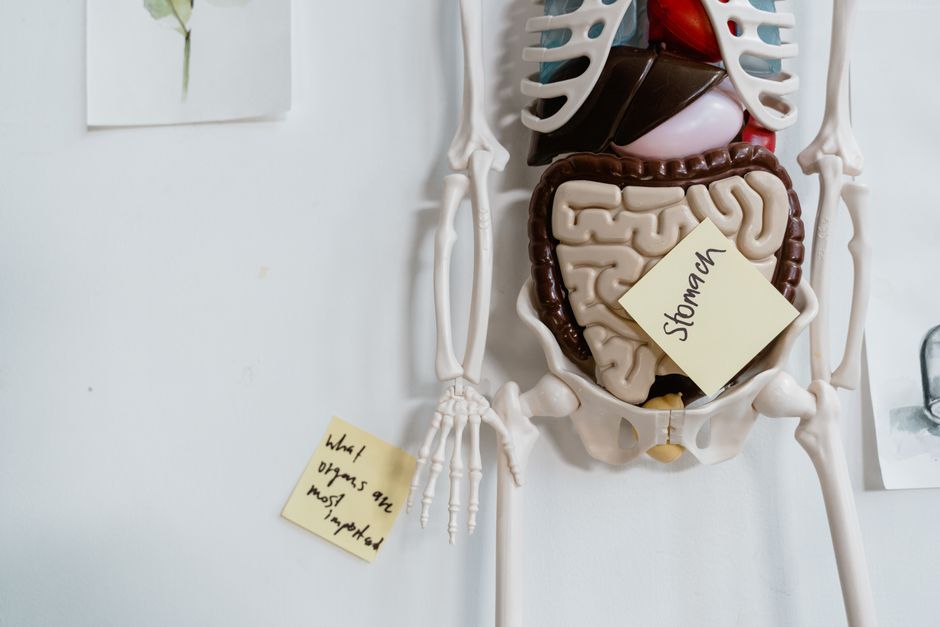
Your digestive system is a 30-foot-long tube that runs from your mouth to your anus, and it does far more than break down food. It turns a sandwich into fuel for every cell in your body, hosts trillions of bacteria, and contains its own nervous system with roughly 500 million neurons. It also works around the clock, whether you are awake or asleep, and it starts processing your next meal before you even take a bite.
What Are Fun Facts About The Digestive System?
Some of the most surprising facts come from the scale and speed of the system. Your mouth produces about 1 to 1.5 liters of saliva every day, according to the National Institute of Dental and Craniofacial Research. The stomach lining produces a fresh layer of mucus every couple of weeks so it does not digest itself. And your small intestine, despite its name, is where most nutrient absorption happens.
Here are some facts worth knowing:
- The digestive tract is about 30 feet long from mouth to anus, according to the National Institute of Diabetes and Digestive and Kidney Diseases.
- The small intestine is roughly 20 feet long, while the large intestine is only about 5 feet.
- The stomach can hold about 1 liter of food comfortably, but it can stretch to hold much more.
- Your body produces about 1 to 1.5 liters of saliva daily.
- The gut contains trillions of microorganisms, often called the gut microbiome.
- The enteric nervous system, which lines the gut, has roughly 500 million neurons.
That last fact is why some researchers call the gut a “second brain.” The enteric nervous system can control digestion on its own, without input from the brain in your skull. It does not think or feel emotions, but it does manage the complex muscle contractions that move food through your system.
How Long Does Food Stay in Your Digestive System?
Food typically spends about 24 to 72 hours in your digestive tract from the moment you swallow it to the moment it leaves your body. That range is wide because digestion speed depends on many factors, including what you ate, your activity level, and your individual biology.
Here is a rough breakdown of the journey:
- Mouth: Seconds to a minute. Chewing and saliva start breaking down food.
- Esophagus: About 2 to 3 seconds. The food travels down to your stomach.
- Stomach: 2 to 4 hours. Food mixes with acid and enzymes to form a liquid called chyme.
- Small intestine: 4 to 6 hours. Most nutrients are absorbed here.
- Large intestine: 12 to 48 hours. Water is absorbed and waste is formed.
These times are estimates. A high-fiber meal moves through more slowly than a low-fiber one. A meal high in fat also slows stomach emptying. That is why a greasy meal can leave you feeling full for hours.
One non-obvious point: the stomach does not absorb much of anything except some water, alcohol, and certain medications. Almost all nutrient absorption happens in the small intestine. The stomach’s main jobs are to store food, mix it, and start protein digestion.
Why Does Your Stomach Not Digest Itself?
Your stomach produces hydrochloric acid strong enough to dissolve metal. The acid helps break down food and kills many bacteria you swallow. So why does it not eat through your stomach wall?
The answer is a thick layer of mucus. Cells in the stomach lining secrete bicarbonate, which neutralizes acid right at the surface. They also replace the entire lining every few days. This constant renewal is one of the fastest cell turnover rates in the body.
When this protective barrier breaks down, problems can occur. That is what happens in a peptic ulcer. For decades, people believed stress and spicy food caused ulcers. Research changed that view. Most peptic ulcers are caused by a bacterium called Helicobacter pylori or by long-term use of nonsteroidal anti-inflammatory drugs (NSAIDs) like ibuprofen and aspirin. This discovery earned a Nobel Prize in 2005.
Some people still get ulcers without either of those causes. The evidence there is less clear, and researchers continue to study other contributing factors.




What Does the Gut Microbiome Do?
Your gut hosts trillions of bacteria, viruses, and fungi. Together they weigh about 2 to 5 pounds, roughly the weight of a human brain. Most of them live in your large intestine.
These microbes help you in several ways:
- They ferment fiber that your body cannot digest on its own, producing short-chain fatty acids that feed your colon cells.
- They help synthesize certain vitamins, including vitamin K and some B vitamins.
- They train your immune system to tell friend from foe.
- They compete with harmful bacteria for space and resources.
The microbiome is a hot area of research, and some claims about it go beyond what studies have shown. Probiotic supplements, for example, are widely marketed but their benefits vary by strain, dose, and the person taking them. The evidence is strong for some uses, such as certain types of infectious diarrhea, and weak or absent for others. No single probiotic has been shown to improve general health in all people.
What is well established: a diet rich in fiber from fruits, vegetables, legumes, and whole grains supports a diverse microbiome. Diversity is generally considered a sign of a healthy gut, though researchers are still working out exactly what that means for long-term health.
How Does Your Gut Talk to Your Brain?
Your gut and brain are in constant communication through a network called the gut-brain axis. This happens through the vagus nerve, hormones, and signals from gut microbes.
The vagus nerve is a long cranial nerve that runs from your brainstem to your abdomen. It carries signals in both directions. About 80 percent of the fibers carry information from the gut to the brain, not the other way around. That means your gut is sending your brain more messages than your brain is sending your gut.
This connection explains why stress can cause stomach upset, and why nausea can come with anxiety. It is not “all in your head.” The gut and brain are physically linked.
What is less clear is how far this connection goes. Some studies suggest the microbiome may influence mood or behavior, but the evidence is still developing. Researchers have not established that changing your gut bacteria can treat depression, anxiety, or other mental health conditions. That is an active area of study, not a proven treatment.
How Much Does Your Digestive System Produce?
Your digestive system produces a surprising amount of fluid every day. If you added it all up, it would come to several liters.
| Organ | Daily Fluid Production |
|---|---|
| Salivary glands | 1 to 1.5 liters |
| Stomach | About 2 liters |
| Liver (bile) | About 1 liter |
| Pancreas | About 1.5 liters |
| Small intestine | About 1.5 liters |
That is roughly 7 to 8 liters of fluid entering your digestive tract each day. Almost all of it is reabsorbed before it leaves your body. Only about 100 to 200 milliliters leave as stool. Your large intestine does most of this reabsorption. When it does not work properly, the result is diarrhea.
These figures come from standard physiology texts. They are estimates, and individual output varies.
Why Does Your Stomach Growl?
Stomach growling, called borborygmi, is the sound of gas and fluid moving through your intestines. It is not a sign that you are starving. It happens all the time, but you usually only notice it when your digestive tract is empty.
When your stomach is empty, it goes through a cleaning cycle called the migrating motor complex. This wave of contractions sweeps leftover food, fluid, and bacteria down toward your colon. The sound is louder because there is no food to muffle it.
Growling can also happen after you eat, especially if you swallowed air while eating or drinking. It is usually normal. If it comes with pain, bloating, or changes in bowel habits, that is worth mentioning to a doctor.
Does Your Digestive System Change as You Age?
Yes, but not as much as you might think. The basic process of digestion stays the same. What changes is speed and sensitivity.
Stomach acid production tends to decrease with age. That can affect how well you absorb certain nutrients, including vitamin B12 and calcium. The risk of constipation rises, partly because of slower colon transit and partly because of medications, lower fluid intake, and less physical activity.
The risk of colon cancer also increases with age. Current guidance from major medical organizations recommends regular screening starting at age 45 for most adults at average risk. If you have a family history or other risk factors, you may need to start earlier. Talk to your doctor about what is right for you.
Older adults also produce less saliva, which can make swallowing harder. That is worth mentioning to a clinician if it becomes a problem.
What Are Common Myths About Digestion?
Several popular beliefs about digestion do not hold up.
Myth: You should wait an hour after eating before swimming. There is no evidence that swimming after a meal causes cramps or drowning. The idea likely came from a misunderstanding of how blood flow shifts during digestion.
Myth: Chewing gum stays in your stomach for seven years. Gum is not digestible, but it does not sit in your stomach for years. It moves through your system like other indigestible material and leaves in your stool.
Myth: Spicy food causes ulcers. As mentioned earlier, most ulcers are caused by H. pylori or NSAIDs. Spicy food can irritate an existing ulcer, but it does not cause one.
Myth: You need to “detox” your colon. Your liver, kidneys, and colon already remove waste. Colon cleansing products are not supported by evidence and can cause dehydration, electrolyte imbalances, and, in rare cases, serious harm. No clinical guidelines recommend routine colon cleansing.
Myth: Fiber causes bloating. Fiber can cause bloating if you add too much too fast, but it usually helps digestion over time. The key is to increase fiber gradually and drink enough water.
How Can You Keep Your Digestive System Healthy?
The basics are not glamorous, but they are well supported.
- Eat a variety of fiber-rich foods. Aim for fruits, vegetables, legumes, and whole grains.
- Drink enough water. Fiber without water can make constipation worse.
- Stay physically active. Movement helps move food through your system.
- Limit alcohol and avoid smoking. Both are linked to digestive problems, including acid reflux and certain cancers.
- Get screened for colon cancer when you are due. Screening saves lives.
- See a doctor if you notice blood in your stool, persistent changes in bowel habits, unexplained weight loss, or ongoing pain.
No supplement or “gut reset” product has been shown to do what these basics do. If a product claims to fix all digestive problems, be skeptical. The evidence is not there.
Frequently Asked Questions
How long is the human digestive system?
The digestive tract is about 30 feet long from mouth to anus, according to the National Institute of Diabetes and Digestive and Kidney Diseases. The small intestine makes up about 20 feet of that length.
How long does food stay in your stomach?
Food typically stays in your stomach for 2 to 4 hours before moving to the small intestine. High-fat meals can slow this down, while liquids pass through faster.
Can your gut really affect your mood?
The gut and brain are connected through the vagus nerve and other pathways, and some studies suggest the microbiome may influence mood. However, researchers have not established that changing gut bacteria can treat mental health conditions.
Is colon cleansing safe?
No clinical guidelines recommend routine colon cleansing, and it can cause dehydration, electrolyte imbalances, and rare serious harm. Your liver, kidneys, and colon already remove waste on their own.
