
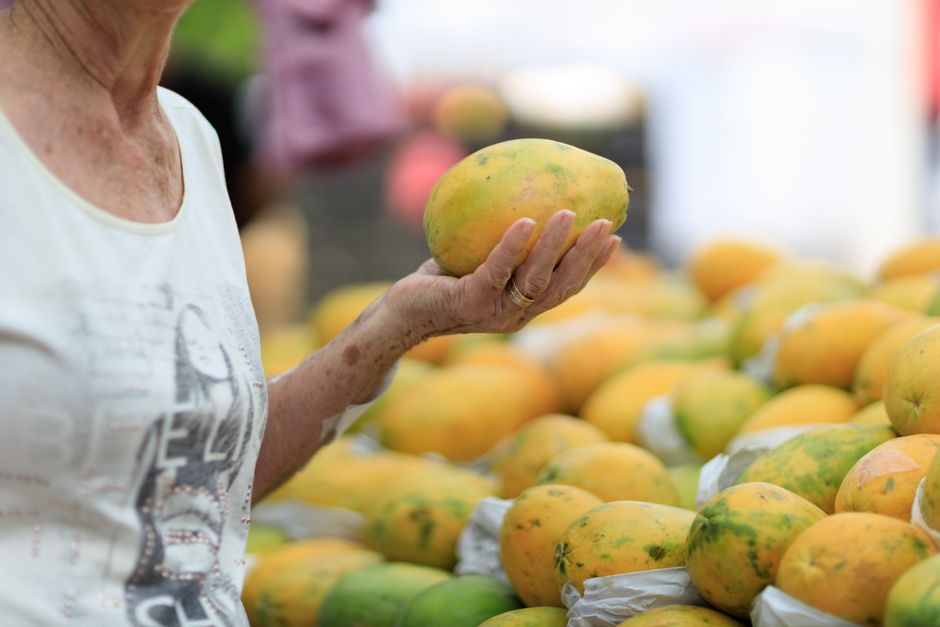
A ripe mango’s colour depends entirely on the variety. There is no single colour that means “ripe.” Some mangoes turn yellow, some turn orange, some stay green, and others develop a red or purple blush. Colour alone is a poor ripeness test for many types. The most reliable signs are firmness and fragrance, not skin colour.
Why Mango Colour Varies So Much
Mangoes come in hundreds of varieties worldwide. The most common ones in US grocery stores are Tommy Atkins, Kent, Haden, Ataulfo, and Keitt. Each has a different ripe colour.
Ataulfo mangoes, sometimes labelled honey or champagne mangoes, turn a rich golden yellow when ripe. They are small, oval, and have thin flesh. Kent mangoes are green with a yellow blush when ripe. Haden mangoes turn red and yellow. Tommy Atkins mangoes show a deep red blush over green and yellow, but this red appears before the fruit is fully ripe.
Keitt mangoes are the tricky ones. They stay mostly green even when fully ripe. If you wait for a Keitt to turn yellow, it will be overripe and mushy inside. This single fact explains why so many people buy unripe mangoes without knowing it.
The red colour on many mango varieties is not a ripeness signal at all. It is caused by sun exposure on the tree. The side facing the sun turns red. The shaded side stays green. A mango can be red on one side and green on the other, and both sides may be perfectly ripe.
What Colour Is a Ripe Mango by Variety
Here is a practical guide to ripe colours for the most common varieties in US stores:
- Ataulfo: Golden yellow, slightly wrinkled skin is a good sign of sweetness.
- Kent: Green skin with a yellow blush. Slight give when pressed.
- Haden: Red and yellow mix. The yellow areas should be deep, not pale.
- Tommy Atkins: Red blush with yellow undertones. Press gently — colour is not reliable.
- Keitt: Green even when ripe. Use fragrance and softness, not colour.
If you do not know the variety, do not rely on colour. This is the honest answer. A green mango may be ripe, and a yellow mango may be unripe, depending on what you bought.
The Most Reliable Signs of a Ripe Mango
Firmness is the best physical test. A ripe mango yields slightly when pressed gently, like a ripe peach or avocado. It should not feel mushy or leave a dent. An unripe mango feels hard and does not yield at all.
Fragrance is the second reliable test. A ripe mango smells sweet and fruity, strongest near the stem end. An unripe mango has almost no smell. An overripe mango smells fermented or sour, like alcohol.
Weight is a less known but useful indicator. A ripe mango feels heavy for its size because it has high juice content. A light mango may be fibrous or drying out inside.
Skin texture changes with ripeness in some varieties. Many ripe mangoes develop tiny wrinkles or a slight stickiness on the skin. This is normal and often indicates higher sugar content, especially in Ataulfo mangoes.





How to Ripen a Mango at Home
Most mangoes sold in US stores are picked mature but unripe. They ripen after harvest. Leave a firm mango on the counter at room temperature. It will typically ripen in two to five days, depending on how mature it was when picked.
Do not put an unripe mango in the refrigerator. Cold stops the ripening process. Once a mango is fully ripe, you can store it in the fridge for up to five days. The cold slows further softening and spoilage.
A paper bag can speed ripening. Mangoes, like bananas and apples, release ethylene gas as they ripen. Trapping that gas in a paper bag concentrates it and speeds the process. Adding a banana or apple to the bag increases ethylene further. This method typically shortens ripening time by a day or two.
Do not use a plastic bag. Plastic traps moisture and promotes mould growth. Paper allows the fruit to breathe while holding the ethylene gas.
What Happens Inside a Mango as It Ripens
Ripening is a biochemical process, not just a colour change. Starches convert to sugars. The flesh softens as cell walls break down. Acids decrease, and aromatic compounds develop. These changes produce the sweet taste and floral smell we associate with ripe mango.
Colour change happens because chlorophyll breaks down. In most varieties, green fades and yellow or orange pigments become visible. In varieties like Keitt, chlorophyll breaks down more slowly, so the skin stays green even as the inside ripens normally.
This is why cutting into a mango is sometimes the only way to know. A ripe mango flesh is juicy and bright yellow to orange. It separates easily from the seed. Unripe flesh is pale, firm, and often sour. Overripe flesh may be brownish, stringy, or have a fermented smell.
Common Mango Ripening Myths
One common myth is that a red mango is always ripe. As explained above, red blush is sun exposure, not ripeness. Many red mangoes are hard and unripe inside.
Another myth is that green mangoes are always unripe. Some varieties are naturally green at full ripeness. Keitt and Palmer mangoes are prime examples. Judging these by colour alone leads to either rock-hard fruit or overripe mush.
A third myth is that mangoes ripen after being cut. They do not. Cutting a mango stops the ripening process. Only whole fruit continues to ripen. If you cut into a hard mango, it will stay hard and sour.
Some people believe that soaking a cut mango in water removes the sap and makes it sweeter. This is not supported by evidence. The sap is an irritant and can cause contact dermatitis in sensitive people, but soaking does not change sugar content.
Frequently Asked Questions
Can a green mango be ripe?
Yes. Keitt and Palmer varieties stay green when fully ripe. Use fragrance and gentle pressure instead of colour to judge these.
What colour should the inside of a ripe mango be?
Ripe mango flesh is bright yellow to deep orange. Pale or whitish flesh indicates an unripe fruit.
How long does a mango take to ripen on the counter?
Most mangoes ripen in two to five days at room temperature. A paper bag can shorten this by a day or two.
Is a red mango always ripe?
No. Red blush on mango skin comes from sun exposure, not ripeness. Press the fruit gently and smell near the stem to check ripeness.
