
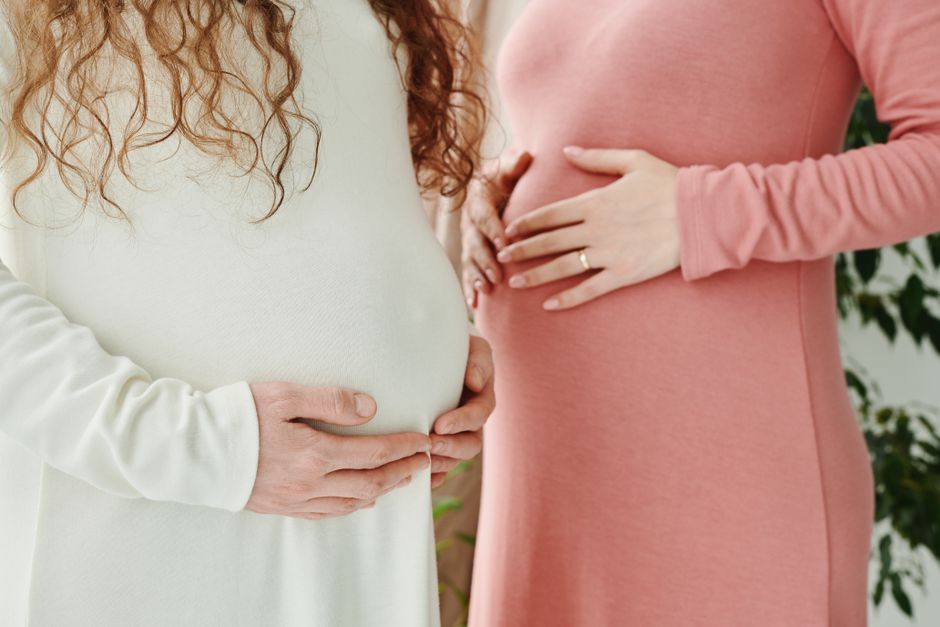
Fertility declines with age for both men and women, but the timeline is not the same for everyone. For women, the most significant drop in fertility begins in the mid-30s, with a sharper decline after age 35 and a substantial decrease after age 40. For men, fertility also declines with age, but the change is more gradual, with noticeable effects on sperm quality typically appearing after age 40. There is no single age that is “too old” to have a child, but the biological odds change significantly as you get older, and the risks of complications rise for both parent and child.
How Age Affects Female Fertility
A woman is born with all the eggs she will ever have. That supply decreases steadily from birth. By puberty, about 300,000 to 500,000 eggs remain. By age 37, roughly 25,000 remain. By age 51, the average age of menopause in the United States, the supply is nearly gone.
Egg quality also declines with age. Older eggs are more likely to have chromosomal abnormalities. This is why the risk of miscarriage and genetic conditions like Down syndrome increases with maternal age. The chance of a live birth per cycle drops from about 25-30% for women in their 20s to under 10% for women over 40 using their own eggs.
This decline is not linear. Fertility remains relatively stable through the early 30s. After age 35, the decline becomes more noticeable. After 40, it drops sharply. Most fertility specialists agree that using your own eggs after age 44 carries a very low chance of success, often under 5% per cycle.
How Age Affects Male Fertility
Men produce sperm continuously from puberty onward. Unlike women, men do not experience a sudden drop in fertility. But age still matters.
Sperm quality declines gradually after age 40. Sperm count, motility, and the percentage of sperm with normal shape all decrease. DNA fragmentation in sperm also increases with age. This means older fathers pass on more genetic mutations to their children.
Research has linked advanced paternal age to higher rates of autism, schizophrenia, and certain rare genetic conditions. The absolute risk remains small, but it is real. Some studies suggest that the optimal age for male fertility is between 25 and 35, though men can father children well into their 60s and beyond.
What Age Is Considered “Advanced” for Pregnancy?
In medical terms, “advanced maternal age” is defined as being 35 or older at the time of delivery. This is a clinical label, not a judgment. It simply means that a pregnancy will be monitored more closely because the risks are higher.
For men, the term “advanced paternal age” is less standardized. Some researchers use 40 as the cutoff. Others use 45 or 50. There is no universal clinical definition, but the biological changes are consistent across studies.
Being labeled “advanced maternal age” does not mean you cannot have a healthy pregnancy. Many women in their late 30s and early 40s do. It means the medical team will watch for conditions like gestational diabetes, preeclampsia, and preterm birth more carefully.





Fertility Success Rates by Age
If you are trying to conceive naturally, the numbers tell a clear story. For women under 35, about 85% will conceive within one year of trying. For women aged 35-39, that number drops to about 75%. For women aged 40-44, it falls to roughly 50%.
For assisted reproduction, the picture is similar. The Centers for Disease Control and Prevention publishes success rates for IVF clinics across the country. For women using their own eggs, the live birth rate per cycle is approximately:
- Under 35: about 40-45%
- 35-37: about 30-35%
- 38-40: about 20-25%
- Over 40: about 10-15%
These figures vary by clinic and by individual health status. They are national averages, not guarantees. The single biggest factor in IVF success is the age of the woman providing the eggs.
Using donor eggs changes the equation completely. When a woman over 40 uses eggs from a younger donor, her chance of success is roughly equal to the donor’s age-based success rate. This is why egg donation is so common for women over 42.
Risks of Pregnancy at Older Ages
Pregnancy after 35 carries higher risks for both the mother and the baby. These risks increase with each passing year.
For the mother, the risk of gestational diabetes, preeclampsia, and cesarean delivery all rise with age. Women over 40 are more likely to develop these conditions than women in their 20s. Most are manageable with proper prenatal care, but they require close monitoring.
For the baby, the risk of chromosomal abnormalities increases with maternal age. At age 35, the risk of Down syndrome is about 1 in 350. At age 40, it is about 1 in 100. At age 45, it is about 1 in 30. These numbers are well established in clinical literature.
Miscarriage rates also rise with age. For women under 35, the risk is about 10-15%. For women over 40, it approaches 40-50%. Most early miscarriages are caused by chromosomal abnormalities in the embryo, which become more common as eggs age.
Fertility Testing: What You Should Know
If you are over 35 and considering pregnancy, fertility testing can give you a clearer picture of where you stand. The most common tests include blood work to check hormone levels and an ultrasound to count antral follicles.
Anti-Müllerian hormone (AMH) is a blood test that estimates ovarian reserve. It tells you how many eggs remain, but it does not tell you about egg quality. A normal AMH level does not guarantee fertility, and a low level does not mean pregnancy is impossible.
For men, a semen analysis is the standard test. It measures sperm count, motility, and morphology. This test is simple, inexpensive, and non-invasive. If a couple has been trying for six months without success and the woman is over 35, both partners should be evaluated.
How Old Is Too Old To Have Kids Fertility By Age: The Bottom Line
For women using their own eggs, age 44 is generally considered the upper limit for realistic chances of success. Beyond that, the live birth rate per cycle drops to under 5%. Most fertility clinics will not offer IVF with a woman’s own eggs after age 44 or 45 because the odds are so low.
For women using donor eggs, age is less of a barrier. The uterus can support a pregnancy well into the 50s, though most clinics set an upper age limit of around 50-55 for medical and ethical reasons. A woman’s overall health matters more than her chronological age when using donor eggs.
For men, there is no hard cutoff. Men can father children at any age, but the quality of sperm declines after 40. The risk of genetic conditions in offspring increases with paternal age, though the absolute risk remains small.
The honest answer is that age matters, but it is not the only factor. Overall health, lifestyle, and medical history all play a role. A 38-year-old with excellent health may have better fertility than a 32-year-old with untreated medical conditions. The best way to know where you stand is to get tested and speak with a fertility specialist.
Frequently Asked Questions
What is the best age to have a baby?
The best age for fertility is the 20s to early 30s for women and the 20s to mid-30s for men. Fertility declines gradually after these ranges, and the risk of complications increases.
Can I get pregnant naturally at 42?
Yes, it is possible, but the chance per cycle is low, around 5-10%. Most women over 42 who conceive use donor eggs or IVF.
Does male age affect pregnancy success?
Yes, sperm quality declines after age 40, which can lower success rates and increase the risk of genetic conditions. The effect is smaller than the female age effect but still significant.
Is 45 too old to have a baby?
For women using their own eggs, 45 is generally considered too old for realistic success rates. With donor eggs, pregnancy is possible, but it requires careful medical monitoring.
