
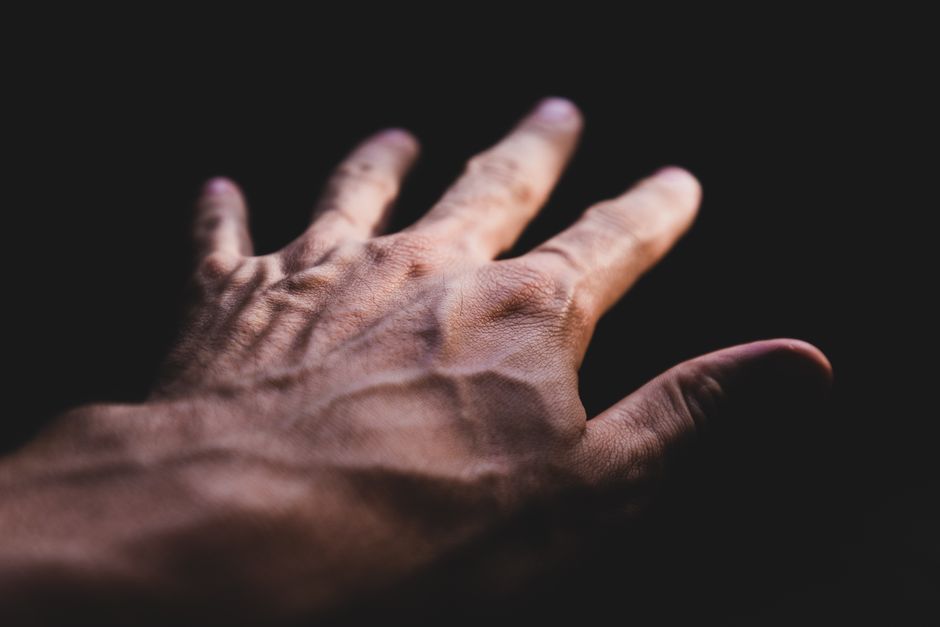
Veins look blue or purple through the skin, but they are not actually blue. The blood inside them is dark red. What you are seeing is an optical effect created by light passing through skin and the way your eyes and brain interpret color.
This surprises most people. The blue appearance is not a sign of low oxygen, poor circulation, or “blue blood.” It is a trick of physics and perception that happens in every person with light-toned skin.
Why Do Veins Look Blue If Blood Is Red?
Blood is red because of hemoglobin, the protein inside red blood cells that carries oxygen. When hemoglobin is loaded with oxygen, it appears bright red. When it has released oxygen to your tissues, it appears a darker, bluish-red. But even deoxygenated blood is still red, not blue.
The blue color you see comes from how light behaves as it travels through your skin. This is often explained by what is called the Tyndall effect. Light is made up of different wavelengths. Red light has longer wavelengths and penetrates deeper into tissue. Blue light has shorter wavelengths and scatters more readily near the surface.
When white light hits your skin, the red wavelengths are absorbed by tissue and blood before they can bounce back to your eye. The blue wavelengths scatter in the upper layers of skin and reflect back out. Your eye picks up this scattered blue light, and your brain registers the vein as blue.
There is a second factor at play. Your brain compares the color of the vein to the surrounding skin tone. Because skin has warm reddish and yellowish tones, the contrast makes the vein appear even bluer than it physically is. This is a visual perception effect, not a change in the blood itself.
What Color Are Veins Really?
Veins are the color of the blood inside them, which ranges from dark red to a brownish-red depending on how much oxygen the blood is carrying. If you could lift a vein out of the body and look at it against a white background, it would not look blue.
The vein wall itself is a thin, translucent, pale structure. It has no blue pigment. There is nothing blue inside a vein.
This is why surgeons and phlebotomists do not rely on the blue appearance of a vein when they need to find one. They look at the shape, the slight bulge under the skin, and the way the vein feels. The color is a surface illusion.
Why Do Some Veins Look Green?
Some veins appear green, especially on the wrists and forearms. The same optical principles explain this. When blue light scattered from the vein mixes with the yellow tones of the skin above it, the combination can shift the perceived color toward green.
Green-looking veins are common in people with warmer or olive skin tones. It is not a sign of anything unusual. It is simply how the wavelengths blend together in that particular patch of skin.
People sometimes use vein color to guess their skin undertone for makeup matching. The idea is that blue veins suggest cool undertones and green veins suggest warm undertones. This method is unreliable. Research on vein color and skin undertone has not shown a consistent link, and many people have veins that look blue in one spot and green in another.





Does Vein Color Change With Oxygen Levels?
Vein color appearance does not reliably tell you anything about your blood oxygen level. The blue look is a light-scattering effect, not a measure of oxygen saturation.
Doctors measure oxygen levels with a pulse oximeter, a device that shines specific wavelengths of light through a fingertip and calculates how much red and infrared light is absorbed. This gives a percentage reading. Normal resting oxygen saturation is generally between 95% and 100% for healthy adults at sea level.
Looking at your veins cannot give you that number. A person with perfectly normal oxygen levels will still have blue-looking veins. A person with low oxygen may not show any obvious change in vein color at all.
If you are concerned about your oxygen level or breathing, a pulse oximeter or a visit to a clinician is the right step. Vein color is not a diagnostic tool.
Why Are Veins More Visible in Some People?
Vein visibility depends on several factors, most of which are normal and not related to health.
- Skin tone. Lighter skin makes veins easier to see because there is less pigment to mask the scattered light.
- Body fat. Less subcutaneous fat means veins sit closer to the surface and show through more clearly.
- Age. Skin thins and loses some elasticity over time, and the fat layer under the skin can shrink. Both changes make veins more prominent.
- Genetics. Some people simply have veins that sit closer to the surface or have thinner skin.
- Temperature. In warm conditions, veins widen to release heat. This can make them more visible.
- Physical activity. During exercise, blood flow increases and veins may bulge temporarily.
- Hydration. Dehydration can reduce blood volume and sometimes make veins look flatter or less visible, though the effect varies.
None of these factors on their own indicate a medical problem. Visible veins are a normal part of human anatomy.
When Should Visible Veins Concern You?
Visible veins are usually harmless. But certain changes are worth having a doctor look at.
Varicose veins are enlarged, twisted veins that often appear on the legs. They happen when valves inside the vein weaken and blood pools instead of flowing back toward the heart. They are common and often not dangerous, but they can cause aching, heaviness, or swelling. In some cases they lead to skin changes or ulcers.
Spider veins are smaller, web-like clusters near the surface. They are also common and usually cosmetic.
Seek medical evaluation if you notice:
- A vein that becomes suddenly swollen, hard, red, or warm to the touch
- Pain in one leg, especially with swelling or redness
- A vein that bleeds or develops an open sore nearby
- Sudden increase in vein visibility with no clear cause
These signs can point to a blood clot or another circulatory problem that needs prompt attention. A blood clot in a deep leg vein is a medical emergency. Do not wait to see if it improves on its own.
Do Blue Veins Mean Poor Circulation?
No. Blue-looking veins are normal and do not indicate poor circulation. The color comes from how light scatters through skin, not from the blood flow inside the vein.
Circulation problems are diagnosed through symptoms, physical exam, and tests such as ultrasound or blood pressure measurements in the limbs. A doctor does not use vein color to assess circulation.
Some people worry that blue veins mean their blood is “not getting enough oxygen.” This is a misunderstanding. Deoxygenated blood is still red. The blue appearance happens in everyone, regardless of how well their circulation is working.
Frequently Asked Questions
Are veins actually blue?
No. Veins carry dark red blood and have no blue pigment. The blue color is an optical effect caused by how light scatters through the skin.
Why do veins look blue but blood is red?
Red wavelengths of light are absorbed by tissue before they reflect back, while blue wavelengths scatter near the surface and reach your eye. Your brain then perceives the vein as blue.
Can vein color tell you your oxygen level?
No. Vein color is not a reliable indicator of blood oxygen. A pulse oximeter is the standard tool for measuring oxygen saturation.
Why do some people have more visible veins?
Lighter skin, lower body fat, older age, and genetics all make veins more visible. These are normal variations and usually not a health concern.
