
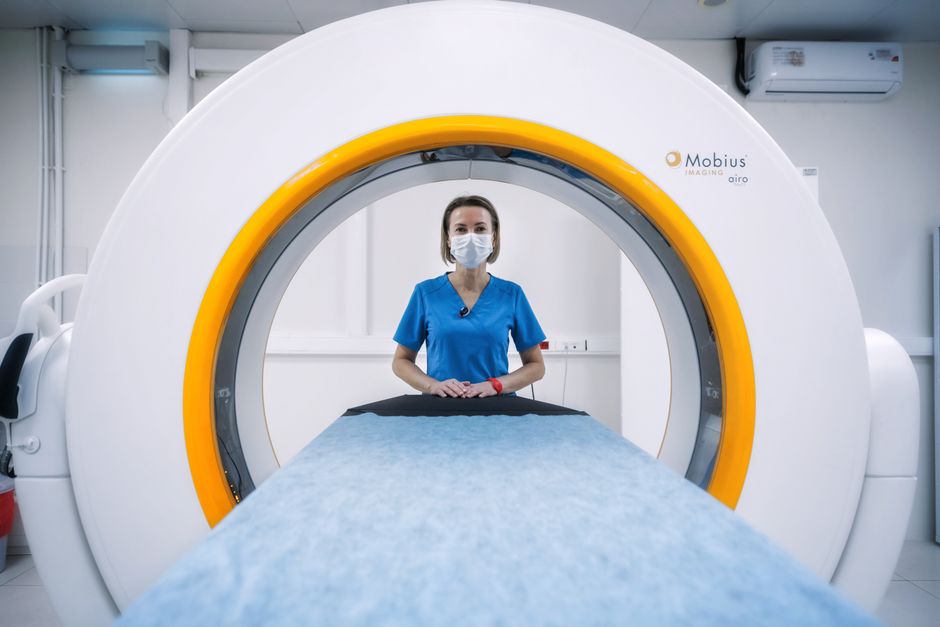
Becoming a radiology nurse takes about two to four years of formal education, a passing score on the NCLEX-RN exam, and a state nursing license. Most radiology nurses start as registered nurses and then gain experience or certification in imaging and interventional radiology settings. Pay varies widely by state, setting, and experience, but radiology and interventional radiology nurses often earn at or above the national average for registered nurses.
What Does A Radiology Nurse Actually Do?
A radiology nurse cares for patients before, during, and after imaging procedures. That covers a broader range of work than many people expect when they hear the word “radiology.”
The role splits into two main areas. Diagnostic radiology nursing involves preparing patients for imaging studies like CT scans, MRIs, and nuclear medicine tests. Interventional radiology nursing is more hands-on and procedure-focused. These nurses assist during image-guided procedures such as angiograms, embolizations, and biopsies.
Day-to-day responsibilities often include:
- Reviewing patient history and screening for contrast dye allergies or kidney problems
- Starting IV lines and administering sedatives or contrast agents under provider orders
- Monitoring vital signs and sedation levels during procedures
- Managing post-procedure recovery and watching for complications
- Educating patients about what to expect before and after imaging
Interventional radiology nurses work in a fast-paced environment similar to a catheterization lab or operating room. They often wear lead aprons for radiation protection. Diagnostic radiology nurses may work in outpatient imaging centers with more predictable schedules.
One thing that surprises new nurses: radiology nursing involves a lot of patient assessment and critical thinking, not just following a doctor’s orders. You are often the first person to notice a change in a sedated patient’s breathing or heart rhythm.
What Education And Licensing Do You Need?
You need a registered nursing license before you can work as a radiology nurse. There is no separate radiology nursing license. Every radiology nurse is first a registered nurse.
There are three main education paths to becoming an RN:
- Associate degree in nursing (ADN) — typically two years, offered at community colleges
- Bachelor of science in nursing (BSN) — typically four years, offered at universities
- Hospital diploma program — less common today, typically three years
Both ADN and BSN graduates sit for the same NCLEX-RN exam and receive the same initial license. Many employers now prefer or require a BSN. Some hospitals will hire ADN nurses with a condition that they complete a BSN within a certain number of years.
After graduation, you must pass the NCLEX-RN, a standardized exam that tests nursing knowledge and judgment. Then you apply for licensure in the state where you plan to work. Licensure requirements vary by state, so check your state board of nursing for specifics.
No radiology-specific education is required before you start working in the field. Most radiology nurses learn on the job. Some hospitals offer orientation programs for nurses new to imaging or interventional settings.
Do You Need Certification To Work In Radiology Nursing?
Certification is not required to work as a radiology nurse in most settings. It is voluntary. That said, certification can improve job prospects and may come with a pay differential at some employers.
The main credential is the Certified Radiology Nurse (CRN) designation. It is offered through the Association for Radiologic and Imaging Nursing. Eligibility generally requires a current RN license and a certain amount of clinical experience in radiology nursing. You can verify current eligibility requirements directly with the certifying body, as they can change.
Some nurses also pursue certification in related areas. A Certified Post Anesthesia Nurse (CPAN) or Critical Care Registered Nurse (CCRN) credential may be relevant for interventional radiology roles. These certifications reflect critical care and procedural skills that overlap with interventional work.
Is certification worth it? It depends on your goals. If you plan to stay in radiology long-term or move into leadership, it can help. If you are exploring the field, it is not necessary to get started. The evidence on whether certification directly improves patient outcomes in radiology nursing specifically is limited. Certification is more clearly linked to career advancement than to measured clinical outcomes in this specialty.




How To Become A Radiology Nurse: Steps And Salary In Practice
The path from new graduate to radiology nurse usually follows a predictable sequence. Here is what it looks like in practice.
- Step 1: Complete a nursing program. Earn an ADN or BSN from an accredited school.
- Step 2: Pass the NCLEX-RN. This is required for licensure in every state.
- Step 3: Get your RN license. Apply through your state board of nursing.
- Step 4: Gain general nursing experience. Many radiology departments prefer one to two years of experience, often in med-surg, critical care, or emergency nursing.
- Step 5: Apply for radiology or interventional radiology positions. Some hospitals hire new graduates directly into radiology; others require prior experience.
- Step 6: Complete on-the-job training. Learn imaging-specific skills like sedation monitoring, contrast administration, and radiation safety.
- Step 7 (optional): Pursue certification. The CRN credential can support advancement.
Not every radiology nurse follows this exact route. Some enter radiology immediately after graduation. Others spend years in ICU or emergency nursing first. Both paths exist, and which one is available depends largely on the hiring practices of the hospital or imaging center.
Salary is where expectations need calibrating. Radiology nursing pay is not dramatically higher than general RN pay in most markets. It can be higher in interventional radiology, where procedural and critical care skills are required, and in certain high-cost-of-living areas.
According to the U.S. Bureau of Labor Statistics, the median annual wage for registered nurses was $86,070 as of May 2024. Radiology nurses typically fall in a similar range, with interventional radiology often at the higher end. Actual pay depends on location, experience, shift differentials, and whether the role requires call coverage.
Call coverage matters more than many people realize. Interventional radiology nurses often take on-call shifts for emergency procedures. That can add meaningfully to total compensation but also affects work-life balance.
What Is The Work Environment Like?
Radiology nursing environments vary widely. A diagnostic imaging center may offer weekday hours with no nights or weekends. A hospital interventional radiology suite may involve call shifts, emergencies, and a faster pace.
Radiation exposure is part of the job in some settings. Nurses who work in fluoroscopy or interventional suites wear lead aprons and follow radiation safety protocols. Occupational radiation exposure is monitored, and hospitals are required to keep exposure within regulatory limits set by organizations like the Nuclear Regulatory Commission and state health departments.
Physical demands are real. Nurses in these roles stand for long periods, move patients, and wear heavy protective gear. That is worth considering if you have back or joint issues.
The emotional side is also worth naming. Interventional radiology involves acutely ill patients, bleeding emergencies, and cancer procedures. It can be rewarding and stressful at the same time.
Is Radiology Nursing A Good Career Choice?
Radiology nursing is a solid career for nurses who want procedural work, technical skills, and often more predictable hours than bedside hospital nursing. It is not for everyone.
If you enjoy critical care, like working with technology, and want a role that combines patient assessment with hands-on procedures, radiology nursing is worth exploring. If you prefer long-term patient relationships and continuity of care, it may feel less fulfilling.
The field is growing along with overall demand for imaging services. An aging population and expanding use of image-guided procedures support ongoing demand for nurses in this specialty. That said, specific growth projections for radiology nursing as a distinct role are not separately tracked by major labor statistics agencies.
One practical consideration: radiology nursing can be a good mid-career move for nurses who want to step away from the physical and emotional demands of bedside nursing without leaving direct patient care entirely. That is a common reason nurses transition into the specialty.
Frequently Asked Questions
How long does it take to become a radiology nurse?
It takes at least two to four years to complete a nursing program and pass the NCLEX-RN, plus additional time to gain experience if your employer requires it. Some hospitals hire new graduates directly into radiology, while others prefer one to two years of prior nursing experience.
How much do radiology nurses make?
Radiology nurse pay generally falls near the national median for registered nurses, which the U.S. Bureau of Labor Statistics reported as $86,070 per year as of May 2024. Interventional radiology roles and positions with call coverage often pay more, while pay varies significantly by state and experience level.
Do you need a special certification to be a radiology nurse?
No, certification is not required to work as a radiology nurse in most settings. The Certified Radiology Nurse credential is voluntary and typically requires a current RN license plus clinical experience in the specialty.
Can you become a radiology nurse right after nursing school?
Yes, some hospitals and imaging centers hire new graduate nurses directly into radiology or interventional radiology. Others require prior experience in med-surg, critical care, or emergency nursing, so availability depends on the employer.
