
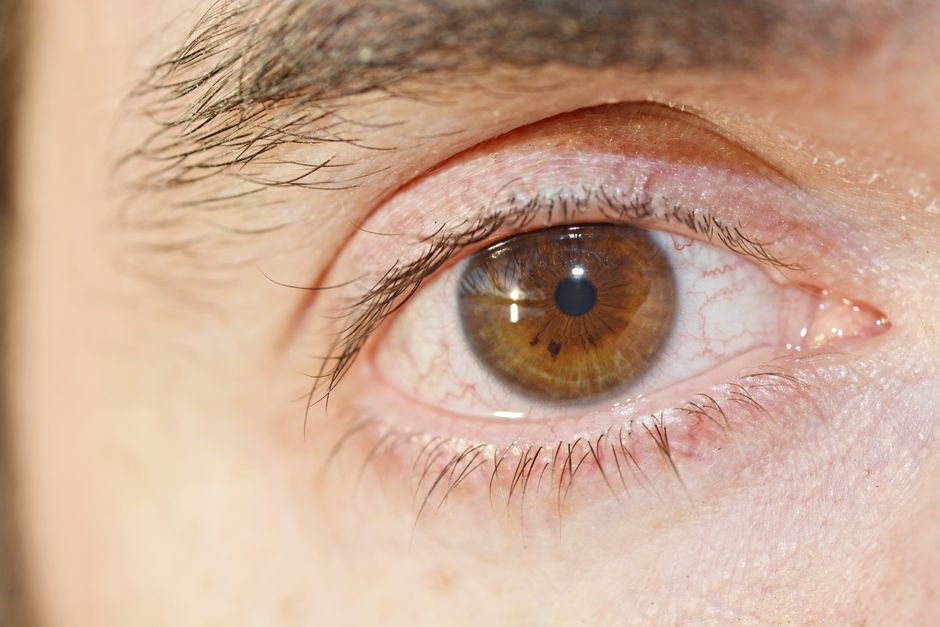
Look around any crowded room and you will see a sea of brown eyes. That is not a coincidence. Brown is the most common eye color worldwide by a wide margin, and it dominates in most of Asia, Africa, and South America. Blue and green eyes, which many people in the United States think of as common, are actually a minority globally.
The exact numbers depend on where you look and who you count. Eye color is not evenly spread across the planet. A shade that is rare in one country may be ordinary in another. This guide breaks down what is known about eye color statistics, how eye color is inherited, and why some colors are far less common than others.
How Rare Are Your Eyes A Look At Eye Color Statistics?
Globally, brown eyes are the most common by far. Reliable estimates suggest that somewhere around 70 to 80 percent of the world’s population has brown eyes, though the exact figure varies by how you define the categories and which populations you sample. Blue eyes come next, followed by hazel, then green, then the genuinely rare shades like amber and gray.
These are estimates, not precise census counts. No one has ever measured the eye color of every person on Earth. The numbers come from population studies, genetic research, and surveys of specific groups. That means any single percentage you see quoted online should be treated as an approximation.
Here is a rough picture of how the major colors stack up worldwide:
| Eye Color | Approximate Share Worldwide |
|---|---|
| Brown | Most common (roughly 70-80%) |
| Blue | Second most common (roughly 8-10%) |
| Hazel | Less common (roughly 5%) |
| Amber | Rare (roughly 5%) |
| Green | Rare (roughly 2%) |
| Gray | Very rare (roughly 1% or less) |
Those percentages are widely repeated in genetics and dermatology references, but they are best understood as rough estimates rather than exact measurements. Different sources group colors differently. Some lump hazel in with brown, for example, which changes the totals.
Why Are Brown Eyes So Common?
Brown eyes are common because the genetics behind them are the default. Eye color comes mostly from melanin, the same pigment that gives your skin and hair their color. More melanin in the front layer of the iris means darker eyes. Less melanin means lighter eyes.
High melanin production is the ancestral, or original, human trait. Lighter eyes are the result of genetic changes that reduced melanin in the iris. Those changes appeared later in human history and only became common in certain regions. So brown eyes are not just common — they reflect the original human eye color.
This is why the distribution looks the way it does. In regions where lighter eye variants never became widespread, brown eyes are nearly universal. In parts of northern and eastern Europe, lighter eyes are far more common because those genetic variants are concentrated there.
Where Are Blue Eyes Most Common?
Blue eyes are most common in people of northern and eastern European descent. In some countries in that region, blue eyes make up a large share of the population — far higher than the roughly 8 to 10 percent seen worldwide. Outside those areas, blue eyes become much less frequent.
Blue eyes contain very little melanin in the front layer of the iris. The blue color does not come from blue pigment. It comes from the way light scatters in the iris, similar to why the sky looks blue. There is no blue dye in a blue eye at all.
All people with blue eyes share a genetic link that traces back to a single common ancestor, according to widely cited genetics research. That does not mean every blue-eyed person is closely related in a family sense. It means the genetic change that allows for blue eyes appears to have a single origin point in human history.





How Rare Are Green Eyes Really?
Green eyes are among the rarest colors, estimated at roughly 2 percent of the world’s population. They are most often found in people of European descent, particularly those with ancestry from certain parts of northern and central Europe.
Green eyes form when melanin levels are low but not as low as in blue eyes, combined with light scattering. The result is a green or greenish appearance. Like blue eyes, there is no actual green pigment involved — it is a mix of low melanin and the way light behaves in the iris.
Because green eyes are uncommon, they tend to attract attention. But rarity does not carry any health meaning. Green eyes are not linked to better or worse vision, and they do not predict anything about your general health.
What About Hazel, Amber, and Gray Eyes?
Hazel eyes are often described as a mix of brown and green, sometimes with flecks of gold. They are more common than green eyes but less common than brown or blue. Hazel is also one of the hardest colors to define, which makes statistics about it especially rough.
Amber eyes are a solid golden or copper color with no green or brown mix. They are rare and are sometimes confused with hazel. Gray eyes are also rare, appearing as a cool, silvery shade. Some researchers think gray eyes may be a variation of blue rather than a separate category.
These in-between colors show why eye color statistics are fuzzy. Eye color is not a set of clean boxes. It exists on a spectrum, and many people have eyes that do not fit neatly into one label. Two people might describe the same pair of eyes differently.
How Is Eye Color Inherited?
Eye color is inherited, but not in the simple way many people were taught in school. The old idea that two blue-eyed parents can only have blue-eyed children is not accurate. Eye color involves multiple genes, and the outcome is not fully predictable from parents’ eye colors alone.
The main gene involved is often called OCA2, which plays a large role in melanin production in the iris. But several other genes also contribute. That is why two brown-eyed parents can have a blue-eyed child, and why siblings can have completely different eye colors.
Because so many genes are involved, you cannot reliably calculate a child’s eye color from the parents’ colors. Genetic testing can give some information, but even that does not capture every factor. The inheritance is real and biological — it is just more complex than a single dominant-or-recessive rule.
Can Eye Color Change Over Time?
Eye color can change in early childhood, and it can shift slightly later in life. Many babies are born with blue or grayish eyes that darken over the first year or so as melanin builds up in the iris. This is normal and expected.
In adults, eye color is generally stable, but small changes can happen with age. The iris can lose some pigment over decades, and the appearance of eye color can also be affected by lighting, clothing, and even mood-related pupil changes. These shifts are usually subtle.
A sudden change in eye color in one eye, or a rapid change in an adult, is different. That is not a normal aging change and is worth discussing with a doctor, because it can sometimes signal an underlying eye or medical condition. This is a case where a real change deserves a real evaluation rather than a wait-and-see approach.
Do Eye Colors Affect Your Health or Vision?
Eye color does not determine how well you see. People with brown, blue, green, and every other color can have excellent vision or need glasses. Color itself is not a measure of eye health.
There is one area where eye color has a modest, well-documented link: lighter eyes have less pigment, and pigment offers some protection from sunlight. Because of this, people with lighter eyes may be somewhat more sensitive to bright light and may be at slightly higher risk from ultraviolet exposure. The evidence here is real but modest, and it does not mean lighter-eyed people are fragile.
The practical takeaway is the same for everyone. Sunglasses and regular eye exams matter regardless of eye color. No eye color makes you immune to eye problems, and none makes them inevitable.
Why Eye Color Statistics Are Hard to Pin Down
Eye color statistics are estimates because eye color is a spectrum, not a set of fixed categories. Researchers have to decide where brown ends and hazel begins, and different studies draw those lines differently. That alone changes the numbers.
Population sampling matters too. A study of one country tells you about that country, not the world. When you see a precise-sounding figure like “green eyes are exactly 2 percent,” remember that it is a rounded estimate drawn from limited data, not a measured fact.
The honest position is this: brown is clearly the most common, blue is clearly next, and green, gray, and amber are clearly rare. The exact percentages are approximate. Anyone who gives you a number to the decimal point is overstating what is actually known.
Frequently Asked Questions
What is the rarest eye color?
Green eyes are often cited as the rarest of the common categories, at roughly 2 percent of the world’s population, though some sources consider certain shades of gray or amber even rarer. The exact ranking depends on how colors are grouped.
Are blue eyes rarer than brown eyes?
Yes. Brown eyes are the most common worldwide, estimated at roughly 70 to 80 percent, while blue eyes make up only around 8 to 10 percent globally. Blue eyes are far more common in people of northern and eastern European descent.
Can two brown-eyed parents have a blue-eyed child?
Yes, this is possible. Eye color involves multiple genes, not just one, so two brown-eyed parents can have a child with lighter eyes. The old single-gene rule taught in schools does not fully explain inheritance.
Does eye color affect your vision?
No, eye color does not determine how well you see. People of every eye color can have strong vision or need corrective lenses, though lighter eyes may be somewhat more sensitive to bright light.
