
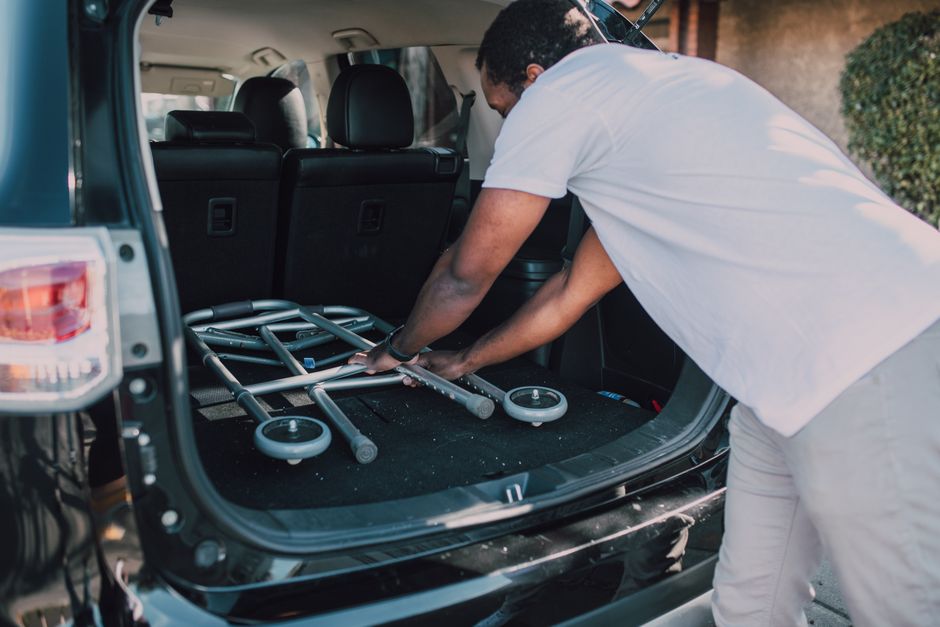
If you have trouble bending to tie your shoes or swinging your leg into the car, the cause is usually a mix of soft tissue tightness, joint changes, and the natural wear that comes with age. These factors overlap, which is why hip stiffness rarely has a single cause. Understanding which one is driving your limitation helps you address it correctly.
The hip is a ball-and-socket joint. It is built for both stability and a wide range of motion. When any part of that system changes — the muscles, the cartilage, the joint capsule, or the bone itself — movement gets harder. Age affects all of these, but not always in the way people assume.
What Causes Poor Hip Mobility in the Muscles?
Muscles control how far and how easily your hip moves. When they are tight, weak, or imbalanced, your range of motion drops even if the joint itself is healthy.
The hip flexors sit at the front of your hip. These muscles — including the iliopsoas and rectus femoris — lift your knee and bend your waist. Long periods of sitting keep them in a shortened position. Over time, that position can feel like the new normal. The muscle does not literally shrink overnight, but its resting length and tolerance for stretch change with disuse.
On the back side, the glutes and deep hip rotators do the opposite job. They extend and rotate the hip. When these muscles are weak, the joint loses support, and other tissues take over. That compensation pattern often shows up as stiffness rather than pain.
There is a detail many people miss. Stretching alone rarely fixes muscle-related hip tightness. Research on flexibility consistently shows that both stretching and strengthening are needed to change range of motion in a lasting way. A muscle that is tight because it is weak will not respond to stretching by itself.
Muscle tightness also has a nervous system component. Your brain sets a safe limit on how far a muscle will lengthen. That limit can tighten after injury, inactivity, or years of never moving through full range. This is one reason mobility work sometimes takes weeks to show results.
How Do Joint Changes Affect Hip Mobility?
The joint surfaces of the hip are covered in cartilage, a smooth tissue that lets the ball glide in the socket. When cartilage thins or wears down, movement becomes rougher and range of motion can shrink.
This process is called osteoarthritis when it becomes symptomatic. It is one of the most common causes of hip stiffness in adults over 50. The cartilage loss itself does not cause pain directly — cartilage has no nerve endings. Pain comes from the surrounding joint capsule, the lining of the joint, and the bone surface underneath.
Osteoarthritis in the hip typically limits rotation first. You may notice it is harder to turn your foot outward or cross your legs. Loss of extension — the ability to step backward — often follows. These changes happen gradually and are easy to dismiss as “just getting older.”
Other joint-level causes exist. A labral tear, which is damage to the ring of cartilage around the socket rim, can limit motion and cause a catching sensation. Femoroacetabular impingement, where the ball or socket has an extra bony shape that pinches soft tissue, is another. These are more common in younger and middle-aged adults and often show up during certain movements rather than as constant stiffness.
It is worth being clear about one thing. Imaging findings do not always match symptoms. Many adults have signs of hip arthritis on an X-ray but feel no pain and move normally. Others have significant stiffness with only mild changes on imaging. Symptoms, not scans alone, guide what matters.
What Causes Poor Hip Mobility Muscles Joints Age?
Age changes the hip in several ways at once, and most of them are gradual. This is the core of what causes poor hip mobility across muscles, joints, and time.
Cartilage loses water content and elasticity with age. The joint capsule, a tough sleeve around the hip, becomes less flexible. Muscle mass and strength decline starting in midlife — a process called sarcopenia — which reduces the muscular support around the joint. Bone density also changes, though this affects fracture risk more than mobility directly.
Activity level matters more than the calendar. Studies consistently show that people who stay active maintain more hip range of motion than those who are sedentary, even at the same age. Inactivity accelerates the very changes people blame on aging.
There is a useful way to think about this. Age sets the stage, but how you move determines the script. A 70-year-old who walks daily and moves through full hip range can have better mobility than a 50-year-old who sits most of the day.
What Else Contributes to Hip Stiffness?
Several other factors can cause or worsen hip mobility problems. Knowing them helps you rule out causes that need different treatment.
- Prolonged sitting: Keeps hip flexors short and glutes inactive.
- Previous injury: A past fracture, dislocation, or surgery can leave scar tissue that limits movement.
- Inflammatory conditions: Conditions such as rheumatoid arthritis can affect the hip joint lining.
- Bursitis: Inflammation of the fluid-filled sacs around the hip can cause pain that restricts motion.
- Referred pain: Problems in the lower back or sacroiliac joint can mimic hip stiffness.
This last point deserves attention. Not all hip stiffness comes from the hip. The lower back and the sacroiliac joint share nerve pathways and movement patterns with the hip. A clinician often checks the spine before concluding the hip is the source.





When Should Hip Stiffness Concern You?
Most hip stiffness is mechanical and improves with movement. Some signs point to something that needs medical evaluation.
Seek care if you have hip pain that wakes you at night, stiffness that lasts more than an hour in the morning, sudden loss of motion, or pain with fever. A hip that locks, catches, or gives way also deserves a professional look. These can signal conditions that need treatment beyond stretching.
Persistent stiffness that limits daily activities — walking, dressing, climbing stairs — is also a reason to get checked. Early evaluation tends to open more options than waiting until motion is severely limited.
Does Stretching Fix Hip Mobility?
Stretching helps, but it is not a complete answer. The evidence supports movement and strengthening as the bigger levers for lasting change.
Static stretching can improve range of motion in the short term. Studies show the effect is real but modest, and it fades if you stop. Strength training through full range of motion appears to produce more durable gains because it trains the muscle and the nervous system together.
For hip mobility specifically, a combination tends to work best:
- Move the hip through its full range daily, not just once a week.
- Strengthen the glutes and hip flexors, not just stretch them.
- Reduce long sitting bouts when possible.
- Warm up before deeper stretching — cold tissue does not lengthen well.
If osteoarthritis is the cause, exercise remains a first-line approach in clinical guidance. It does not reverse cartilage loss, but it can reduce pain and maintain function. Some clinicians also recommend physical therapy for targeted programs. For advanced arthritis, other options exist, but they are decisions to make with a doctor, not from an article.
Can You Prevent Poor Hip Mobility?
You cannot stop every age-related change, but you can slow the ones tied to inactivity. Prevention focuses on keeping the hip moving and the muscles around it strong.
Regular walking, squatting, and hip hinging keep the joint moving through range. Strength work two or more days a week supports the muscles that stabilize the hip. Breaking up long sitting periods helps prevent the flexor tightness that builds quietly over years.
No single exercise prevents arthritis. The honest position is that staying active reduces the functional decline that makes stiffness worse, even when it does not change the underlying joint. That distinction matters. You are managing how the hip ages, not stopping the clock.
Frequently Asked Questions
What is the most common cause of poor hip mobility?
The most common cause is a combination of muscle tightness from inactivity and age-related joint changes, especially osteoarthritis. These two factors often overlap and reinforce each other.
Can poor hip mobility be reversed?
Muscle-related stiffness often improves with consistent movement and strengthening, though it can take weeks. Mobility lost to significant cartilage wear is generally managed rather than reversed.
Is hip stiffness a normal part of aging?
Some decline in hip range of motion is common with age, but the degree varies widely. Activity level influences it as much as age itself.
When should I see a doctor for hip stiffness?
See a doctor if stiffness lasts more than an hour in the morning, wakes you at night, or limits daily activities. Sudden loss of motion or pain with fever needs prompt care.
