
Low oxygen levels in older adults usually come down to one of a few things: the lungs are not moving air or transferring oxygen as well as they used to, the heart is not circulating blood efficiently, or the blood itself is not carrying enough oxygen. Age-related changes make all three more likely, and chronic conditions like COPD, heart failure, and sleep apnea become far more common with age. The result is that older adults can develop hypoxemia — the medical term for low oxygen in the blood — from causes that would rarely affect a younger person.
This article explains how oxygen gets from the air into your cells, what disrupts that process in older adults, and what the symptoms and warning signs actually look like. It is informational only and does not replace a medical evaluation.
What Causes Low Oxygen Levels In Older Adults?
Oxygen has to travel a long chain before it reaches your cells. Air enters the lungs, crosses into tiny air sacs called alveoli, passes through their thin walls into the bloodstream, and then gets carried by red blood cells to the rest of the body. A problem anywhere along that chain can drop your blood oxygen level.
In older adults, the most common causes fall into four groups:
- Lung conditions: COPD, emphysema, chronic bronchitis, pulmonary fibrosis, pneumonia, and asthma all interfere with gas exchange in the lungs.
- Heart conditions: Heart failure and certain arrhythmias reduce how much oxygenated blood the heart can pump out to the body.
- Sleep-related breathing problems: Obstructive sleep apnea causes repeated drops in oxygen during sleep and is common in older adults.
- Blood and circulation problems: Anemia reduces the number of red blood cells available to carry oxygen, and poor circulation can limit oxygen delivery to tissues.
Age itself contributes. The chest wall becomes stiffer, the muscles used for breathing weaken, and the lungs lose some of their elastic recoil. These changes alone rarely cause hypoxemia in a healthy older adult, but they lower the reserve. When illness is added on top, oxygen levels can fall faster and further than they would in a younger person.
How Does Aging Affect Oxygen Levels?
Aging changes the mechanics of breathing. The rib cage becomes less flexible, the diaphragm and chest muscles lose some strength, and the airways and lung tissue lose elasticity. This means older adults have to work harder to move the same amount of air.
There is also a change in how the lungs match airflow to blood flow. In a healthy young lung, air and blood are well matched, so oxygen transfer is efficient. With age, that matching becomes less precise, and the amount of oxygen that crosses into the blood can drop slightly. This is usually mild and does not cause symptoms on its own.
The bigger issue is that these age-related changes leave less room for error. A younger person might handle a bout of pneumonia or a mild heart problem without their oxygen dropping much. An older adult with reduced reserve can tip into hypoxemia more easily.
What Symptoms Suggest Low Oxygen in Older Adults?
Shortness of breath is the most common symptom. It may show up during activity that used to be easy, or at rest in more serious cases. Other signs include a fast heart rate, confusion or trouble concentrating, and a bluish tint to the lips, fingernails, or skin — a sign called cyanosis that needs urgent attention.
Older adults can be tricky here. Symptoms may be subtle or mistaken for normal aging. Some people feel tired, foggy, or unusually sleepy rather than short of breath. In others, confusion is the first noticeable sign, especially if they have an underlying lung or heart condition.
If you notice new confusion, a sudden drop in alertness, or bluish lips in an older adult, treat it as a medical emergency. Do not wait to see if it improves on its own.




How Is Low Oxygen Measured?
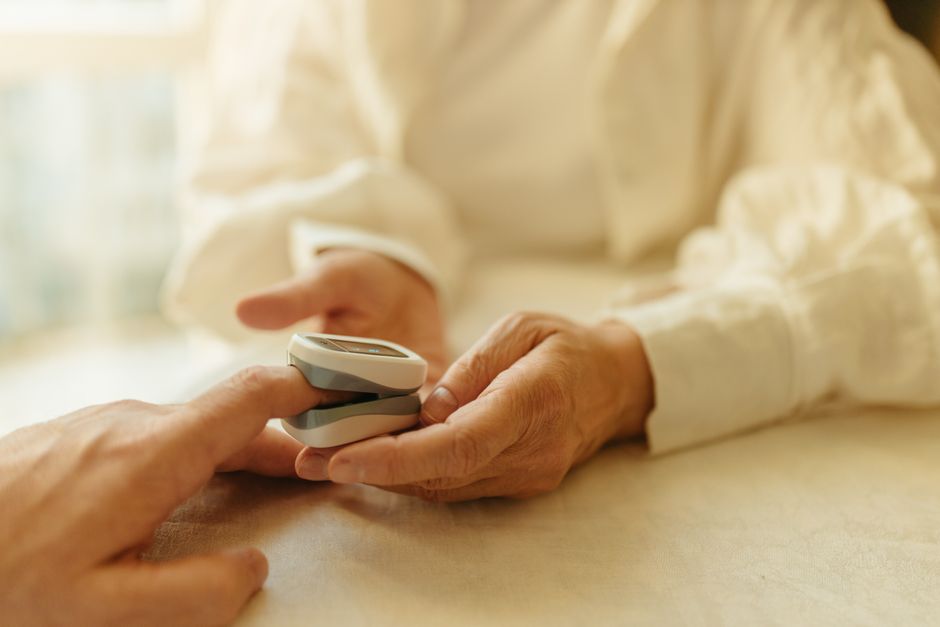
A pulse oximeter is the most common tool. It clips onto a finger and estimates oxygen saturation, written as SpO2. For most healthy adults, a normal reading is generally considered to be in the mid-to-high 90s. Values below 90 percent are usually considered low and warrant medical attention.
Pulse oximeters are not perfect. They can be less accurate in people with poor circulation, cold hands, or dark skin pigmentation. Research has shown that readings can be less reliable in patients with darker skin, which can delay recognition of low oxygen. If a reading does not match how someone looks or feels, that mismatch matters.
A blood test called an arterial blood gas gives a more direct and accurate measurement. It is used in hospitals when precise numbers are needed. It measures the partial pressure of oxygen in arterial blood, which is a different value from the percentage a pulse oximeter shows.
What Health Conditions Most Often Cause It?
COPD is one of the leading causes. It damages the alveoli and airways, so less oxygen crosses into the blood. It is strongly linked to smoking but can also occur from long-term exposure to dust, fumes, or air pollution.
Heart failure is another major cause. When the heart cannot pump effectively, fluid can build up in the lungs, and oxygen transfer suffers. Heart failure and lung disease often occur together in older adults, which makes the picture more complicated.
Obstructive sleep apnea is common and often undiagnosed. It causes the upper airway to collapse repeatedly during sleep, which drops oxygen levels and interrupts sleep. Over time, this can strain the heart and worsen other conditions.
Anemia, pulmonary fibrosis, pneumonia, and blood clots in the lungs are other possible causes. So is a condition called a pulmonary shunt, where blood passes through the lungs without picking up oxygen. The specific cause usually requires testing to identify.
What Raises the Risk in Older Adults?
Several factors make low oxygen more likely as people age. Having a chronic lung or heart condition is the biggest one. Smoking history, obesity, and a sedentary lifestyle all increase risk as well.
Living at high altitude lowers the amount of oxygen in the air, which can matter more for older adults with reduced lung reserve. Certain medications that suppress breathing, such as opioids, can also contribute, especially when combined with other risk factors.
Sleep apnea deserves special mention. It is more common with age, and many people do not know they have it. Loud snoring, gasping during sleep, and daytime sleepiness are signs worth discussing with a doctor.
When Should You See a Doctor?
See a doctor if you notice new shortness of breath, unusual fatigue, or a pulse oximeter reading that stays below 90 percent. Get emergency care right away for bluish lips or skin, severe trouble breathing, chest pain, or sudden confusion.
A single low reading is not always meaningful. Cold hands, poor circulation, or a poorly fitted device can cause a false low number. But repeated low readings, or a reading that matches symptoms, should not be ignored.
For older adults with a known lung or heart condition, it helps to know your usual baseline reading. A drop from your normal range can be meaningful even if the number is not yet in a danger zone. Your doctor can advise on what range to watch for in your specific case.
Frequently Asked Questions
What is a dangerously low oxygen level?
Oxygen saturation below 90 percent is generally considered low and needs medical attention. Below 88 percent is often treated as a more serious concern, but your doctor’s guidance depends on your specific condition.
Can low oxygen levels in older adults be reversed?
It depends on the cause. Some causes, like pneumonia or a blood clot, can improve with treatment, while chronic conditions like COPD are managed rather than reversed. The underlying cause determines the outlook.
Does low oxygen cause confusion in older adults?
Yes, confusion and reduced alertness can be signs of low oxygen, and they are sometimes the first noticeable symptom. New confusion in an older adult should be treated as a medical emergency.
Is a pulse oximeter accurate for older adults?
It is usually reliable but can be less accurate with poor circulation, cold hands, or darker skin pigmentation. If the reading does not match how the person looks or feels, seek medical advice.
