
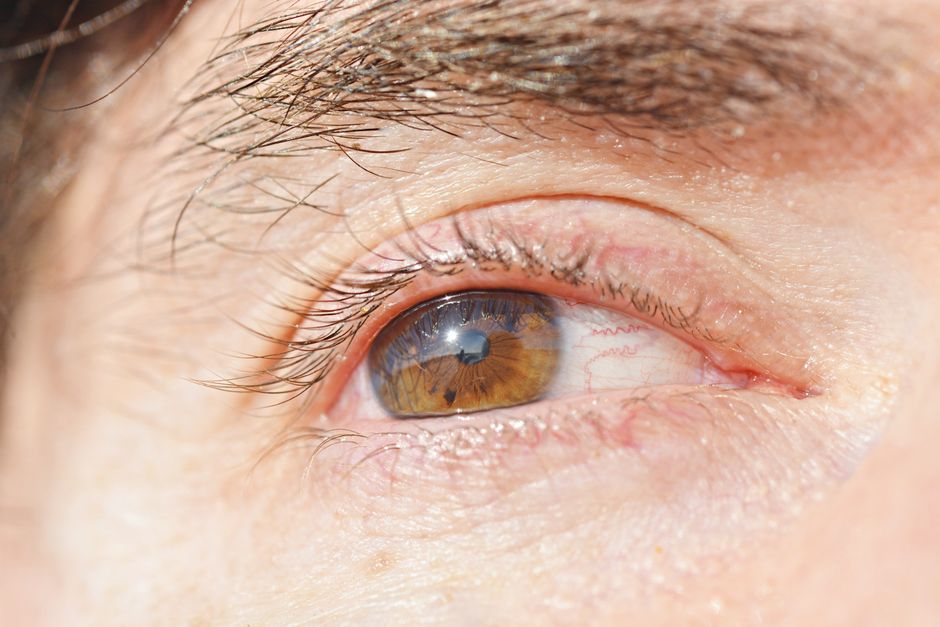
When the black center of the eye grows wider than usual, the cause is often a drug that affects the muscles controlling the pupil. Pupils normally widen in dim light or when you feel excited or scared. But certain substances — both medical and recreational — push the pupil open and hold it there. That is why large pupils are one of the classic physical signs clinicians look for when they suspect drug use.
Drugs cause large pupils by disrupting the muscles that control how much light enters the eye. Some drugs stimulate the muscle that opens the pupil. Others block the muscle that closes it. Either way, the pupil stays wide even in bright light, because the normal reflex that shrinks it is being overridden.
How Do Pupils Normally Work?
The pupil is a hole in the colored part of the eye. It is controlled by two tiny muscles that pull in opposite directions.
The sphincter muscle circles the pupil like a ring. When it tightens, the pupil shrinks. The dilator muscle radiates outward like spokes on a wheel. When it tightens, the pupil widens.
These muscles respond to two signals. One comes from how much light hits the retina. The other comes from the autonomic nervous system, which controls automatic body functions.
The autonomic system has two branches that normally balance each other:
- Parasympathetic — the “rest and digest” branch. Its nerve fibers release acetylcholine, which tightens the sphincter and shrinks the pupil.
- Sympathetic — the “fight or flight” branch. Its fibers release norepinephrine, which tightens the dilator and widens the pupil.
Most drugs that enlarge pupils work by pushing one of these two systems off balance. They either boost the sympathetic signal or block the parasympathetic one.
What Causes Large Pupils Drugs? The Two Main Mechanisms
Almost every pupil-widening drug falls into one of two categories. Knowing which one is at work explains why the pupil looks the way it does.
Stimulating the dilator muscle
These drugs mimic or boost norepinephrine. The dilator muscle contracts harder and the pupil opens wide. Because the drug is driving the muscle directly, the pupil stays large even in bright light.
Common examples include:
- Cocaine — blocks the reuptake of norepinephrine and other neurotransmitters, leaving more of them active at the dilator muscle.
- Amphetamines and methamphetamine — trigger release of norepinephrine and related signaling molecules.
- MDMA (ecstasy) — increases serotonin, dopamine, and norepinephrine activity.
- LSD and other classic hallucinogens — act mainly on serotonin receptors, but also increase sympathetic outflow.
- Psilocybin — the active compound in magic mushrooms, with similar effects on pupil size.
These substances also tend to raise heart rate, blood pressure, and body temperature. The wide pupil is one part of a broader “fight or flight” state.
Blocking the sphincter muscle
These drugs interfere with acetylcholine, the signal that normally tightens the pupil. If acetylcholine cannot reach the sphincter muscle, the pupil cannot shrink. The dilator muscle wins by default.
Examples include:
- Anticholinergic drugs — a large family that includes some antihistamines, motion sickness medications, certain antidepressants, and bladder control drugs.
- Tricyclic antidepressants — an older class of medication with strong anticholinergic effects.
- Atropine and scopolamine — medications used in eye exams and for some stomach or motion issues.
- Some antipsychotics — particularly older ones, which can block acetylcholine receptors.
Anticholinergic drugs often cause other signs too: dry mouth, blurred vision, constipation, and confusion. When several of these appear together with large pupils, clinicians may suspect an anticholinergic effect.
Which Specific Drugs Cause Large Pupils?
Many substances can dilate pupils, but some are more strongly linked to this effect than others. The list below covers the ones most often seen in emergency rooms and clinical practice.
Stimulants
- Cocaine
- Amphetamine and methamphetamine
- MDMA (ecstasy)
- Some prescription stimulants for ADHD, especially at high doses
Hallucinogens
- LSD
- Psilocybin
- Mescaline
- Some synthetic designer drugs
Anticholinergic medications
- Diphenhydramine (Benadryl) and similar antihistamines
- Scopolamine
- Tricyclic antidepressants such as amitriptyline
- Some muscle relaxants and bladder medications
Other substances
- Ketamine — can cause pupil dilation, though the effect varies
- Some synthetic cannabinoids
- Withdrawal from opioids — pupils become large during withdrawal, even though opioids themselves constrict pupils
It is worth noting that the same drug can affect people differently. Dose, body weight, tolerance, and individual biology all change how large the pupils become and how long they stay that way.





How Can You Tell Drug-Related Pupil Dilation From Other Causes?
Large pupils are not proof of drug use. Many other things can widen them, and some of those are completely normal.
Pupils naturally dilate in dim light, during exercise, when you feel strong emotions, or when you are focusing on something close. They also change with age. On average, pupil size tends to decrease as people get older.
Other non-drug causes include:
- Eye injury or inflammation — can damage the muscles or nerves controlling the pupil.
- Neurological conditions — some affect the third cranial nerve or the brain pathways that control pupil size.
- Adie’s pupil — a condition where one pupil reacts slowly to light.
- Migraine — can cause pupil changes in some people.
- Anxiety or panic — the sympathetic nervous system can widen pupils temporarily.
- Certain eye drops — used in eye exams or for treatment.
When a clinician evaluates large pupils, they look at the whole picture. Are both pupils affected equally? Do they react to light? Are there other signs like rapid heart rate, sweating, confusion, or agitation? The pattern of symptoms often points to the cause more clearly than pupil size alone.
What Other Signs Come With Drug-Related Pupil Dilation?
Large pupils rarely appear alone. The other signs depend on which drug is involved, and they can help distinguish one cause from another.
With stimulants like cocaine or methamphetamine, expect:
- Rapid heart rate
- High blood pressure
- Sweating and raised body temperature
- Agitation, restlessness, or paranoia
- Reduced need for sleep and appetite
With hallucinogens like LSD or psilocybin, expect:
- Distorted perception of time, sound, or color
- Mood changes ranging from euphoria to fear
- Sometimes increased heart rate and blood pressure
With anticholinergic drugs, expect:
- Dry mouth and dry skin
- Blurred vision
- Constipation
- Confusion or memory problems, especially in older adults
- Flushed skin
With opioid withdrawal, expect:
- Large pupils
- Runny nose and tearing
- Goosebumps and sweating
- Stomach cramps and diarrhea
- Anxiety and irritability
The combination of large pupils with these other signs is what usually prompts further testing or treatment in a medical setting.
How Long Do Drug-Related Large Pupils Last?
Duration depends entirely on the drug and how it was taken. There is no single timeline that applies to all substances.
In general, the pupil effect tracks with how long the drug stays active in the body. A stimulant that wears off in a few hours will typically leave pupils back to normal within that window. A drug with a longer half-life may keep pupils wide longer.
Anticholinergic eye drops used in an eye exam can keep one pupil wide for many hours, sometimes into the next day. That is expected and not a sign of a problem.
If pupils stay large for days without a clear explanation, that is a reason to see a doctor. Persistent pupil changes can signal a neurological issue that needs evaluation.
When Should You Seek Medical Help?
Large pupils alone are usually not an emergency. But they can be a warning sign when they come with other symptoms.
Seek medical attention if large pupils appear with:
- Severe headache, especially one that comes on suddenly
- Confusion, fainting, or loss of consciousness
- Vision loss or double vision
- Eye pain or injury
- One pupil much larger than the other, especially if it started suddenly
- Signs of a drug overdose, such as difficulty breathing, chest pain, or seizures
A pupil that is fixed and unresponsive to light, especially on one side, needs urgent evaluation. That pattern can point to a serious problem with the nerves or brain.
What Should You Do If You Notice Large Pupils in Someone Else?
Stay calm and look at the whole picture. Is the person alert and speaking normally? Are they having trouble breathing? Do they seem confused or distressed?
If they are awake, breathing normally, and acting like themselves, large pupils may simply be a side effect of a medication or a temporary response to light or emotion. If they are drowsy, confused, or having trouble breathing, treat it as a medical emergency and call for help.
Do not try to diagnose the cause yourself. Pupil size is one clue among many, and it can be misleading on its own. A medical professional can assess the full picture safely.
Frequently Asked Questions
What causes large pupils besides drugs?
Dim light, strong emotions, exercise, eye injury, migraine, and certain neurological conditions can all widen pupils. Some people also have naturally larger pupils or a condition called Adie’s pupil that affects one side.
Do all drugs make your pupils big?
No. Opioids like heroin and prescription painkillers actually make pupils small, not large. Stimulants, hallucinogens, and anticholinergic drugs are the main categories that widen pupils.
Can prescription medications cause large pupils?
Yes. Antihistamines, tricyclic antidepressants, some bladder medications, and certain antipsychotics can dilate pupils as a side effect. Eye drops used in exams are a common and expected cause.
How long do large pupils last after drug use?
It depends on the drug and how it was taken, so there is no single timeline. Pupils typically return to normal as the drug wears off, which can range from a few hours to longer for drugs that stay in the body longer.
