
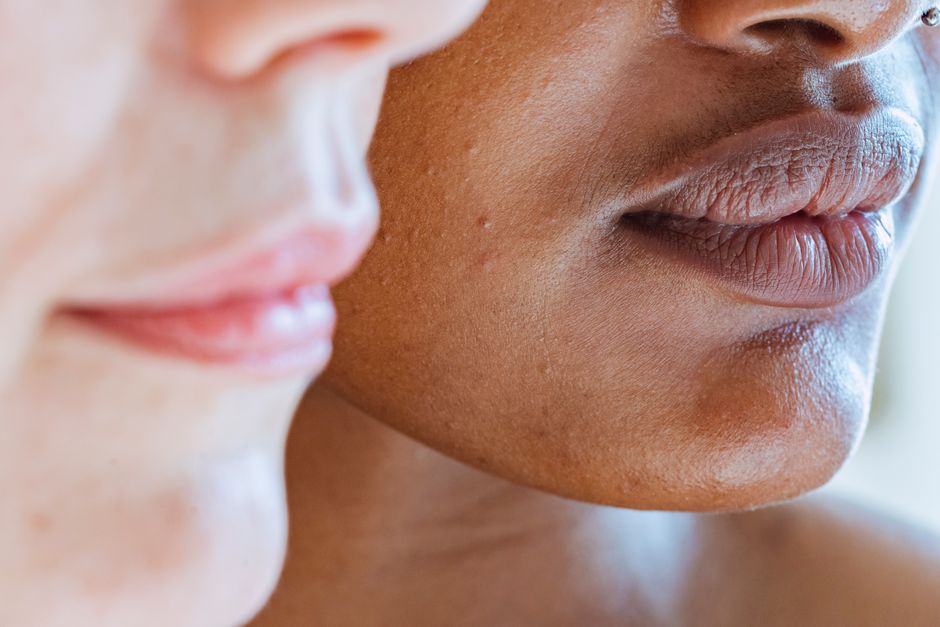
Your face is full of tiny bumps and you want to know exactly what they are. The truth is that face bumps like acne, milia, and keratosis pilaris all start in the hair follicle or the pore, but they form for different reasons. Acne comes from oil and dead skin trapping bacteria, milia happen when dead skin gets trapped under the surface, and keratosis pilaris is caused by a buildup of a protein called keratin blocking the hair follicle.
Why Do Bumps Form on the Face in the First Place?
Your skin sheds dead cells constantly. Normally they fall away and you never notice. But sometimes those cells stick together and block the opening of a pore. That is the starting point for most bumps on the face.
When a pore is blocked, a few different things can happen. If the blockage stays closed and below the surface, you get a whitehead. If the pore opens up and the contents touch the air, the oil oxidizes and turns dark, creating a blackhead. If bacteria that normally live on your skin get trapped inside, the immune system reacts, and you get a red, swollen pimple.
The type of bump you see depends on what is trapped in the pore and how deep it sits. Sebum, which is the natural oil your skin makes, plays a role in every case. Some people produce more oil than others, and that alone raises the chance of blockages.
What Causes Acne Bumps Specifically?
Acne is the most common reason for face bumps. It happens when the hair follicle becomes clogged with oil and dead skin cells. The bacterium Cutibacterium acnes lives on everyone’s skin, but when it gets trapped in a blocked pore, it multiplies and triggers inflammation.
Hormones drive most acne. Androgens, which are present in both men and women, increase oil production in the skin. That is why acne often starts during puberty and why many women see breakouts around their menstrual cycle. Stress can also raise hormone levels and make existing acne worse.
Acne bumps come in different forms. Blackheads and whiteheads are non-inflamed. Papules are small red bumps, and pustules are red bumps with a white center. Nodules and cysts are larger, deeper, and more painful. These deeper forms are the ones most likely to leave scars.
Certain products and habits can trigger acne in people who are prone to it. Heavy moisturizers, oily sunscreens, and makeup can block pores further. Touching your face frequently can push bacteria and oil deeper into the follicles. Some research also links high-glycemic diets, which spike blood sugar, to worse acne, though the effect varies from person to person.
What Are Milia and How Are They Different from Acne?
Milia are small, white, dome-shaped bumps that often appear around the eyes, cheeks, and nose. They look like tiny pearls under the skin. People sometimes mistake them for whiteheads, but they are not the same thing.
A whitehead is a blocked pore filled with oil and dead skin. Milia are cysts filled with keratin, a protein that makes up your hair and the outer layer of your skin. The keratin gets trapped just below the surface and forms a hard little ball. You cannot squeeze milia out like a pimple because the contents are solid, not liquid.
Milia are very common in newborns, where they usually clear on their own within a few weeks. In adults, they can appear after skin damage. Burns, blisters, long-term sun damage, and some laser treatments can trigger them. Heavy skin creams can also contribute because they trap dead skin cells against the surface.
Milia are not dangerous and do not require treatment. They often resolve on their own over several months. If they persist, a dermatologist can remove them with a sterile needle or blade in the office. Do not try to pop them at home. The risk of scarring and infection is not worth it.





Can Keratosis Pilaris Cause Face Bumps?
Keratosis pilaris is usually associated with the backs of the arms and thighs, but it can appear on the face, especially on the cheeks. The bumps are small, rough, and often described as feeling like sandpaper. They may be red or flesh-colored.
The cause is a buildup of keratin inside the hair follicle. The excess keratin forms a plug that blocks the opening. This is not acne and it is not caused by poor hygiene or bacteria. It has a strong genetic component, so if your parents had it, you are more likely to have it too.
Keratosis pilaris is harmless and often improves with age. Many people see it fade by their thirties. The bumps can become more noticeable in winter when the air is dry. Moisturizers containing urea or lactic acid can help soften the plugs, but the condition is a long-term skin trait rather than something you cure.
On the face, keratosis pilaris is sometimes confused with acne or rosacea. If you have rough bumps on your cheeks that never turn into pimples, this may be the cause. A dermatologist can usually tell the difference just by looking and feeling the skin.
What Other Conditions Cause Face Bumps?
Several other skin conditions can produce bumps on the face, and they are frequently misidentified as acne.
Rosacea causes redness and small bumps, usually on the central part of the face. Unlike acne, rosacea does not produce blackheads. The bumps are often accompanied by flushing and visible blood vessels. Triggers include heat, spicy food, alcohol, and sun exposure.
Folliculitis is an inflammation of the hair follicles, often caused by bacteria or yeast. It appears as small red bumps that may have a hair in the center. It can look very similar to acne but requires different treatment.
Contact dermatitis is a reaction to something your skin touched. It can cause red bumps, itching, and sometimes blisters. Common triggers include fragrances, preservatives in skincare products, and certain metals.
Molluscum contagiosum is a viral infection that causes small, firm, dome-shaped bumps with a dimple in the center. It is more common in children but can occur in adults. The bumps usually clear on their own but can take months.
Skin cancer can also appear as a bump. Basal cell carcinoma often looks like a pearly or waxy bump that may bleed or crust. Squamous cell carcinoma can look like a firm red nodule. Any bump that grows, bleeds, or does not heal deserves a professional evaluation.
How Do You Know What Kind of Bumps You Have?
Location and appearance offer the first clues. Acne tends to cluster on the forehead, nose, and chin, where oil glands are most active. Milia appear as tiny white domes, often around the eyes. Keratosis pilaris feels rough and appears on the cheeks. Rosacea centers on the nose and cheeks with redness.
Timing matters too. Acne comes and goes in waves, often tied to hormonal changes. Milia appear suddenly and stay for months without changing. Rosacea flares in response to triggers and then settles down.
If you are not sure what you are dealing with, a dermatologist is the right call. They can examine the bumps with a magnifying tool called a dermatoscope. In some cases, they may take a small sample of skin to test, though this is rarely needed for common conditions like acne or milia.
What Actually Works to Treat Face Bumps?
Treatment depends entirely on the cause. Using acne products on milia will not help because milia are not caused by oil or bacteria. Moisturizing keratosis pilaris with acne medication may irritate the skin without improving the bumps.
For acne, over-the-counter products with salicylic acid or benzoyl peroxide are the first line. Salicylic acid helps unclog pores. Benzoyl peroxide kills bacteria and reduces inflammation. Prescription options include topical retinoids, which speed up cell turnover, and antibiotics for inflammatory acne.
For milia, the most effective approach is professional removal. A dermatologist makes a tiny nick in the skin and extracts the keratin ball. This is quick and leaves minimal marks. Retinoid creams may help prevent new milia from forming by encouraging skin cell turnover.
For keratosis pilaris, moisturizers with urea or lactic acid soften the keratin plugs. Gentle physical exfoliation can also help. The condition responds slowly, and consistent daily care matters more than any single treatment.
For rosacea, prescription creams and oral medications are often needed. Over-the-counter acne products can make rosacea worse by irritating the skin. Identifying and avoiding your personal triggers is a key part of management.
What Not to Do with Face Bumps
Do not pop or squeeze bumps. This pushes material deeper into the skin and increases the risk of infection and scarring. Milia cannot be popped anyway because they have no opening to the surface.
Do not scrub aggressively. Harsh scrubbing damages the skin barrier and can make inflammation worse. Gentle cleansing twice a day is sufficient for most skin types.
Do not pile on multiple active ingredients at once. Using salicylic acid, benzoyl peroxide, and retinoids together can cause severe dryness, redness, and peeling. Start with one product and use it consistently for several weeks before adding anything else.
Do not ignore a bump that changes, grows, or bleeds. Most face bumps are harmless, but any skin lesion that does not behave normally deserves a medical evaluation.
When Should You See a Doctor?
See a dermatologist if your bumps are painful, spreading, or leaving scars. See one if over-the-counter treatments do not improve things after six to eight weeks. See one if you are unsure what the bumps are, because the wrong treatment can make things worse.
Seek prompt medical attention for any bump that is new, growing rapidly, bleeding, or changing in color. These features raise concern for skin cancer, and early detection makes a real difference in outcomes.
Frequently Asked Questions
Can milia turn into acne?
No. Milia are keratin-filled cysts that stay below the skin surface, while acne involves oil and bacteria in a pore. They are completely different conditions that require different treatments.
Why do I have bumps on my face that are not pimples?
Many conditions cause face bumps, including milia, keratosis pilaris, rosacea, and folliculitis. The appearance, location, and whether the bumps come and go help identify the cause.
Does face washing get rid of milia?
No. Milia are trapped under the skin and cannot be washed away. Gentle cleansing helps overall skin health, but milia typically require professional extraction or a retinoid cream to clear.
Can stress cause face bumps?
Stress can worsen acne by raising hormone levels that increase oil production. Stress does not directly cause milia or keratosis pilaris, which are related to skin cell turnover and genetics.
