
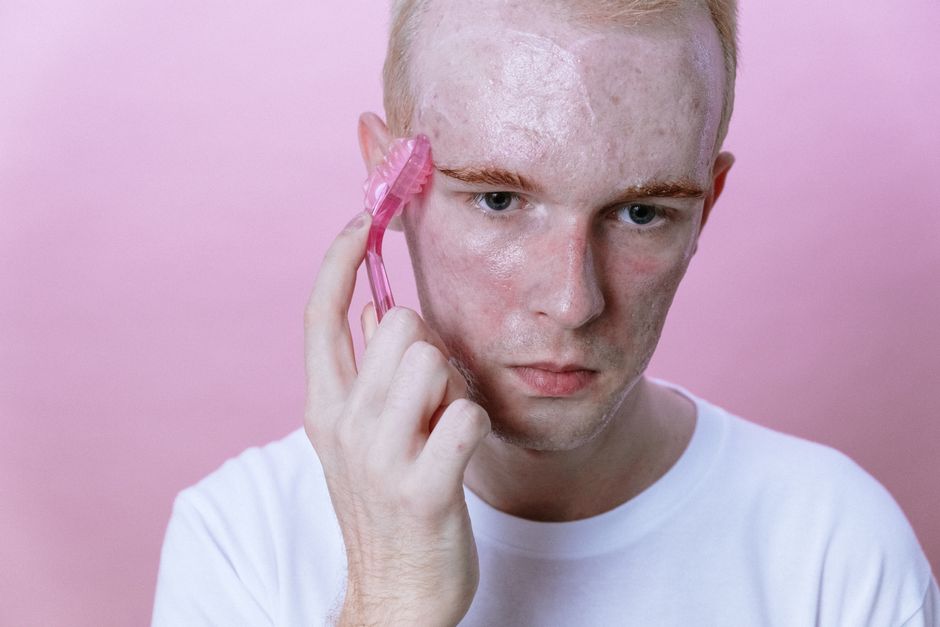
Chest acne is acne that develops on the skin of your chest, and it forms through the exact same process as acne on your face. It happens when hair follicles become clogged with excess oil (sebum) and dead skin cells, which then allows bacteria to multiply and trigger inflammation. While the root cause is identical to facial acne, the chest has unique features—like thicker skin, more sweat glands, and constant friction from clothing—that make it a common and often stubborn area for breakouts.
What Causes Chest Acne?
Acne on the chest starts inside the hair follicle. Your skin naturally produces sebum, an oily substance meant to keep skin lubricated. As your skin sheds dead cells, they mix with this oil. Normally, this mixture rises to the surface and washes away. When it does not, the pore becomes blocked.
Once a pore is clogged, a bacteria called Cutibacterium acnes (C. acnes), which lives on everyone’s skin, begins to multiply inside the trapped oil. The immune system detects this overgrowth and responds with inflammation. That inflammation is what turns a simple clogged pore into a red, tender pimple.
On the chest, this process is amplified by the environment. The area is often covered by clothing, which traps heat and sweat. It also experiences constant rubbing from shirt collars, bra straps, seatbelts, and backpack straps. This friction, combined with moisture, creates ideal conditions for pores to clog and for irritation to worsen existing bumps.
Is Chest Acne the Same as Body Acne?
Yes, chest acne is a form of body acne. The same condition affects the back and shoulders. Dermatologists often group these together because they share the same causes and respond to the same treatments.
However, chest skin is not identical to facial skin. It tends to be thicker and has larger sebaceous glands. This means breakouts can sometimes be deeper and more painful than facial pimples. The chest also heals differently, and it is more prone to developing dark spots or hyperpigmentation after a pimple clears, especially in people with darker skin tones.
Another difference is the trigger profile. While facial acne is often tied to hormonal fluctuations, chest acne is frequently driven by external factors like sweat, friction, and hair removal routines. That does not mean hormones are irrelevant—they still play a role—but lifestyle factors carry more weight for body breakouts.
What Role Do Hormones Play?
Hormones are a primary driver of acne at any age. Androgens, which include testosterone, stimulate the sebaceous glands to produce more oil. When androgen levels rise, oil production increases, and the risk of clogged pores goes up.
In women, this is why chest acne often flares around the menstrual cycle. Estrogen and progesterone levels shift during the cycle, and progesterone can have an oil-stimulating effect in the second half. Many women notice new pimples on their chest or jawline in the week before their period begins.
Stress also plays a role through hormones. Stress triggers the release of cortisol, which can indirectly increase oil production. This does not mean stress causes acne by itself, but it can worsen existing breakouts or make a flare-up more likely.


Can Sweat and Exercise Cause Chest Breakouts?
Sweat itself does not cause acne. Sweat is mostly water and salt, and it does not clog pores on its own. The problem is what happens when sweat sits on the skin.
When you exercise, your body heats up and produces sweat. That sweat mixes with the natural oil on your skin, along with any dirt, bacteria, or product residue already there. This mixture becomes thicker and stickier than oil alone, making it much more likely to block a pore.
The type of clothing you wear during a workout matters. Tight, non-breathable fabrics like polyester or spandex trap heat and moisture against the skin. This creates a “sauna effect” that softens the skin and makes pores more vulnerable to clogging. Looser, moisture-wicking fabrics allow sweat to evaporate and reduce this risk.
What you do after exercise matters just as much. Sitting in sweaty clothes for an hour after a workout gives the oil-sweat mixture time to settle into pores. Showering promptly after exercise is one of the most effective ways to prevent gym-related chest breakouts.
How Does Clothing and Friction Affect the Chest?
Friction is a well-established acne trigger. The medical term is acne mechanica, which refers to acne caused by physical pressure, rubbing, or heat against the skin.
On the chest, common friction sources include tight shirt collars, bra straps, seatbelts, and even the straps of a backpack. When fabric rubs against skin repeatedly, it can irritate the hair follicle. This irritation disrupts the follicle lining, making it easier for oil and dead skin to get trapped inside.
Tight clothing also presses sweat and oil against the skin rather than allowing them to evaporate. This is why people who wear tight undershirts or sports bras for long periods often notice breakouts along the pressure lines. Choosing looser clothing and removing tight garments soon after exercise or heavy sweating can reduce this trigger.
Are Skincare and Hair Products a Hidden Cause?
Yes, this is one of the most overlooked causes of chest acne. Products you apply to your hair, neck, or shoulders can easily migrate down to your chest and clog pores.
Conditioners, leave-in treatments, hair oils, and styling gels often contain heavy oils, silicones, and butters. These ingredients are designed to coat the hair shaft, but they also coat whatever skin they touch. When you rinse your hair in the shower, the runoff carries these ingredients directly over your chest and back.
Body lotions and sunscreens can also contribute. Some moisturizers are formulated with thick, occlusive ingredients that trap oil against the skin. If you are prone to chest acne, look for body products labeled “non-comedogenic,” which means they are formulated to avoid clogging pores. This label is not a guarantee, but it reduces the risk.
A simple test is to check whether your breakouts follow a pattern. If you get pimples along your collarbone or upper chest but not the lower chest, your hair products are a likely suspect.
What Is the Difference Between Chest Acne and Folliculitis?
Not every red bump on your chest is acne. Folliculitis is a common condition that looks very similar but has a different cause.
Folliculitis is an inflammation of the hair follicle, usually caused by bacteria or fungi. It often appears as small, red, pus-filled bumps that may be itchy or tender. The most common form is caused by Staphylococcus aureus bacteria, but a fungal form called Malassezia folliculitis is also common on the chest and back.
True acne is caused by clogged pores with C. acnes bacteria. Folliculitis is an infection of the follicle itself. The two conditions often look identical to the untrained eye, and they require different treatments. Acne treatments like salicylic acid or benzoyl peroxide may not clear up folliculitis, and antifungal or antibacterial prescription treatments may be needed.
If over-the-counter acne products are not working after several weeks, or if the bumps are intensely itchy, see a dermatologist. They can determine whether you are dealing with acne or a different skin condition.
What Are the Most Effective Treatments?
Treatment for chest acne follows the same principles as facial acne, with a few adjustments for the thicker skin on the body.
Benzoyl peroxide is one of the most effective ingredients for chest acne. It kills the C. acnes bacteria and helps clear blocked pores. It is available in body washes and leave-on creams. Start with a lower concentration like 2.5% or 5% to reduce irritation. Be aware that benzoyl peroxide bleaches fabric, so rinse it off thoroughly and let your skin dry before dressing.
Salicylic acid is another proven option. It works by dissolving the glue that holds dead skin cells together, helping to unclog pores. It is available in body washes and sprays. Because the chest skin is thicker, a 2% concentration is often more effective than the 0.5% or 1% found in facial cleansers.
For persistent cases, a dermatologist may prescribe topical antibiotics, retinoids like adapalene or tretinoin, or oral medications. In women with hormonal breakouts, oral contraceptives or spironolactone can be effective. Isotretinoin is reserved for severe, scarring acne that does not respond to other treatments.
Consistency matters more than intensity. Using a medicated body wash daily for several weeks is more effective than using a strong treatment once and stopping. Most treatments take 6 to 8 weeks before visible improvement occurs.
How Can You Prevent Chest Acne?
Prevention focuses on reducing the three key triggers: clogged pores, bacteria overgrowth, and friction.
- Shower promptly after sweating. Do not let sweat and oil sit on your skin for extended periods.
- Wear breathable fabrics. Cotton and moisture-wicking materials allow sweat to evaporate instead of pooling against the skin.
- Change out of tight clothing after workouts. Sports bras and compression shirts should be removed soon after exercise.
- Wash your chest with a gentle cleanser daily. Avoid harsh scrubbing, which can irritate the skin and worsen breakouts.
- Rinse hair products thoroughly. Shampoo and conditioner residue can clog chest pores, so rinse your body after washing your hair.
- Use non-comedogenic body products. Check labels on lotions, sunscreens, and body washes.
- Wash clothing and towels regularly. Bacteria and oil build up on fabric and transfer back to your skin.
One non-obvious insight: your laundry detergent may be part of the problem. Heavy fragrances and fabric softeners can leave residue on clothing that irritates the skin. Switching to a fragrance-free, dye-free detergent is a low-cost change that helps some people.
Frequently Asked Questions
Is chest acne caused by poor hygiene?
No. Chest acne is caused by clogged pores, bacteria, and inflammation, not by being dirty. Over-washing can actually make it worse by stripping the skin and triggering more oil production.
Can chest acne be a sign of a hormonal imbalance?
Sometimes. If chest acne appears suddenly, worsens around your period, or comes with other symptoms like irregular periods or excess facial hair, it may indicate a hormonal issue. A doctor can run tests to check.
How long does chest acne take to clear?
With consistent treatment, most people see improvement in 6 to 8 weeks. Deeper nodules can take several months to fully resolve, and dark spots may take longer to fade.
Should I pop chest pimples?
No. Popping pimples on the chest increases the risk of scarring and infection. The skin on the chest is thicker and heals slower than facial skin, so damage is more likely to leave a permanent mark.
