
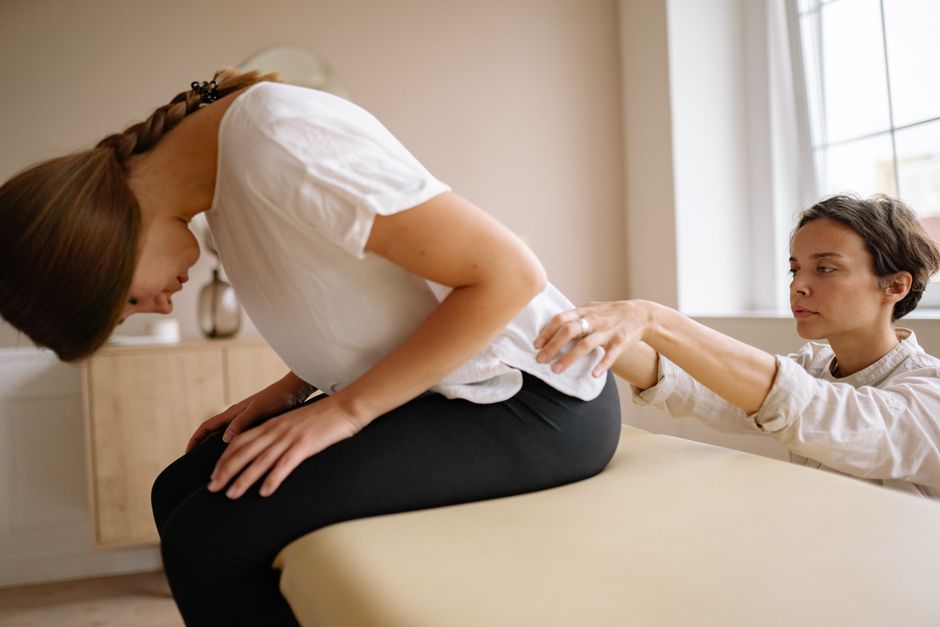
Tailbone pain, known medically as coccydynia, is pain in the small triangular bone at the very bottom of your spine. It usually comes from a specific injury, repeated pressure, or the natural changes your body goes through during childbirth. While the pain can be sharp and intense, most cases improve with time and simple at-home care.
What Causes A Painful Tailbone?
Your tailbone, or coccyx, is a small bone made of three to five fused segments. It attaches to the bottom of your sacrum and is held in place by strong ligaments and muscles. These structures support your body weight when you sit and help with certain movements.
Pain in this area typically develops from one of three main sources: direct trauma, repetitive strain, or structural changes. Trauma includes falls directly onto the tailbone, like slipping on ice or landing hard during a sport. Repetitive strain can come from long periods of sitting on a hard surface, cycling on a narrow seat, or poor posture that puts extra pressure on the area. Structural changes most often occur during pregnancy and vaginal childbirth, when the tailbone can shift or, in rare cases, fracture.
In some cases, no clear cause is found. This is called idiopathic coccydynia. It is not a sign of a more serious problem, but it can be frustrating because the pain appears without an obvious trigger.
What Does Tailbone Pain Actually Feel Like?
Tailbone pain is usually described as a dull ache that turns sharp when you sit down or stand up. The pain is located right at the very bottom of the spine, between the buttocks. It often worsens when you lean backward while sitting or when you transition from sitting to standing.
Some people feel pain during bowel movements or during sex. Others notice it when they sit on a hard chair for more than a few minutes. The pain can radiate into the lower back, hips, or thighs, but it is typically centered on the tailbone itself.
The intensity varies widely. Some people have mild discomfort that fades quickly. Others have severe pain that interferes with work, driving, and daily activities. Pain that lasts longer than a few weeks or gets progressively worse deserves a medical evaluation.
How Is Tailbone Pain Diagnosed?
A doctor will start by asking about your symptoms and any recent injuries. The physical exam usually involves pressing on the tailbone to check for tenderness and assessing how the bone moves. In many cases, the diagnosis is clear from the exam alone.
Imaging is not always needed, but it can help rule out other conditions. X-rays taken while you sit and stand can show whether the tailbone is dislocated or fractured. An MRI may be ordered if the pain does not improve after several weeks, or if the doctor suspects a tumor, infection, or a problem with the spinal discs.
One important point: a fractured tailbone and a bruised tailbone can feel identical. The treatment is essentially the same for both, so doctors do not always order imaging just to tell them apart. Imaging is more valuable for identifying less common causes of the pain.





When Should You See a Doctor?
Most tailbone pain from a minor fall improves within a few weeks. You should see a doctor if the pain is severe, if it does not improve after a few weeks of home care, or if it interferes with your ability to sit or work.
Seek prompt medical attention if the pain comes with numbness or weakness in your legs, loss of bowel or bladder control, or a fever. These symptoms can indicate a more serious condition, such as a spinal cord issue or an infection. These situations are rare, but they need immediate evaluation.
You should also see a doctor if the pain started without any injury and has been present for more than a few weeks. While most cases of unexplained tailbone pain are not dangerous, a doctor can rule out less common causes like a pilonidal cyst, which is an infection near the tailbone, or referred pain from the lower spine.
What Are the Best Treatment Options?
Treatment starts with reducing pressure on the tailbone. A wedge-shaped cushion with a cutout at the back, sometimes called a coccyx cushion or donut pillow, can make sitting much more comfortable. These cushions shift your weight away from the tailbone onto your sitting bones, which are the ischial tuberosities.
Over-the-counter pain relievers like ibuprofen or acetaminophen can help manage pain and inflammation. Applying ice to the area for 15 to 20 minutes several times a day during the first few days after an injury can reduce swelling. After the initial phase, some people find heat more soothing.
Avoid sitting on hard surfaces whenever possible. If you must sit, lean forward slightly to shift weight off the tailbone. Stand up and move around every 30 minutes or so. When lying down, lying on your side with a pillow between your knees can take pressure off the area.
What If Home Care Does Not Work?
If pain persists for more than a few weeks despite at-home care, a doctor may recommend physical therapy. A physical therapist can teach you exercises to stretch the ligaments and muscles attached to the tailbone. These stretches can reduce tension and improve mobility in the area.
Manual therapy, where a trained clinician mobilizes the tailbone through the rectum, is another option. Some studies suggest this technique can be effective, but it is not widely available and requires a clinician with specific training.
Corticosteroid injections into the area around the tailbone are sometimes used for persistent pain. The evidence for these injections is mixed. Some people get significant relief, while others get little benefit. The effect, when it works, is often temporary.
Surgery to remove the tailbone, called coccygectomy, is reserved for severe cases that have not responded to any other treatment. It is a major operation with a long recovery time, and the results are not always predictable. Most doctors exhaust all other options before recommending surgery.
Does Childbirth Cause Tailbone Pain?
Pregnancy and vaginal delivery are common causes of tailbone pain. During pregnancy, hormones relax the ligaments around the pelvis, including those attached to the tailbone. This allows the bone to move more than usual, which can cause pain. The weight of the baby also increases pressure on the area.
During vaginal delivery, the baby’s head passes close to the tailbone. This can bruise the bone, strain the ligaments, or, in rare cases, cause a fracture. Most women recover within a few weeks after delivery. Persistent pain after childbirth should be evaluated by a doctor, as it may require targeted treatment.
It is worth noting that not all women who give birth vaginally develop tailbone pain. Many factors influence whether this occurs, including the baby’s position and size, the duration of labor, and the use of instruments like forceps.
Can Your Posture Make Tailbone Pain Worse?
Yes. Sitting with a rounded lower back puts extra pressure on the tailbone. This is common when sitting in a slouched position on a soft couch or in a car seat that does not support the lower back well. Over time, this posture can irritate the area and make existing pain worse.
Sitting for long periods without breaks is another contributing factor. The tailbone is not designed to bear your full body weight for hours at a time. Taking regular breaks to stand, walk, and stretch can significantly reduce pressure on the area.
Improving your sitting posture can help prevent tailbone pain from developing in the first place. Sit with your weight evenly distributed on both sitting bones, keep your feet flat on the floor, and use a lumbar roll or rolled towel to support your lower back. These simple adjustments reduce the load on your tailbone.
Are There Any Warning Signs of Something More Serious?
Most tailbone pain is musculoskeletal and resolves with conservative care. However, certain symptoms should raise concern. Unexplained weight loss, fever, or night sweats along with tailbone pain could indicate an infection or, rarely, a tumor in the area. These are uncommon but serious.
Pain that wakes you up at night or pain that is constant and not related to sitting is another red flag. So is pain accompanied by a visible lump, redness, or warmth over the tailbone. These signs could point to a pilonidal cyst or an abscess, which requires medical treatment.
If you have a history of cancer, new tailbone pain should be evaluated promptly. The tailbone is an uncommon site for metastasis, but it can occur. A doctor can order imaging to rule out this possibility.
How Long Does Tailbone Pain Last?
Most cases of tailbone pain resolve within a few weeks to a few months. The recovery time depends on the cause. A minor bruise from a fall may heal in a few weeks. A fracture or a dislocation can take longer, sometimes several months.
For about 10% of people, tailbone pain becomes chronic and lasts longer than three months. Chronic coccydynia can be frustrating, but it is not dangerous. Most people with chronic pain still find relief with a combination of cushions, physical therapy, and other treatments.
The most important predictor of recovery is consistent pressure relief. People who continue to sit on hard surfaces and ignore the pain tend to have longer recovery times. Making simple adjustments to how and where you sit can make a significant difference.
Frequently Asked Questions
Can a tailbone injury heal on its own?
Yes, most tailbone injuries heal on their own within a few weeks to a few months. Using a cushion and avoiding prolonged sitting on hard surfaces speeds up the healing process.
Is a broken tailbone worse than a bruised tailbone?
Not necessarily. The symptoms are nearly identical, and the treatment is the same for both. A fracture may take slightly longer to heal, but it is rarely a serious medical problem.
Why does my tailbone hurt when I stand up from sitting?
Standing up shifts your weight off the tailbone and stretches the surrounding ligaments and muscles. This movement can trigger a sharp pain if the area is inflamed or injured.
Can sitting on a wallet cause tailbone pain?
Sitting on a thick wallet in your back pocket can tilt your pelvis and put uneven pressure on the tailbone. Over time, this can contribute to pain in the area.
