
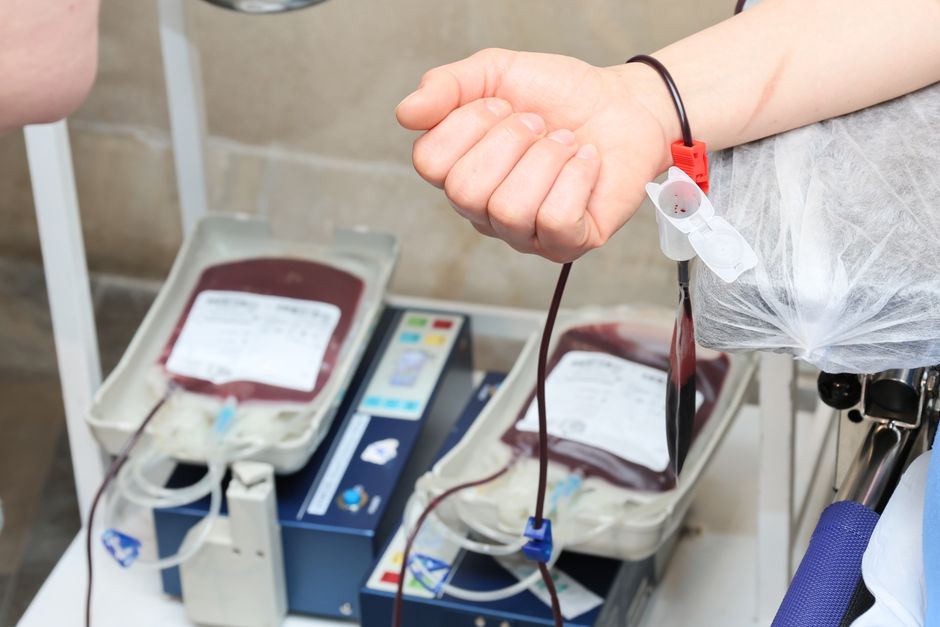
If you have B positive blood, you can donate red blood cells to people with B positive and AB positive blood. If you have B negative blood, you can donate to people with B positive, B negative, AB positive, and AB negative blood. The difference comes down to the Rh factor, a protein on the surface of your red blood cells that determines whether your blood type is positive or negative.
What Can B Donate To Blood Type Compatibility?
Blood type compatibility depends on two systems: the ABO system and the Rh system. The ABO system has four main types: A, B, AB, and O. The Rh system adds either a positive or negative sign, based on whether you have the Rh D antigen.
For red blood cell transfusions, the rule is simple. Your immune system will attack blood cells that carry markers it does not recognize. Someone with B blood has B antigens on their red cells. They also carry anti-A antibodies in their plasma, which means they can only receive blood that does not have A antigens.
Here is the full breakdown for B donors:
- B positive donors can give to B positive and AB positive recipients.
- B negative donors can give to B positive, B negative, AB positive, and AB negative recipients.
B negative is the more versatile of the two because it lacks the Rh antigen. This makes it compatible with both positive and negative recipients within the B and AB blood groups.
Why Can B Blood Only Go to B and AB Types?
The ABO blood group system works on specific antigens. Type B blood has B antigens on the surface of its red blood cells. The plasma contains antibodies against A antigens, the ones your body does not have.
If someone with type A blood receives type B blood, their anti-B antibodies will attack the donated cells. This triggers a transfusion reaction, which can be dangerous. The same applies in reverse. Type O blood has no A or B antigens, which is why O negative is called the universal donor for red cells.
Type AB blood has both A and B antigens. Because of this, people with AB positive blood can receive red cells from any blood type. This makes them universal recipients, but they can only donate to other AB positive people.
For B donors, the recipient must already have B antigens or be able to tolerate them. Since AB blood has both A and B antigens, it accepts B blood without issue. Since B blood has B antigens, it also accepts B blood. No other blood types work.
The Rh Factor and What It Means for B Donors
The Rh factor is a separate protein marker. If you have it, your blood type is positive. If you do not, your blood type is negative.
About 85 percent of people in the United States are Rh positive. The Rh negative status is less common, which makes those donations more valuable for certain patients.
Rh negative blood can be given to Rh positive people. The reverse is not true. If an Rh negative person receives Rh positive blood, their immune system may produce antibodies against the Rh antigen. This usually does not cause a problem on the first exposure, but it can complicate future transfusions or pregnancies.
For B negative donors, this means you can help four different blood types. For B positive donors, you can help two. Both are needed, but B negative has more flexibility.





What About Plasma and Platelet Donations?
Blood donation is not just about red cells. Plasma and platelets follow different compatibility rules.
Plasma is the liquid part of blood that contains antibodies. The compatibility rules are reversed compared to red cells. A B donor can give plasma to B and O recipients, because these recipients do not have anti-B antibodies that would attack the plasma. AB plasma is the universal plasma type because it contains no anti-A or anti-B antibodies.
Platelets are matched based on the ABO system when possible, but the rules are less strict than for red cells. Many blood banks will use B platelets for B or AB recipients. In urgent situations, platelets from a different ABO type may be used, though this is not ideal.
If you are a B donor, your whole blood donation can help the most people possible when it is separated into components. This is standard practice at most blood centers. Your red cells, plasma, and platelets each go to different patients who need them.
How Rare Is B Blood?
B positive blood is relatively common. About 9 percent of the US population has B positive blood. B negative is rarer, at about 2 percent of the population.
Blood type distribution varies by ethnicity and geographic region. B blood is more common in Asian populations and less common in people of Northern European descent. The American Red Cross publishes distribution data by race and ethnicity, and these numbers shift slightly depending on the population group.
Because B negative is uncommon, blood banks often keep a close eye on their supply. If you are B negative, regular donations can make a meaningful difference for patients who share your blood type.
O negative remains the most in-demand blood type because it is the universal red cell donor. But every type is needed. A stable supply of B negative blood prevents delays for patients who need surgery, cancer treatment, or trauma care.
How to Find Out Your Blood Type
You can learn your blood type through a simple blood test. Blood donation centers always test your blood before accepting a donation. They will tell you your type after your first donation.
You can also request a blood type test from your doctor. It is a standard lab test that requires a small blood draw. Some at-home test kits are available, but results from a clinical lab are more reliable if you need to know your type for medical reasons.
If you have never donated blood, the donation center will check your type as part of the screening process. This is free, and it gives you a clear answer you can use for future donations.
Why Blood Type Matching Matters
Transfusion medicine is built on compatibility. Giving someone incompatible blood can trigger a hemolytic reaction, where the immune system destroys the donated red cells. This can cause fever, chills, kidney damage, and in severe cases, death.
Modern blood banks use rigorous testing to prevent these reactions. They confirm both the donor and recipient blood types before any transfusion. They also perform a crossmatch test, which mixes a small sample of donor cells with recipient plasma to confirm compatibility.
These safety steps are why blood donation is so carefully regulated. The rules around ABO and Rh compatibility exist to protect patients, not to create unnecessary restrictions.
Can B Blood Receive Blood From Other Types?
B positive recipients can receive B positive and B negative red cells. They can also receive O negative blood, which is the universal donor type. In emergency situations, O positive may be used for B positive patients if O negative is not available.
B negative recipients can receive B negative and O negative red cells. These are the only safe options because the recipient lacks the Rh antigen. Giving Rh positive blood to an Rh negative patient can cause sensitization, which creates problems for future transfusions.
Understanding both sides of compatibility helps you see the full picture. What you can donate is one half of the equation. What you can receive is the other half. Both matter for clinical decision-making.
Frequently Asked Questions
Can B positive donate to anyone?
No. B positive red cells can only go to B positive and AB positive recipients. For plasma, B positive donors can give to B and O recipients.
Is B negative blood rare?
Yes. About 2 percent of the US population has B negative blood. It is one of the rarer blood types.
Can B negative receive O positive blood?
No. B negative recipients can only receive B negative or O negative red cells. Receiving Rh positive blood can cause an immune reaction.
What is the best blood type to have?
No blood type is medically better than another. O negative is the most useful for emergency transfusions because it works for everyone, but every type is needed to maintain a stable blood supply.
