
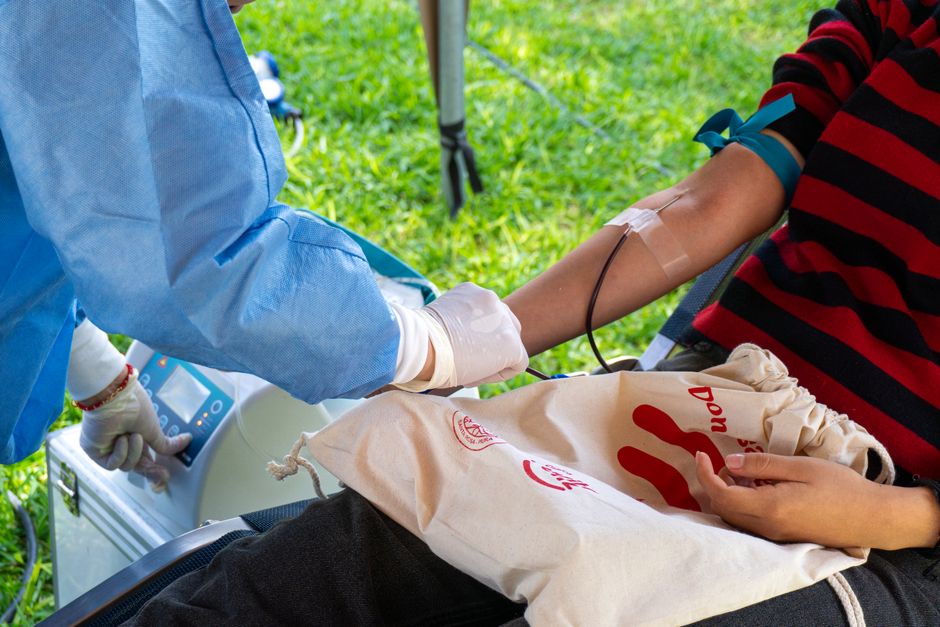
How much blood you can donate in a month depends entirely on the type of donation. Whole blood donors must wait 56 days (8 weeks) between donations, so most people can give whole blood only once in a calendar month. Platelet donors can give as often as every 7 days, up to 24 times per year. Plasma donors following FDA-aligned collection center rules can donate as frequently as twice in a 7-day period, with at least 48 hours between donations. Double red cell donors must wait 112 days (16 weeks) between procedures.
How Much Blood Can You Donate In A Month By Type?
Each donation type removes a different component of blood and places a different demand on your body. That is why the waiting periods vary so widely. The limits below reflect standards used by major US blood collection organizations and federal regulations for source plasma collection.
Here is the comparison at a glance:
| Donation Type | Minimum Wait Between Donations | Maximum in One Month | Annual Limit |
|---|---|---|---|
| Whole blood | 56 days (8 weeks) | 1 donation | Up to 6 per year |
| Platelets (plateletpheresis) | 7 days | Up to 4 donations | 24 per year |
| Plasma (source plasma centers) | 48 hours | Up to 8 donations | Up to 104 per year |
| Double red cells | 112 days (16 weeks) | 1 donation | Up to 3 per year |
A single whole blood donation is about 1 pint, or roughly 450 to 500 milliliters. Platelet and plasma donations collect a smaller volume of the targeted component and return the rest of the blood to you, which is why the body recovers faster and the waiting periods are shorter.
Why Are the Waiting Periods So Different?
The waiting period exists to protect the donor, not just the recipient. When you give whole blood, you lose red blood cells, plasma, and platelets all at once. Your body needs time to rebuild that full picture.
Red blood cells carry oxygen. They live about 120 days, and your body replaces them slowly. After a whole blood donation, it takes several weeks for red cell levels to return to normal. That is the main reason for the 56-day rule. Donating whole blood again too soon can leave you with low hemoglobin, a condition called anemia, which causes fatigue, shortness of breath, and dizziness.
Platelets are different. They are tiny cell fragments that help blood clot, and they circulate for only about 7 to 10 days. Your bone marrow replaces them quickly. Plasma, the liquid part of blood, is mostly water and proteins, and it is replaced within about 24 to 48 hours. Because apheresis machines return your red cells and much of your plasma, platelet and plasma donors recover faster.
Double red cell donation removes two units of red cells and returns your plasma and platelets. Since red cells are the slow part to recover, this donation carries the longest waiting period of all.
What Is the Difference Between Whole Blood and Apheresis Donation?
Whole blood donation is the simplest and most common. Blood flows from your arm into a bag, and you are done in about 10 minutes. The unit is later separated into red cells, plasma, and platelets.
Apheresis is a longer process. A machine draws your blood, separates out one component, and returns the rest to you through the same needle or a second one. Platelet and plasma donations both use apheresis. A platelet donation can take 1.5 to 2.5 hours depending on the machine and your platelet count. Plasma donation typically takes about 45 minutes to an hour.
One clarification worth knowing: the plasma you donate at a community blood center and the plasma collected at a for-profit source plasma center are regulated differently and have different frequency rules. Community blood centers generally follow a 28-day interval for plasma. Source plasma centers, which pay donors and collect plasma for manufacturing into medicines, follow federal rules that allow more frequent collection. This is why you may see very different plasma donation schedules depending on where you go.


How Often Can You Donate Platelets in a Month?
Platelets can be donated as often as every 7 days, with a maximum of 24 donations per year. In a 30-day month, that works out to a theoretical maximum of about 4 donations, though most donors do not reach that.
The 7-day rule is a minimum. Many centers prefer a longer gap, and some donors find that frequent platelet donation lowers their platelet count over time. Your platelet count is checked before each donation, and if it falls below the required level, you will be deferred until it recovers.
Platelets have a short shelf life, only about 5 to 7 days. That is why platelet donors are so valuable and why centers are often eager to schedule them regularly. If you have a higher platelet count, you may be eligible to give a “double” or “triple” platelet unit in a single session, which counts as one donation but helps more patients.
What Are the Requirements to Donate Blood?
Basic eligibility rules apply to all donation types, though specifics vary by center and state.
- You must be at least 16 or 17 years old, depending on your state and whether you have parental consent.
- You generally need to weigh at least 110 pounds for whole blood. Higher weight minimums apply to some apheresis donations.
- Your hemoglobin must meet a minimum level, checked with a fingerstick before donation. For whole blood, this is typically 12.5 g/dL for women and 13.0 g/dL for men.
- You must be in good general health and free of infection at the time of donation.
- Certain medications, travel history, and medical conditions may cause a temporary or permanent deferral.
These thresholds are set to protect donors from becoming anemic and to protect recipients from transfusion-transmitted illness. They are not arbitrary. A center will turn you away if your hemoglobin is too low, even if you feel fine.
How Does Your Body Recover After Donating?
Plasma volume is restored within about 24 to 48 hours, which is why you are advised to drink extra fluids after donating. Red blood cells take much longer. It can take several weeks for your red cell count and hemoglobin to return to your pre-donation level.
Iron is the limiting factor. Each whole blood donation removes roughly 200 to 250 milligrams of iron, and your body absorbs iron slowly from food. This is why frequent whole blood donors, especially menstruating women, are at higher risk of iron deficiency. Some blood centers now screen frequent donors for iron levels and may recommend iron supplementation, though practices vary.
Feeling tired or lightheaded for a day or two after donating is common and usually passes. If fatigue lasts longer, or if you develop shortness of breath or a racing heart, that warrants a call to your doctor. Persistent symptoms after donation can signal anemia that needs to be evaluated.
Can You Donate Different Types in the Same Month?
In some cases, yes, but the rules are specific. You cannot simply stack donations however you like. Each type of donation resets a different clock.
For example, after a whole blood donation, you generally must wait before donating platelets or plasma. Many centers require a waiting period of about 8 weeks after whole blood before you can do an apheresis donation. After a platelet or plasma donation, you may be able to donate whole blood sooner, but centers often require a gap of at least a few days to a few weeks. The exact intervals are set by each collection organization and can differ.
If you want to maximize your donations, the practical answer is to ask your local center what combinations they allow. They track your donation history and will tell you when you are eligible for each type. Trying to plan it yourself without checking can lead to a deferral at the door.
Is Donating Blood Safe?
Blood donation is a well-established medical procedure with a strong safety record when eligibility rules are followed. The needles and collection equipment are sterile and used once, so there is no risk of catching an infection from donating.
The main risks are to the donor, and they are usually minor. Bruising at the needle site, lightheadedness, and fatigue are the most common. Fainting happens in a small number of donors, which is why you are asked to rest and eat before and after. Serious complications are rare.
The frequency limits exist precisely because donating too often is not safe. Ignoring the waiting periods raises your risk of iron deficiency and anemia. The rules are not there to make donating inconvenient. They are there to keep repeat donors healthy over years of giving.
Frequently Asked Questions
How much blood can you donate in a month?
It depends on the type. Whole blood donors can give once per month at most, since the wait is 56 days. Platelet donors can give up to about 4 times, and source plasma donors can give up to 8 times in a 30-day month.
Can you donate blood twice in one month?
Not whole blood. The 56-day minimum wait means whole blood donation cannot happen twice in the same month. Platelet and plasma donors can donate more than once per month because those components are replaced faster.
How often can you donate plasma?
At a source plasma center, you can donate as often as twice in a 7-day period, with at least 48 hours between donations. Community blood centers typically use a longer interval, often about 28 days.
Why do you have to wait 56 days between whole blood donations?
The wait allows your body to rebuild the red blood cells lost during donation. Red cells are replaced slowly, and donating again too soon can lead to iron deficiency and anemia.
