
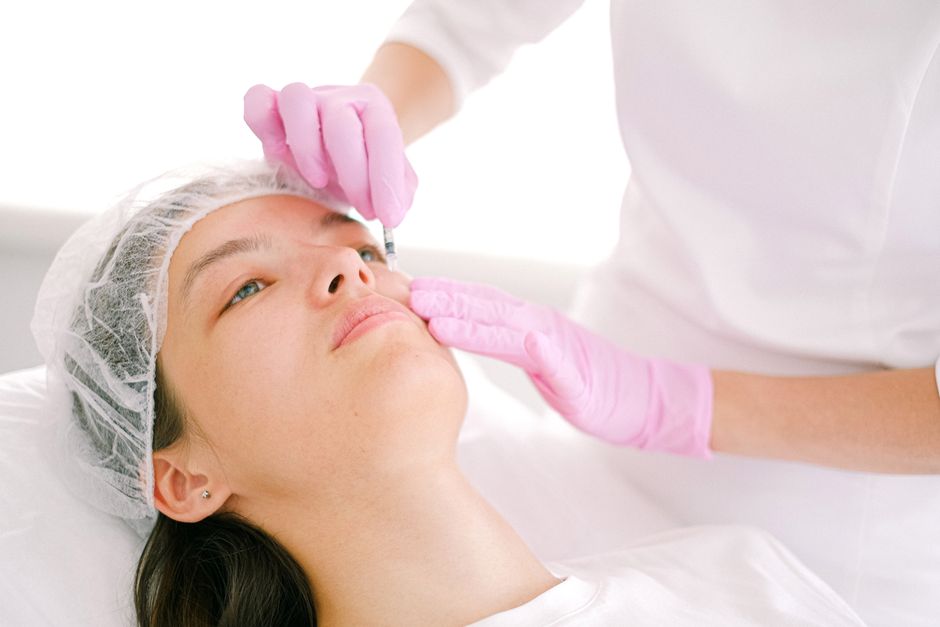
Botox is one of the most common cosmetic procedures in the United States, with millions of treatments performed each year. It works by temporarily relaxing the facial muscles that cause wrinkles, most notably frown lines, forehead lines, and crow’s feet. Beyond cosmetics, Botox has legitimate medical uses, including treatment for chronic migraines, excessive sweating, and certain muscle disorders. The effects are temporary, typically lasting three to four months, which means maintenance treatments are required to sustain results.
How Does Botox Actually Work?
Botox is the brand name for botulinum toxin type A, a purified protein produced by the bacterium Clostridium botulinum. When injected in tiny, controlled doses, it blocks the release of acetylcholine, a chemical that tells muscles to contract. Without that signal, the muscle stays relaxed.
This mechanism is the same whether the treatment is cosmetic or medical. The difference is simply where the injection goes and what muscle is being targeted. The effects begin within a few days and reach full strength at about two weeks after treatment.
It is worth understanding that Botox does not erase wrinkles that are already deeply etched into the skin. It prevents the muscle movement that creates and deepens those lines. For deep wrinkles that have been present for years, results may be more modest than many people expect.
What Can Botox Do for Wrinkles?
Botox is FDA-approved for three cosmetic uses: glabellar lines (the vertical frown lines between the eyebrows), forehead lines, and crow’s feet (the lines at the outer corners of the eyes). These are all dynamic wrinkles, meaning they form from repeated muscle movement over time.
The treatment works best on people who have wrinkles that are visible when they make facial expressions but less noticeable when their face is at rest. Younger patients often see the most dramatic prevention benefits, as regular treatment can keep wrinkles from becoming permanent.
For people with deep resting wrinkles, Botox alone may not be enough. Dermal fillers, which add volume beneath the skin, are sometimes combined with Botox to achieve a smoother appearance. This combination is common in clinical practice, though results vary significantly from person to person.
What Are the Medical Uses of Botox?
Botox has a range of approved medical applications that many people do not know about. Chronic migraine is one of the most significant. Patients who experience headaches on 15 or more days per month may qualify for Botox treatment, which involves multiple injections around the head and neck every 12 weeks.
Severe underarm sweating, a condition called primary axillary hyperhidrosis, is another well-established use. Botox blocks the nerve signals that stimulate sweat glands, providing relief that typically lasts several months. Some studies also show benefit for sweating on the palms and soles, though these uses are less consistently covered by insurance.
Cervical dystonia, a painful condition where neck muscles contract involuntarily, is treated with Botox injections directly into the affected muscles. The treatment helps reduce pain and improve head position. Strabismus, or misaligned eyes, and blepharospasm, uncontrolled eyelid twitching, are older approved uses that remain in clinical practice.
Overactive bladder is another FDA-approved indication. Botox injections into the bladder muscle can reduce urgency and frequency of urination in people who have not responded to oral medications.





What Are the Risks and Side Effects?
Botox is generally safe when administered by a qualified provider, but it is not risk-free. The most common side effects are temporary and localized: pain at the injection site, bruising, swelling, and redness. These typically resolve within a few days.
More significant complications can occur when the toxin spreads beyond the injection site. This can cause temporary muscle weakness in nearby areas. For example, eyelid drooping can occur after forehead injections if the toxin migrates downward. This complication is usually temporary and resolves as the Botox wears off.
Difficulty swallowing, speaking, or breathing is a rare but serious complication. It happens most often in medical patients receiving higher doses for conditions like cervical dystonia. Anyone who experiences these symptoms after Botox treatment should seek medical attention immediately.
There is also a rare risk of an allergic reaction. Symptoms can include itching, rash, and dizziness. Severe allergic reactions are extremely uncommon but possible.
Who Should Not Get Botox?
Botox is not appropriate for everyone. People who are pregnant or breastfeeding should not receive Botox, as no adequate safety studies exist for these populations. The FDA categorizes botulinum toxin as a pregnancy category C drug, meaning risk cannot be ruled out.
People with certain neurological conditions, such as myasthenia gravis or Lambert-Eaton syndrome, should avoid Botox because it can worsen muscle weakness. Anyone with a known allergy to any ingredient in the formulation should not receive the treatment.
People taking certain antibiotics, particularly aminoglycosides, may have an increased risk of toxin spread. It is important to disclose all medications to your provider before treatment.
How Much Does Botox Cost and How Long Does It Last?
Botox is priced per unit, and the number of units needed varies by treatment area. A typical cosmetic treatment uses 20 to 60 units depending on the area and the individual’s muscle strength. Costs vary widely by geographic region and provider, so it is not possible to give a reliable national average.
The effects of Botox last approximately three to four months for most people. Some individuals find their results last longer with repeated treatments, while others metabolize the toxin more quickly. There is no reliable way to predict exactly how long results will last for any given person.
Insurance may cover Botox for medical indications like chronic migraine, cervical dystonia, and overactive bladder, but coverage policies vary. Cosmetic treatments are never covered by insurance.
What Happens If You Stop Getting Botox?
When Botox wears off, the treated muscles gradually regain their ability to contract. Wrinkles will return to their pre-treatment appearance over time. There is no evidence that stopping Botox causes any permanent harm or makes wrinkles worse than they would have been otherwise.
Some research suggests that regular long-term use may lead to muscle atrophy in the treated area, which could slow the return of wrinkles. However, this is not a consistent finding, and the evidence is not strong enough to make firm claims about long-term structural changes.
How to Choose a Provider
The skill of the person administering Botox matters as much as the product itself. A poorly placed injection can cause asymmetry, drooping, or an unnatural frozen appearance. Choose a board-certified dermatologist, plastic surgeon, or other physician with specific training in injectable treatments.
Be wary of deals that seem too good to be true, particularly at spas or salons where injections are performed by non-medical staff. In most states, only licensed medical professionals can legally administer Botox. Verify credentials and ask about the provider’s experience with the specific treatment you are considering.
A good provider will discuss realistic expectations, explain the risks, and tell you honestly if Botox is not the right treatment for your concerns. If a provider pressures you into treatment or dismisses your questions, that is a sign to look elsewhere.
Botox Myths and Misconceptions
One common myth is that Botox is toxic and dangerous. In reality, the doses used in both cosmetic and medical treatments are far below the levels that would cause systemic toxicity. Botox has been used safely for decades, and its safety profile is well established when administered properly.
Another myth is that Botox makes you look completely expressionless. This only happens when too much product is used or when it is injected incorrectly. A skilled provider can soften wrinkles while preserving natural facial movement.
Some people believe Botox is addictive. There is no chemical addiction associated with Botox. However, people often return for repeat treatments because they like the results, which some may describe as a psychological dependency. This is a preference, not an addiction.
Frequently Asked Questions
Does Botox hurt?
Most people describe the sensation as a brief pinch or sting. The needles used are very fine, and the procedure typically takes less than 15 minutes with no downtime.
How long does Botox take to work?
Results usually become visible within three to five days, with full effects at about two weeks. If you do not see results after two weeks, contact your provider.
Can Botox be reversed if I do not like the results?
No, there is no reversal agent for Botox. The effects will fade on their own over three to four months as your body metabolizes the toxin.
Is Botox safe for long-term use?
Long-term safety data is generally reassuring, and many people have used Botox continuously for decades without serious complications. However, no large long-term studies have tracked cosmetic Botox users for extended periods, so the full picture of lifelong use is not completely documented.
