
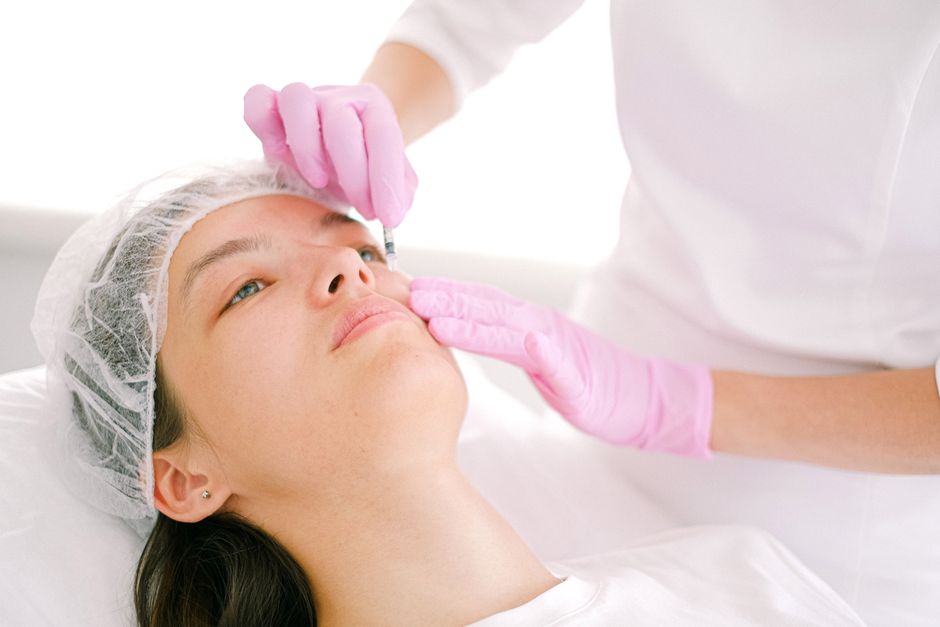
Most people describe Botox injections as brief pinpricks — a few seconds of sharpness, then nothing. The needle used for cosmetic Botox is one of the smallest in medicine, and the entire face treatment usually takes under 15 minutes. The discomfort is real but short. What varies is how much you feel it, and that depends on a few things worth understanding before you book.
This is not a procedure people typically need pain relief for. No numbing is required for most patients. But “not required” and “not felt” are different things, and the honest picture includes cold, pressure, and a few sharp moments rather than true pain.
What Does Botox Actually Feel Like During the Injection?
The sensation is a quick sting at each injection site. Not a deep ache. Not a burning throb. A sharp, momentary prick — similar to a rubber band snapping lightly against the skin.
A typical cosmetic treatment involves somewhere between 10 and 30 injections depending on the areas treated. The forehead, the frown lines between the brows, and the crow’s feet around the eyes are the most common targets. Each injection takes roughly one to two seconds. The needle itself is extremely fine — thinner than the needles used for most blood draws and vaccinations.
What surprises many first-timers is not the needle but the fluid. Botox is injected in a small volume of saline solution, and some people feel a slight coolness or a faint pressure as it goes in. Others feel nothing beyond the initial prick. The muscle itself does not hurt during injection. There are no pain receptors inside the muscle tissue in the way people imagine.
The whole thing is over fast. Most people sit down, get treated, and stand up within 10 to 15 minutes. The discomfort does not build. It does not linger between injections. It happens, it stops, and the next one happens.
How Bad Does Botox Hurt Compared to Other Common Procedures?
On a standard 0-to-10 pain scale, most patients rate Botox injections somewhere between 1 and 4. That range comes from patient reports, not from controlled trials measuring pain as a primary outcome — so treat it as a general picture rather than a precise number.
For context, here is how it tends to compare with other common experiences people already know:
- Routine blood draw: similar or slightly more uncomfortable
- Flu shot: Botox is generally reported as less painful
- Eyebrow threading or waxing: often rated higher than Botox
- Dental cleaning with scaling: usually rated higher
- Laser hair removal on sensitive areas: consistently rated higher
The comparison that comes up most often is the blood draw. Both involve a fine needle and a brief sting. The difference is that Botox involves multiple needle sticks in a short window, so the total discomfort adds up slightly even though each individual stick is minor.
People who have had fillers often describe Botox as easier. Dermal fillers use a thicker product and a larger needle, and the injection itself can feel like more pressure. That is a general pattern, not a rule — individual experiences vary widely.
Why Do Some People Feel Botox More Than Others?
Pain perception is genuinely individual. Two people can receive identical treatment from the same injector and report very different experiences. Several factors explain why.
Injection site matters. The forehead and the area between the brows tend to be less sensitive than the crow’s feet around the eyes, where the skin is thinner and more nerve endings sit close to the surface. The lips — treated for other reasons, not typically with Botox — are far more sensitive still.
Needle technique plays a role. An experienced injector moves quickly, uses the smallest appropriate needle, and does not hesitate. A slow, tentative injection is often felt more than a fast, confident one. This is one of the reasons provider skill matters beyond just results.
Anxiety amplifies sensation. This is well established in pain research: anticipation and tension increase how much a stimulus is felt. People who are nervous tend to tense their facial muscles, which can make the injection feel sharper. Relaxing the face — even deliberately — tends to reduce it.
Medications and health conditions can lower pain threshold. Some people are simply more sensitive to needle pain. If you know you are, tell your injector. They can adjust technique, use a smaller needle, or apply a topical numbing cream in advance.
Alcohol and certain medications thin the blood. This does not directly increase pain, but it increases bruising risk, which can make the aftereffects feel worse than the injection itself.




Does Botox Hurt After the Injection?
The injection discomfort fades within minutes. What people notice afterward is usually not pain but other sensations.
Mild redness and small raised bumps at each injection site are common and typically resolve within 15 to 30 minutes. Some people get a small bruise. Bruising is the most common side effect and is not usually painful — it is cosmetic and fades over several days.
A mild headache can occur after treatment, particularly with injections in the forehead and brow area. This is reported often enough to be considered a known possible side effect. It usually resolves on its own within a day or two. Some people describe a feeling of heaviness or tightness in the treated area in the first week, which is not pain but a change in how the muscles feel as they begin to relax.
Serious complications are rare but real. These include eyelid drooping, which can occur if the product migrates slightly, and in very rare cases more serious reactions. Anyone with significant pain, vision changes, difficulty swallowing, or muscle weakness after treatment should seek medical attention. Those symptoms are not typical and should not be dismissed.
Can You Reduce the Discomfort of Botox Injections?
There is no standard protocol requiring pain management for Botox, and most clinics do not use numbing by default. But there are things that can help if you are sensitive or anxious.
- Ask about a topical numbing cream applied 20 to 30 minutes before treatment. This is more common for sensitive areas.
- Avoid alcohol for 24 hours before your appointment. It increases bruising risk.
- Avoid blood-thinning medications like aspirin or ibuprofen before treatment unless your doctor has told you to take them — never stop a prescribed medication without medical advice.
- Tell your injector if you are nervous or have had a bad experience with needles before.
- Stay still and relax your face during the injections. Tension makes it worse.
- Some clinics use ice or a cold pack before injection to reduce sensation.
None of these eliminate discomfort entirely. They reduce it. The honest position is that Botox is a minor procedure with minor discomfort for most people — not a painless one.
Is the Pain Worth It? What the Evidence Actually Shows
This is where the conversation needs to be careful. Botox for cosmetic use is well established for reducing the appearance of dynamic wrinkles — the lines that form from muscle movement. That is a real effect, supported by clinical research and decades of use.
What the evidence does not support is the broader list of claims that sometimes get attached to Botox. It is not proven to treat depression, improve mood, or provide general wellness benefits in any reliable way. Some preliminary research has looked at these questions, but the findings are not consistent enough to call them established. Anyone marketing Botox as a mental health treatment or a general wellness tool is ahead of the evidence.
The discomfort question is simpler. For most people, the injections are brief and tolerable. The bigger considerations are cost, the need for repeat treatments every three to four months, and the skill of the injector. A poor injection can cause asymmetry or drooping that lasts weeks. Choosing a qualified provider matters more than the pain of the needle.
If you are weighing whether to try it, the pain itself is rarely the deciding factor for people who go ahead. Most say it was less than they expected. That is a common report, not a guarantee. Your experience will depend on your sensitivity, your provider, and the areas treated.
Frequently Asked Questions
How bad does Botox hurt on a scale of 1 to 10?
Most people rate it between 1 and 4 out of 10. The discomfort is brief and comes from the needle prick, not from the product itself.
Does Botox hurt more than a flu shot?
Most people report Botox as less painful than a flu shot. The needle is finer, though Botox involves more individual injections in one session.
How long does the pain from Botox last?
The injection sting fades within seconds to minutes. Any soreness afterward is usually mild and resolves within a day or two.
Can I get Botox without feeling any pain?
No technique eliminates all sensation, but topical numbing cream and a skilled injector can reduce it significantly. Complete numbness is not typical.
